

All About Bamboo Shoots: Welcoming Spring with Takenoko Gohan
Learn about takenoko, Japan’s treasured spring bamboo shoot, plus a classic takenoko gohan recipe.
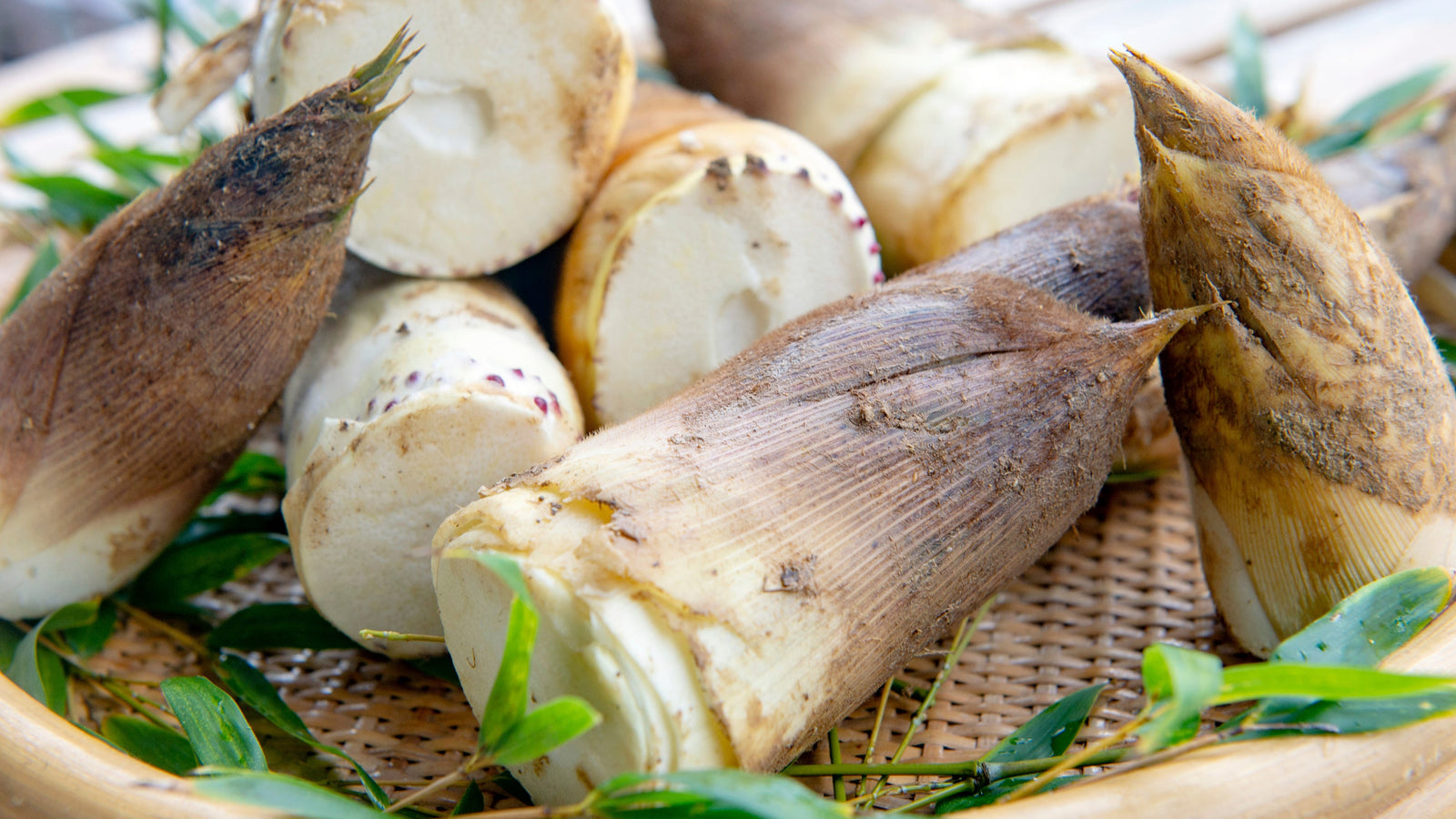
As the tall stalks of fresh green bamboo sway along mountainsides and narrow forest paths, their presence feels constant—steady through the seasons, unchanged by the passing months.
Yet in the early days of spring, something different appears at their roots. Before the bamboo rises skyward, a small shoot pushes through the earth. Takenoko, or bamboo shoots, emerge with surprising strength and speed.
Outside Japan, bamboo shoots can feel slightly unfamiliar. A vegetable that will one day become a towering stalk of bamboo is not something most people encounter. Takenoko sits somewhere between curiosity and discovery. In Japan, however, it is anticipated, prepared, and shared at the table. Take a closer look at how it grows and is harvested, and how quickly it finds its way onto the table in a classic spring recipe.
Why Takenoko Is So Eagerly Awaited
Fresh bamboo shoots are available for only a short time each year, mainly from March to May. Miss that period, and the flavor and texture change entirely. In Japan, takenoko is valued for its limited availability, arriving just as the landscape begins to shift toward warmer days. During this time, whole bamboo shoots begin to appear in shops, sometimes still covered in soil, set out at the entrance, their freshness immediately apparent.
There are also earlier harvests. In late autumn to early winter, bamboo shoots known as toujun are dug while still fully underground. These early shoots are especially tender, with a natural sweetness and very little bitterness, and are considered a premium ingredient, often used in osechi ryori.
Records show that bamboo shoots have been eaten in Japan since ancient times, first gathered from wild groves. By the Edo period (1603–1868 CE), takenoko had become a familiar seasonal sight in markets. Its early appearance placed it among hatsumono, the first foods of the season, long associated with good fortune.

Its appeal lies not only in how it tastes, but in when it can be experienced. It carries a clear sense of the season, something people look forward to each year.
From Forest to Kitchen
Most of takenoko’s growth happens out of sight. By the time it appears above the ground, it has already been developing beneath the surface. Bamboo grows best in well-drained, slightly acidic soil, often rich in red clay. These conditions allow moisture to be retained without saturating the roots. A balance of warm days and cooler nights supports steady underground growth before the shoot emerges.
Across Japan, takenoko appears gradually, beginning in Kyushu and moving northward toward central regions such as Ishikawa Prefecture as temperatures rise. This progression is sometimes referred to as the “takenoko front,” marking the advance of the season, much like the movement of cherry blossoms.
Among the different varieties, moso bamboo is the most widely used as an ingredient, known for its size and tenderness. Depending on the timing of harvest, shoots can vary in size, typically ranging from about 10 to 20 cm (4 to 8 in).
Harvesting requires precise timing. Shoots are dug just as they begin to break through the soil, before exposure to sunlight alters their character. Farmers often use a hoe to locate and carefully dig out the shoots, taking care not to damage them and trimming away the tougher base for easier preparation.

Takenoko, Up Close
Newly unearthed, takenoko is wrapped in firm outer sheaths that protect the delicate shoot within. The surface is almost velvety to the touch, with a faint green tint at the tip where it has begun to meet the light.
Inside, it is composed of tightly wrapped layers, overlapping like an artichoke. As the layers are peeled back, the flesh becomes progressively more tender toward the center, shifting from a firmness to an almost yielding texture. A faint vertical grain runs through each piece, a quiet trace of its upward growth beneath the soil.

Its flavor is difficult to compare with anything else. Freshly cooked, it carries a mild sweetness with a gentle earthiness and a faint, almost nutty nuance. After boiling, the lower portion becomes slightly more fibrous, while the upper section softens, becoming increasingly delicate with little resistance.
When exceptionally in-season and young, takenoko can also be served raw in a sashimi style in select regions, including Kyushu and Kyoto.
Preparing Takenoko: Bringing Out Its Character
While many stores now offer pre-boiled bamboo shoots, raw takenoko still appears during the season. The outer layers are firm, almost rigid, enclosing a core that has yet to soften, and the bitterness remains pronounced. Simply cutting into it does little to reveal its character. The longer it is left uncooked, the more the astringency deepens.
Thus, the shoots are boiled to draw this out, often with rice bran and a dried chili. This process, known as akunuki, allows the sharper notes to recede, bringing a sweetness into focus. In shops, small packets of rice bran are often placed beside piles of takenoko, an indication of what follows.

Once boiled, the tough outer layers can be peeled away with ease. At this point, the bamboo shoot begins to take on a more familiar form. From here, it can be cut as needed—larger pieces from the base for simmered dishes, thinner slices for soups, or for one of the most familiar dishes of the season, takenoko gohan.
Cooking Spring: Takenoko Gohan Recipe

Takenoko gohan is one of the most familiar ways to enjoy bamboo shoots in season. Cooked together with rice, its aroma settles into each grain, while its texture remains distinct. The recipe can also be made using an electric rice cooker.

Ingredients (Serves 4 to 5)
- 3 rice cooker cups (about 15.9 oz / 450 g) white rice
- 2 1/8 cups (510 ml) dashi
- 10.5 oz (300 g) takenoko (boiled and cut into bite-sized pieces)
- 3 Tbsp (45 ml) soy sauce
- 3 Tbsp (45 ml) sake
Optional
- 1 package abura-age (thin sheets of deep-fried tofu), sliced
- Kinome (young leaves of the Japanese pepper tree), for garnish
Instructions (Donabe Method)
1. Prepare the rice
Rinse the rice and drain well.
2. Combine and soak
Add the rice to the donabe rice cooker, along with dashi, soy sauce, and sake.
Note: Reduce the amount of dashi to account for the soy sauce and sake.
Let the rice soak for about 30 minutes.
3. Add the takenoko
Spread the takenoko evenly over the rice. Add abura-age if using.
4. Cook in the donabe rice cooker
Cover with the lid and place over medium to medium-high heat. Once steam begins to rise steadily from the lid, turn off the heat. Keep the lid closed and let the rice steam for 20 minutes.
Remove the lid and gently fluff the rice from the bottom with a rice paddle to allow excess moisture to escape.

5. Serve
Serve in a rice bowl, garnished with fresh kinome leaves, if available. The bright, herbal note adds a subtle contrast and is a traditional way of finishing takenoko gohan.
*Please refer to our blog, Three Irresistible Japanese Rice Recipes to Try at Home, for details on how to use a donabe rice cooker.

While bamboo stands year-round as a symbol of resilience, it is the brief appearance of its young shoots that signals the arrival of spring.
Even if only packaged bamboo shoots are available, taking a moment to consider how they are grown and prepared can change the way they are enjoyed. What might seem like a simple ingredient begins to carry a sense of timing and care, becoming a way of noticing the season in a spring meal.
Stay close to the craft
Now and then, a quiet letter — new stories, seasonal notes, and the hands behind the work.

Hasegawa Akari's Spring Donabe Recipe: Salmon and Asparagus Takikomi Gohan
This takikomi gohan donabe recipe by Hasegawa Akari is a light, fresh, and nourishing,…
Hasegawa Akari's Spring Donabe Recipe: Lamb and Vegetable Stew
Create this rich and comforting lamb stew by Hasegawa Akari, slow-cooked in a donabe…
Ready for Hot Summer: Making Umeboshi (Pickled Plum)
This is a memory from my elementary school days, on the day of the…
Yamada Minako
Leave a comment