

The Art of Kitaoji Rosanjin: The Beauty of Cuisine
Rosanjin united ceramics, calligraphy, and cuisine into one vision of beauty, where tableware and food live in harmony.
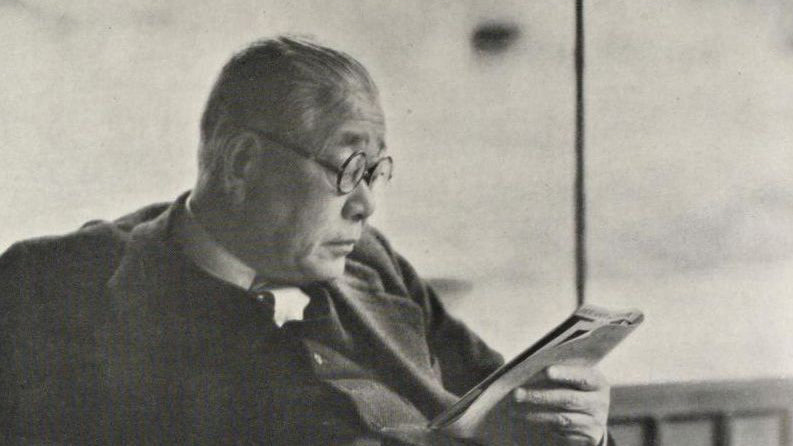
“Tableware is the kimono of cuisine.” This famous saying lies at the heart of Kitaoji Rosanjin’s artistic philosophy. For him, beauty was never confined to a single object but emerged through the harmony of food, tableware, flowers, and the surrounding space.
Far more than a ceramic artist, Rosanjin was one of Japan’s great creative visionaries of the 20th century. He expressed his philosophy across ceramics, calligraphy, painting, cuisine, and other art forms, seeking to unite craftsmanship with everyday life. To understand his artistry, it is essential to consider these diverse disciplines as parts of a unified vision of beauty. This article explores that vision through his work and philosophy.
Beyond Ceramics: A Life in Many Arts

Born in Kyoto in 1883, Rosanjin was placed in foster care shortly after his birth and later moved between several adoptive families, spending his early years in a difficult and unsettled environment. Among the stories that have been passed down about his childhood is an episode in which, at the age of three, he was deeply moved by the sight of blooming red azaleas. This childhood experience is said to have left a lasting impression on him and later shaped his understanding of beauty.
His creative career began with calligraphy. As a teenager, he entered calligraphy competitions and repeatedly received recognition for his exceptional talent. At the age of twenty-one, he received first prize in the calligraphy section of an exhibition held by the Japan Art Association.

A wood engraving created at the request of a paper wholesaler in Nagahama, Omi. It is considered a masterpiece from Rosanjin’s early period as an engraver and calligrapher.
After moving to Tokyo, Rosanjin established himself as a respected calligrapher. Throughout his twenties, his calligraphic work earned him increasing recognition and paved the way for the remarkably diverse career that followed.

Rosanjin believed that the beauty of calligraphy reflects the character of the person who creates it. Throughout his life, he produced powerful and expressive works unconstrained by established schools or styles. The Folding Screen with Iroha-Uta is a major work created when he was seventy, written in a single, fluid motion with a brush loaded with diluted ink.
While continuing his work in calligraphy, he devoted himself to the study of seal carving and produced numerous seals. He also pursued painting in a variety of styles—Japanese-style painting, nanga (Southern School painting, an Edo-period movement inspired by Chinese literati painting), ink wash, and watercolor—leaving works that demonstrate his versatility as an artist.

Musashino Plain depicts scenes of Musashino that Rosanjin often painted, including Mount Fuji and fields of silver grass. With soft brushstrokes, he captures the varying lengths and shades of each blade of silver grass spreading across the foothills of Mount Fuji, creating a lyrical portrayal of the Musashino landscape swaying in the wind.
Through the 1910s, his interest in antiques, food, and ceramics deepened as he traveled for commissions in calligraphy and seal carving, staying as a guest in the houses of collectors and connoisseurs. In 1915, the Kanazawa connoisseur Hosono Entai brought him to Yamashiro Onsen to carve signboards for several establishments, among them the Yoshinoya inn and the kiln of Suda Seika I. Recognizing the quality of his brushwork, Seika invited him into the workshop, and that October Rosanjin put a brush to a ceramic surface for the first time. He remained in Yamashiro for about half a year.
In 1919, Rosanjin and his business partner Nakamura Takeshiro opened Taigado, an antiques shop in Kyobashi, Tokyo, stocked with pieces Rosanjin had personally selected. Two years later, he established the Bishoku Club, or “Gourmet Club,” which later became legendary. There, guests enjoyed dishes prepared and arranged by Rosanjin himself, served on tableware from his collection, including ko-Sometsuke and ko-Akae wares, among other antique ceramics. The club became renowned not only for its cuisine but also for its distinctive appreciation of food and tableware as a unified aesthetic experience.
The growing popularity of the Bishoku Club eventually led to the establishment of the members-only ryotei restaurant Hoshigaoka Saryo in 1925. Rosanjin placed great importance on seasonal ingredients and sourced exceptional produce from across Japan.
As his dining operation grew, Rosanjin became dissatisfied with the tableware available to him. Determined to create vessels worthy of his cuisine, he devoted himself to ceramics. Traveling to kilns throughout Japan, he studied traditional styles such as Oribe, Shino, Bizen, and Karatsu ware while developing a language of his own. Working from his own kiln, he pursued the ideal ceramic vessels that embodied his belief that cuisine and tableware should exist in perfect harmony.

Bowl with Design of Camellias features bold depictions of camellia flowers and leaves. More than 40 cm (about 16 in) in diameter, it is large enough that it must be held with both hands. Rosanjin used such large bowls to serve dishes to his guests.

Dishes with Design of Crab is a set of six plates, each featuring a large crab. The crabs are subtly different in their poses, making this one of the most charming works in Rosanjin’s oeuvre.
From the mid-1920s onward, Rosanjin also became involved in lacquerware, although his role focused primarily on design rather than applying lacquer himself.

Lacquer Bowls with Design of Suns and Moons is an exquisite set of ikkanbari bowls depicting the sun and moon in gold and silver leaf. Made by layering Japanese paper over a form, the bowls are finished with multiple coats of lacquer, applied after each layer has dried.
Alongside his work in ceramics and lacquerware, Rosanjin also created interior furnishings, including iron andon lanterns.
In his later years, Rosanjin remained fiercely independent in his pursuit of beauty. In 1955, he was approached about being designated a Holder of an Important Intangible Cultural Property, commonly known as a “Living National Treasure,” for his work in Oribe ware, but declined the designation. His refusal reflected his determination to follow his own artistic convictions rather than seek recognition from established institutions. Until the end of his career, he continued to explore ceramics, calligraphy, painting, lacquerware, and other forms of craftsmanship, never limiting himself to a single artistic discipline. He died in Yokohama on December 21, 1959, at the age of seventy-six.

Rosanjin’s Philosophy of Beauty
Cuisine stood at the center of everything Rosanjin pursued. He sought harmony between food and the dishes that carried it, treating the meal itself as one of the highest expressions of art in daily life. For him, the aesthetic and the culinary rose from a single ground: “The source of beauty is nature, and the source of flavor is nature as well.”
In his view, the essential task of an artist or a cook was to learn to see what nature had already made, and to bring it out. He illustrated the idea with a freshly harvested daikon: grated raw or simmered, its flavor needs little embellishment, while an old daikon cannot be restored however well it is cooked. He made a similar comparison with flowers. A freshly opened bloom holds its own even when set down casually, whereas a fading one cannot be restored by any arrangement or vessel. True skill, he argued, lies in seeing what is already there.

This approach to beauty was also reflected in his philosophy of tableware. Rosanjin made vessels to be used, not only admired. His ceramics, calligraphy, seals, and signboards were tied to human life and activity, and his tableware was made for food. He weighed how a vessel looked, but also how it worked with what it held and what it did for the people around the table. “Tableware is the kimono of cuisine” captures this exactly.
Tradition shaped his eye just as deeply. He studied and wrote about the old wares—Oribe, Shino, Bizen, Karatsu, and ko-Kutani—and collected beyond Japan as well, including Chinese ko-Sometsuke of the late Ming and the ceramics of Joseon Korea. From each he took what he needed and reworked it, as he explained plainly: “Making pottery is all copying; there is nothing that is entirely without copying. What matters, however, is knowing what to look for and what to emulate.” His ceramics demonstrate this approach, drawing from the past while developing forms and expressions of his own.
Food, for Rosanjin, was one of life’s great pleasures, an experience shaped not only by flavor but also by the vessels that carried it, the room in which it was served, and the changing seasons. This holistic view of dining continues to resonate in Japanese culinary culture today. Through ceramics, painting, calligraphy, and every other form of expression he pursued, Rosanjin pursued a single idea of beauty—one that has lost none of its force.
Where to Experience Rosanjin Today

Today, visitors can experience Rosanjin’s artistic vision at the Adachi Museum of Art in Yasugi, Shimane Prefecture. Founded in 1970, the museum was established around the collection of Adachi Zenko, a businessman from Yasugi who devoted his life to collecting Japanese art. Today, the museum is home to more than 500 of Rosanjin’s works.

The Rosanjin Hall, opened in 2020 and designed specifically to showcase his art, permanently displays approximately 120 carefully selected works. Soft, even lighting allows visitors to see the details of each work clearly and appreciate the subtle variations in form, color, and texture.
Adachi Museum of Art
Address: 320 Furukawacho, Yasugi, Shimane
Hours: 9:00–17:30 (April–September) / 9:00–17:00 (October–March)
References: Iroha Soan (Site of Rosanjin’s Lodging). Kaga, Ishikawa Prefecture. https://iroha.kagashi-ss.com. / Kitaoji Rosanjin. Rosanjin bido [Rosanjin on Taste]. Edited by Hirano Masaaki. Tokyo: Chuo Koronsha, 1980. Revised edition, Tokyo: Chūō Kōron Shinsha, 2008. / Kitaoji Rosanjin. Rosanjin tosetsu [Rosanjin on Ceramics]. Edited by Hirano Masaaki. Tokyo: Chuo Koronsha, 1992. / Translations from the Japanese are the author’s own.
Stay close to the craft
Now and then, a quiet letter — new stories, seasonal notes, and the hands behind the work.
The Art of Plating: Lessons from Rosanjin and Japanese Chefs
Discover how Rosanjin’s philosophy shaped Japanese plating, plus expert tips from Michelin-starred chef Nakajima…
Ito Ryo
The Aesthetics of the Written Character in Japanese Crafts
From auspicious 福 to hidden ashide poetry, explore how characters become decoration and meaning…
The Enduring Beauty of Fine Imari Porcelain
Discover the origins and traditions of Imari porcelain, from Kakiemon to Nabeshima ware, and…
Leave a comment