


A Day Made Easier with Japanese Trays
From breakfast to a nightcap, see how trays of different shapes and finishes carry a Japanese home through the day.

In a Japanese home, it is not unusual to find more than one tray: perhaps a large one for carrying a meal, a smaller one just big enough for a cup and something sweet, and another brought out for guests.
From the everyday to those more special occasions, there is no shortage of choice. Follow along to see how various sizes, shapes, materials, and finishes lend themselves to different parts of the day. At every turn, a tray brings things together, each time in its own way.
Where the Day Begins
The first tray of the day might appear at breakfast.

Perhaps coffee, toast, and fruit: even a simple meal can quickly add up to several pieces. A round ash wood tray makes the trip from kitchen to table in one go, then stays where it is.

A Japanese breakfast might look entirely different, but the same tray does the job just as well. A bowl of rice, miso soup, and a small side dish fit comfortably, with chopsticks laid across the front. In traditional Japanese dining, meals were often served on individual zen, small trays or low stands set with one person’s dishes. That idea still makes practical sense at the table.

For hot coffee in your go-to mug and a small bite, this cherry bark tray is the right size. Everything fits side by side comfortably, and the floral inlays make for a delightful start to the day.
All Together for Lunch
Come lunchtime, the tray has another job.

A rectangular tray has room for all the pieces of a teishoku, or set meal. Bowls of rice and miso soup sit alongside smaller plates and a teacup.
Set it down, eat directly from it, and when lunch is over, the dishes are already gathered for the trip back to the kitchen.

Pasta with a small salad, soup and a sandwich, or whatever else you are having can go on one. A light-colored rectangular tray is just right for a leisurely lunch.
Tea for Company
Of all the times a tray appears in a Japanese home, serving tea to a guest may be one of the most familiar. Tea is prepared, carried in, and placed before the guest, often with something sweet alongside it. The tray is part of the welcome.

For an everyday pot of tea with friends or family, the Wood-Grain Zelkova Round Tray feels right at home. Its warm color and bold grain have a lived-in quality, and the round shape leaves plenty of room for a teapot and a couple of teacups. Nothing about it feels particularly formal, which is precisely its appeal.
With its softly curved shape and warm amber finish, the Golden Amber Clam-Shaped Tray is an inviting choice for tea and a wagashi sweet. This Hida Shunkei lacquerware tray is surprisingly light, with a glossy surface that allows the wood grain to show through.

Drinking matcha with a friend can be a casual affair. The Rectangular Lacquerware Serving Tray gives enough space to prepare and share a bowl of matcha with higashi sweets. It is not meant to recreate a formal tea setting. Instead, the raised edges mark out a place for the few things at hand.

As the Day Winds Down
For dinner, there is usually more to carry.

Rice and soup, a main dish, some sides, drinks, and perhaps a condiment remembered at the last minute. This is where the larger Wood-Grain Zelkova Round Tray comes in. Thick and sturdy, with plenty of surface area, it can handle several bowls and plates at once.

Not every dinner calls for a crowded tray, though. For a finer meal, the Golden Amber Double-Rim Rectangular Tray can do more than carry the dishes. Its slim double rim and amber lacquer coat frame the food, making the tray part of the table rather than something to put away after dinner.

Later still, a tray might make one last appearance. The long, narrow Lustrous Rectangle Serving Tray sets off a few small Edo Kiriko glasses of an after-dinner libation. Against its glossy black surface, the jewel-like colors and intricate cuts stand out. It’s a different look from the wooden trays used earlier in the day, and a fitting way to bring the evening to a close.
One Day, Many Trays
By the end of the day, each tray has had a slightly different part to play.
Even within the same shape, the choices can be surprisingly broad. One round tray might be pale and lightweight; another thick, substantial, and lacquered. A rectangular one might be sized for one person’s lunch or large enough for several dishes.
You don’t need to have a tray for every possible situation. The variety simply leaves room to find one that suits the way you already serve and eat. Over time, the trays you reach for most tend to find their own place in the day.
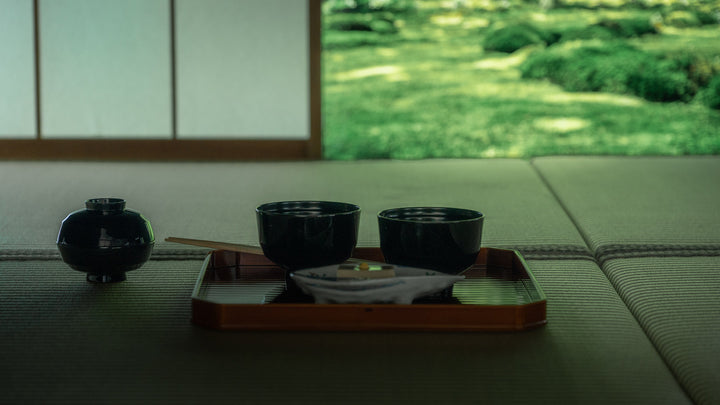
The Two Types of Kaiseki Cuisine
Same word, two meals: discover how cha-kaiseki and kaiseki diverge in purpose, sequence, and…
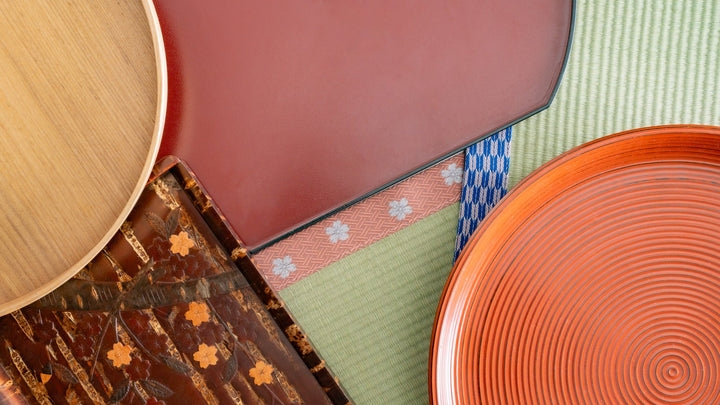
Guide to Japanese Trays & Placemats
Transform your table with Japanese trays and placemats. Explore unique designs, materials, and tips…

Akari’s Sake-Steamed Hamburg Steak Recipe
Akari's sake-steamed hamburger steak with cherry tomatoes. No eggs, no breadcrumbs, just a simple,…
Hasegawa AkariStay close to the craft
Now and then, a quiet letter — new stories, seasonal notes, and the hands behind the work.

Leave a comment