

Giving an Old Bento Box New Life
A worn cedar bento box, a trip to Odate, and a quiet reflection on why we repair the things we keep.
When we repair something, what exactly are we repairing?
The object itself, of course. But I have come to feel that it may not be only the object.
Twenty-Five Years with One Bento Box

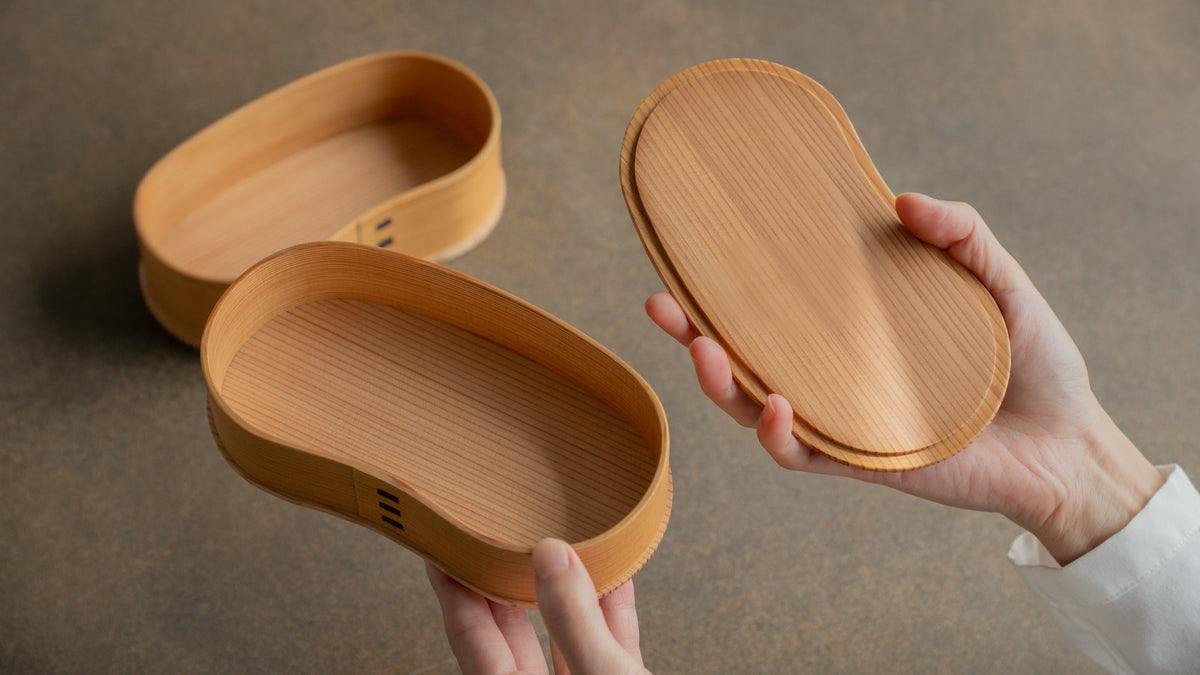
I have a magewappa bento box that I have used for about twenty-five years. A friend from my university days, who is from Akita Prefecture, gave it to me when I had just started working. It is a generously sized, two-tiered box with beautiful, pronounced wood grain. Back then, whenever I lifted the lid, I was greeted by the scent of cedar.
Odate Magewappa is a bentwood craft from Odate, in northern Akita. Thin boards of cedar are softened in hot water and bent into shape. My bento box was made by the magewappa maker Odate Kougeisha, where each piece is carefully crafted to bring out the natural character of the wood grain.
I had left my hometown in western Japan to attend university in Tokyo and was living alone. Until then, I had never made a bento. Receiving such a well-made bento box made me feel that perhaps this was the start of a new habit: making my own lunch each day.

I started using it from time to time, without making too much of it. First for my own lunches, then, after I got married, for my husband’s. When our son grew older, I used it for his lunches too. Whether the lunch was headed to school or the office, the magewappa kept the rice soft and delicious even after it had cooled. It soon became one of those things our family simply relied on.

Eventually, though, there came a time when I stopped reaching for it. I no longer needed to bring a packed lunch with me, and at some point, I bought another lacquered bento box. Then our son went off to university and didn’t need me to make his lunch either.

By then, the scent of cedar had long since faded, and the wood had deepened to an amber color. The bottom was showing signs of wear, the corners had worn down, the urethane coating was peeling, and the surface had grown rough to the touch. You could say these were the marks of a bento box that had been well used. And it was still remarkably sturdy. So although I no longer used it, I kept it tucked away on a shelf.
At the Odate Kougeisha Workshop

The idea of having it repaired came to me when I was planning a trip to the Tohoku region. Once I remembered it had been made by Odate Kougeisha, whose magewappa we have long carried at MUSUBI KILN, I thought I could take the bento box with me, visit their workshop, and even try making magewappa myself.
More than anything, I was curious. What does it actually mean to repair something made of wood? And so, with the bento box tucked into a corner of my suitcase, I set off on my trip.

Summer in Tohoku was much cooler than in Tokyo, and it was the perfect place to slow down and forget the bustle of the city for a while.


When I arrived at Odate Kougeisha, I first showed my bento box to Fukuoka Yoshimitsu, a craftsperson specializing in magewappa, and we talked through what could be done. The damaged bottom, which had worn through in places, would be replaced, the entire box sanded down, and a new urethane coating applied. With these repairs, I was told, the box would be as good as new.
“You’ll hardly recognize it when it’s finished,” Fukuoka told me.
Nearby were many other pieces awaiting repair, sent in from all over Japan.
A Hands-On Experience with Magewappa
Before the hands-on workshop, I was given a tour of the factory. The magewappa pieces at Odate Kougeisha are made from Akita cedar more than one hundred years old. Once the cedar boards have been cut to the right size for each piece, they move on to the bending process. The boards are softened in hot water, then quickly wrapped around round wooden molds to set their shape. After drying overnight in a drying chamber, they are joined to the bottom boards.


During the workshop, we tried this bending process ourselves before assembling the item we had chosen.


The tools were different from those I had seen in the factory, but we too wrapped a softened cedar board around a cylindrical wooden mold to give it its curve. We bent the board into a ring by hand and secured it in place. It was a little like wrapping hair around a roller to give it a curl.
Once the wood comes out of the hot water, you have to bend it into shape quickly, because the cedar begins to dry almost immediately. Then you secure it with a tool that looks rather like an oversized clothespin.


This quick-drying quality also comes in handy when it is time to wash the box. I was told that washing it in slightly hot water rather than cold helps it dry more quickly afterward.
Before the workshop, I had chosen whether to make a tray or a bento box, and now it was time to assemble it. I applied a food-safe adhesive and fitted the bottom into the already-bent side piece, which turned out to be trickier than it looked.


Imagining the round piece as the face of a clock, I pressed it into place one point at a time: twelve o’clock, one, eleven, three, then nine. All that remained was to carefully wipe away any adhesive that had squeezed out.
From there, the craftsperson would take over and complete the piece. All I had to do was wait for it to arrive at my door.

Despite having come all this way to get one bento box repaired, I chose to make another one: a round bento box. As I’ve gotten older, the two-tiered box has sometimes started to feel a little too large for me. Besides, I had a plan for the repaired one. My husband or son could put it back to use.
It would take about a month for everything to arrive, and in the meantime, I returned to the usual rush of everyday life.
What We Keep

Strangely, after leaving the bento box behind, I found myself thinking about what it means to live with the things we own.
Why had I held on to this worn old bento box instead of throwing it away? Perhaps because getting rid of it felt, somehow, like letting go of the family memories tied to it.
There were the lunches I made for my husband with his health in mind, even when our son was small and I was busy raising him. And then there was our son, who kept taking this rather traditional bento box to school when the other children had ones decorated with anime characters, simply because he thought the food tasted better in it.
The box had become much more than a container. It held all these memories, too.

There would be nothing wrong with letting the object go and simply keeping the memories of it. But Akita cedar that grew for a hundred years can continue its life for many more after being made into magewappa. Ceramics can be restored through kintsugi. Magewappa can be brought back to life through repair.
Perhaps that was why I wanted to have it repaired. And maybe what I really wanted to hold on to was not the bento box itself, but the memories it carried and all the years we had spent with it.
If those memories remain not only with me but with my husband and son as well, I could ask for nothing more.
Now I am in my forties. As the years pass, I find myself surrounded by more and more tableware that has been with me for a long time. Looking at these pieces brings back the moments and memories that have gathered around them, and reminds me of how much of my own life has unfolded alongside them.
Over time, these objects have come to mean more to me than the purpose they were made to serve. If I think of my life as my own story, then the things I choose to keep close are companions that have traveled through it with me. That is how I have come to see them.
Side by Side

Around the time I was sorting through all these thoughts, my repaired magewappa arrived, along with the piece I had made at the workshop.
The old box had been beautifully sanded, and its surface felt smooth again. There was even a faint scent of cedar. Then I noticed something I had not expected. The newly replaced bottom was pale and fresh, while the original sides still held the amber color they had developed over the years. Beneath my fingertips, I could still feel the slightest unevenness left by years of use. The signs of age had not disappeared.
More than anything, I loved the contrast between the pale new wood and the warm color of the old. It was striking, and unmistakably my own bento box. In that unexpected two-tone appearance, two different stretches of time had come together, ready to continue as one.
And then there was one more surprise.

When I placed the repaired two-tiered box beside the new round one, they formed another kind of two-tone pairing: one carrying twenty-five years of our family’s life, the other just beginning its own. Now the two will go on gathering years together in our home.
Stay close to the craft
Now and then, a quiet letter — new stories, seasonal notes, and the hands behind the work.

How to Care for Magewappa
Learn proper care for Japanese Magewappa bento boxes and how to keep their natural…

Mother's Day Brunch with Cedar Magewappa Plates
Enjoy Mother's Day brunch with Magewappa wooden plates, crafting a heartfelt setting that imparts…

Six Sustainable Japanese Craft Makers
Discover six Japanese craft makers embracing sustainable practices for mindful everyday living.
Leave a comment