

The Hashi Kanshasai: Giving Thanks to Used Chopsticks
Join us at Hie Jinja, where used chopsticks are thanked with prayer and music, then returned to the fire each August.
Chopsticks are among the most familiar objects in Japanese daily life. We reach for them almost without thinking, as they rest beside a bowl of rice or accompany a meal at home, at work, or at a restaurant. It was therefore striking to see something so ordinary become the focus of a formal ceremony at Hie Jinja, one of Tokyo’s best-known Shinto shrines.
On August 4, Team MUSUBI visited the shrine to witness its annual Hashi Kanshasai. Held on Hashi no Hi (Chopsticks Day), the date itself carries a playful connection to the Japanese readings of eight (hachi) and four (shi). The ceremony honors these humble utensils, while prayers are offered for health, longevity, and protection from illness.
We joined the Hashi Kanshasai that morning, following its sequence of rituals from the worship hall to the grounds outside.
A Ceremony of Gratitude

We took our seats among dozens of other participants inside the worship hall, facing the altar and waiting for the Hashi Kanshasai to start. For a moment, the hall was silent, filled with the anticipation of what was about to unfold. Then the deep sound of a large taiko drum reverberated through the space, signaling the beginning. The first notes of gagaku, Japan’s traditional court music, followed, and priests in white robes entered the hall and ascended the wooden steps to the raised sanctuary. Everyone rose from their seats and bowed in prayer.

The sounds of the sho (Japanese mouth organ) and flute accompanied the presentation of offerings to the gods: trays bearing rice, sake, fruit, and vegetables were carefully arranged before the altar. One of the priests knelt before it and began to pray. Though we could not understand every word, the meaning of the moment was conveyed through the deliberate pace of every movement and the focused attention of everyone gathered there.

For a while, the world outside seemed very far away. The hall was filled with music and the measured gestures of the priests, while beyond its walls, the summer heat lingered and cicadas sang from the trees.

Then came one of the ceremony’s most captivating moments: the Tsurugi no Mai, a sacred Shinto dance. Two miko (shrine maidens) appeared before the altar, each carrying a ceremonial sword. Moving in graceful unison to the sounds of gagaku, they brought another layer of movement and solemnity to the ritual.
Later, sacred sakaki branches were offered, and several attendees were invited to receive branches of their own and place them before the altar. By this point, the chopsticks at the heart of the ceremony seemed far removed from the ones we pick up at the dining table without a second thought.
A Final Farewell

When the indoor ceremony came to an end, everyone made their way outside. Participants gathered on either side of the worship hall, leaving an open space in the middle for the priests.


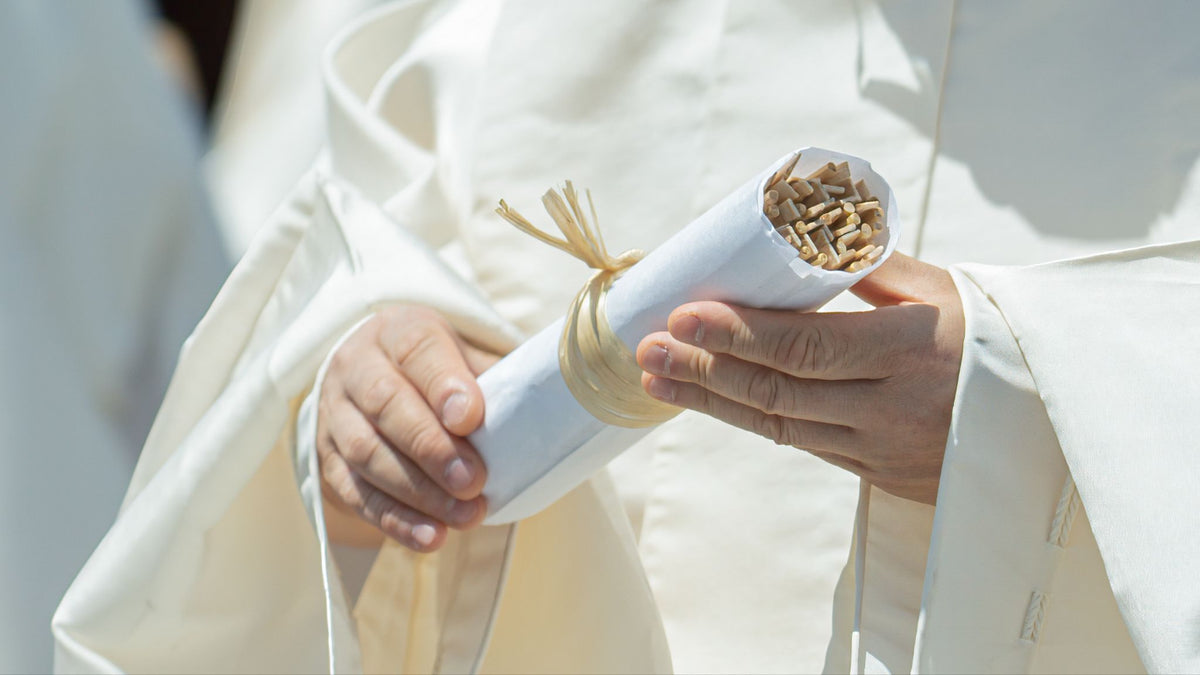
A fire was lit in the vessel prepared for hashi kuyo, the memorial service for used chopsticks. One by one, the priests approached it, placing bundles of wooden chopsticks wrapped in white paper into the flames, carrying out the ritual with solemn attention. The white paper quickly disappeared into the heat, and the fire grew as more chopsticks were added.

Then the participants stepped forward, placing the chopsticks they had brought from home into the flames.
Noticing the Everyday
Hashi Kanshasai offers a moment to reflect on something we use every day but often take for granted.

Chopsticks accompany us through countless meals. When they are no longer usable, some eventually make their way to Hie Jinja, where they are offered with prayers before being entrusted to the fire.


Perhaps that is what stayed with us most after the ceremony. Something as simple as a pair of chopsticks had brought us into this formal space, surrounded by music and ritual. We were reminded that there is meaning in the everyday, and that such objects are worthy of our gratitude.

Stay close to the craft
Now and then, a quiet letter — new stories, seasonal notes, and the hands behind the work.

How to Care for Your Japanese Chopsticks
Learn how to care for your Japanese chopsticks with tips on washing, storing, and…
Mastering Chopstick Etiquette: Tips for Using Japanese Chopsticks
Master graceful techniques, avoid common mistakes, and immerse yourself in centuries of dining tradition.
From Table to Shrine: The Life of Japanese Chopsticks
Discover the meaning behind Japanese chopsticks, from everyday dining to shrine ritual and centuries…
Leave a comment