

The Art of Connection with Mizuhiki Artist Omoda Kyoko
Discover how mizuhiki artist Omoda Kyoko finds meaning, mindfulness, and connection in the craft of Japanese cord-tying.
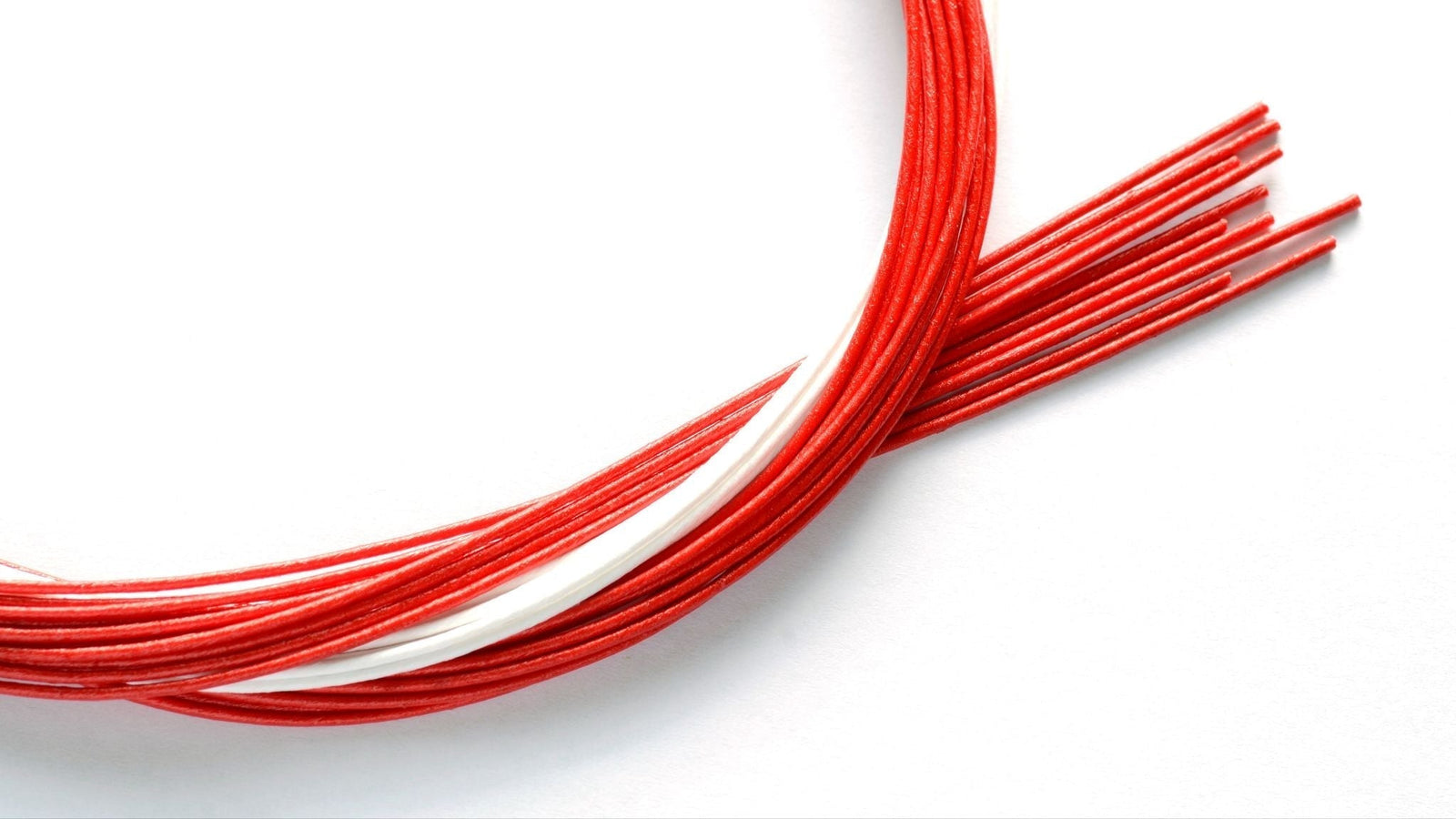
Mizuhiki is the traditional art of Japanese cord-tying. Made of washi paper wrapped with colorful threads, mizuhiki knots are best known for their role in Japanese gift-giving, where they encircle gift wrap and adorn envelopes. Yet they can also be used in accessories and art, from simple mizuhiki earrings to complex sculptures integrating hundreds of knots.
Sharing mizuhiki with the world is Omoda Kyoko, Representative Director of the Modern Mizuhiki Association. The supervising expert on the Mizuhiki MUSUBI Craft Kit, she teaches mizuhiki workshops in Japan and online. She also promotes the craft with an eye toward keeping it alive and relevant to the modern day.

We interviewed Omoda to learn more about what first attracted her to the craft, how mizuhiki brings people together, and the quiet joy behind the experience of crafting each knot. What we found was a meaningful and fun world of creation that even beginners—including those hearing about mizuhiki for the first time—can enjoy.
Discovering the Deep World of Mizuhiki
Omoda’s first foray into mizuhiki came fifteen years ago when she moved to Kanazawa. A hotspot for traditional crafts, Kanazawa is particularly well-known for being the country’s top producer of gold leaf, but it is also home to a longstanding mizuhiki tradition.

“In Kanazawa, there is a long-established shop called Tsuda Mizuhiki, which has been in operation since the Edo period (1603–1868 CE) and became very famous for their three-dimensional mizuhiki creations. That’s partly why now, if you go to Kanazawa Station, you’ll see mizuhiki in the omiyage (souvenir) shops. I hadn’t paid much attention to mizuhiki before, but that got me curious.”
So, she decided to take a class with Kanazawa-based mizuhiki artist Inami Kana. Omoda had assumed they would be making gift envelopes, which are used in Japan to give monetary gifts for occasions such as weddings, graduations, and other milestones, as well as for situations such as funerals or illness. These envelopes are a familiar sight in Japan, where they can be found in stationery shops and convenience stores around the country.

When she joined the class, however, she discovered that mizuhiki encompassed far more than decorative gift wrapping. It was an entire world of symbolism.
“Each knot has a different meaning. Take the knot for a wedding, for example. Ideally, a wedding should happen only once, right? So there is a knot suitable for a one-time event, one that is difficult to untie. When someone is ill, there is a knot that symbolizes it will never happen again. On the other hand, for life events that you might like to happen more than once, like a child being born or a promotion at work, you would use a knot that can be untied and re-tied multiple times.”
Thinking back to her first classes, she explains, “I thought it was very interesting that so many different meanings can be contained within a mere cord.” Those layers are what set mizuhiki apart from regular knots.

“You think of the recipient while you tie each mizuhiki knot, which I found wonderful,” she adds. “I thought that was very characteristically Japanese.” Speaking to that consideration for others, she says, “Mizuhiki is not just gift wrapping. It contains the Japanese heart.”
Connecting with Others Through Each Knot
The power of mizuhiki to foster relationships is, for Omoda, another of its main charms. One anecdote dates from her beginner days in the craft.
“I had such a great time making three-cord plum blossom knots that I passed them out to everyone I met. I would say, ‘Wait a minute, I’ll give you this! Isn’t it cute?’ If you make something fun, you naturally want to give it to people.”

Even after moving away from Kanazawa, Omoda stayed in touch with many of those individuals, some of whom began learning mizuhiki themselves.
“Gifting mizuhiki connected me with them. Being able to maintain those relationships even now makes me very happy. I truly feel that mizuhiki is what brings us together.”
When asked whether mizuhiki has also introduced her to people whom she wouldn’t have met otherwise, Omoda replies immediately, “Oh, yes. Mountains of people. There are so many, I don’t know which example to share.”
Finally, she settles on this story: “When my child was graduating from elementary school, I gave a mizuhiki bookmark to her teacher. Other students said they wanted to give bookmarks, too, so the school invited me to teach a workshop. When my daughter turned twenty and became an adult, that teacher sent me a letter saying that all these years, she’s kept teaching her sixth graders how to make mizuhiki bookmarks. So, by doing mizuhiki, I connected with that teacher and people I didn’t even know. I was so moved.”

Those connections extend even beyond Japan thanks to Omoda’s online lessons. Among those she has taught are an American man whose involvement in Boy Scouts had gotten him interested in knots, fans of paper intrigued by the fact that mizuhiki cords are made of washi, and individuals who became curious about mizuhiki after visiting Japan.
Omoda’s wish to share mizuhiki with as many people as possible is part of what inspired her to start the Modern Mizuhiki Association. Unlike ikebana and the tea ceremony, mizuhiki didn’t have a system for taking classes and earning licenses or qualifications to teach before Omoda created one. Now, Omoda continues to spread the art alongside other passionate “Mizuhiki Ambassadors.”
Harmonizing a 1,400-Year-Old Craft with Today
Mizuhiki in Japan dates back to around 600 CE, when Japanese ambassadors brought knots tied with hemp cord back from Sui Dynasty China. With such an old tradition, what does Omoda do to keep mizuhiki relevant?
“Our lives today are completely different from 1,400 years ago, so we can’t do the same things, right? If something doesn't fit our current way of life, that culture will die out. So I want to make mizuhiki blend into the way we live as much as possible.”

She does this by teaching accessible mizuhiki designs, with a focus on items that are not only beautiful, but practical—ones that can be used day to day.
“The things you carry around, you get attached to,” she explains. People no longer carry katanas in modern times, but the earrings, bookmarks, and necklaces whose designs Omoda teaches can be used and enjoyed within everyday life.
The Quiet Satisfaction of Working with Your Hands
The appeal of mizuhiki lies not only in the finished product but also in the process of creation. As a mizuhiki teacher, Omoda is often told by her students that they value the time to put aside their worries and focus solely on tying each knot.
“I call it ‘becoming mu,’ or nothingness,” she says about that mental state of leaving your thoughts at the door. “While you concentrate on mizuhiki, your mind clears and you forget about the things that are bothering you at work or in your relationships. My students tell me they really value that.”

Peaceful moments like this are more important than ever in our always-on society. “It’s a chance to put your smartphone aside, turn off notifications, and work quietly.”
The act of thinking about the recipient while you tie is another appealing part of the process. As you do, the feelings in your heart are poured into each knot, making for a meaningful and mindful gift.
Getting Started with Mizuhiki
You don’t have to be particularly crafty or live in Japan to try mizuhiki yourself. The Mizuhiki MUSUBI Craft Kit contains everything you need to begin, from the mizuhiki cords and jewelry parts to an instruction manual and publicly-accessible YouTube tutorial demonstrated by Omoda.

The kit introduces three of the most common knots: the awaji knot, plum blossom knot, and standing plum blossom knot. These form the building blocks for accessories that can be enjoyed in daily life.
As the supervising expert on the kit’s creation, Omoda thought deeply about what designs would be accessible for beginners, including people who may be encountering mizuhiki for the very first time. Ultimately, she decided on earrings, bookmarks, and rings that each involve one mizuhiki knot, followed by a bouquet, charm, and necklace that incorporate multiple knots pieced together for those who have gotten the hang of the basics.
It’s an authentic and rewarding chance to try out this centuries-old craft in a way that feels relevant to modern life. For those who want to learn more, read our article, Mizuhiki Experience: Creating Beautiful Japanese Knot Art, or check out the YouTube tutorial.
A craft that is meaningful yet accessible and engaging, that brings in tradition while also adapting to modern lifestyles—these are just some of the joys of mizuhiki. As you draw the cords through your fingertips and sink into a moment of mental quiet, perhaps thinking about someone special as you tie each knot, we hope you discover how rich the act of creation can truly be.
Stay close to the craft
Now and then, a quiet letter — new stories, seasonal notes, and the hands behind the work.
A Beginner’s First Kintsugi with the MUSUBI Craft Kit
Five pieces of chipped, cracked, and broken tableware, seven sessions, and one beginner's honest…
Rebecca Menasché
Kintsugi FAQ: All About Japanese Gold Repair
Answers to the most frequently asked questions about kintsugi—what it means, whether repaired pieces…
The Secret Behind the Beauty of the Japanese Sword
Young swordsmiths in Kyoto revive Japanese katana-making. Discover their craft, tradition, and bold new…
Ito Ryo
Leave a comment