

The Importance of Gift Giving in Japan
Explore the traditions, etiquette, and meaning behind Japanese gifts for every season and occasion.

In Japan, gift-giving is much more than a thoughtful gesture, and it goes beyond simply commemorating special occasions. It is a deeply rooted cultural practice that reflects respect, appreciation, and social harmony. Whether you're visiting Japan for business or leisure, understanding the etiquette behind giving and receiving gifts can be daunting, especially for those unfamiliar with Japanese customs. This article will help you enrich your experience and help you navigate social situations with grace.
 The above image is for illustrative purposes only.
The art of gift-giving dates back to the Edo period (1603–1868 CE) and has cultural significance. Unlike in Western culture, gift-giving in Japan isn't limited to birthdays or holidays. It's commonly practiced in both personal and professional settings, and goes beyond formal events such as weddings, christenings, funerals, anniversaries, or housewarmings.
Types of Gifts
Seasonal Gifts
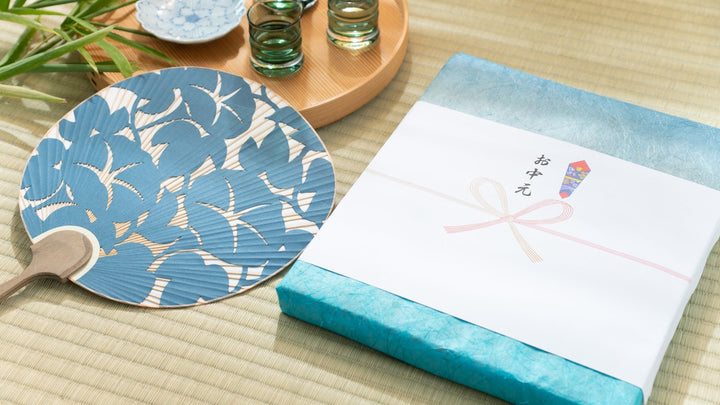
Ochugen, or mid-summer gifting, takes place from July 1 to July 15, while oseibo gifts mark the end-of-year period from late November to December 20. Giving gifts during these periods is a traditional way to show gratitude to those who've helped you throughout the year and is an expression of ongoing appreciation. The time frame for giving ochugen varies depending on the region, so if you're unsure, check out our ochugen blog all about this unique tradition.

Popular items to give include gourmet seasonal foods and fruit, beverages like sake or beer, and household items. In the summer months, a beautifully made uchiwa fan might be appropriate, or some cooling glassware. In winter, on the other hand, you might send items with a plum or crane motif to symbolize longevity and good fortune.


These gifts are usually exchanged between coworkers, clients, or family members and are often returned in kind.
Souvenirs
Omiyage are souvenirs brought back for friends, family, or coworkers after a trip. They are often edible products like local specialty snacks, sweets, and produce unique to the area you have visited. Such specialties are known in Japanese as meibutsu, literally “famous things.” It is also fairly common to bring back local handicrafts like ceramics from that particular kiln area; for instance, Bizen ware from Okayama or Arita ware from Saga Prefecture.


Okaeshi
Okaeshi roughly translates to “returning something.” These are thank-you gifts to express gratitude. If you receive a gift, it is polite to then either send a letter of thanks or give them something in return.
Temiyage
Temiyage are gifts commonly given when you’re visiting an individual or a family to show thanks for what a person may do for you while visiting them.
Business Gift-Giving
When choosing a business gift, it is generally best to keep it modest and symbolic to avoid creating a sense of obligation. They are often exchanged at the first or final meeting, and the timing should be coordinated carefully.
When traveling abroad, bring a souvenir that represents your home region. If giving within your own company, bring enough small gifts for the entire team or department. If giving to higher ranks in the company, consider the expense allocated to each recipient.
Presentation Matters
In Japanese culture, the presentation of the gift is nearly as important as the gift itself.
Unwrapped gifts are frowned upon, and beautiful wrapping is essential. Stores and specialty shops often offer free or elegant wrapping services. Here at MUSUBI KILN, we present all our products beautifully in furoshiki, a traditional wrapping cloth, adding a special touch to every purchase.

Also keep in mind the colors you use when wrapping gifts. For instance, white is associated with mourning, and bright red is often used in wedding announcements. Subtle, elegant colors are preferred. The color green is always a good choice, as it symbolizes good luck.
The correct way to give and receive a gift is to accept it with both hands as a sign of respect, much like you would with a Japanese business card.
It is customary to be modest and decline a gift once or twice before accepting it. This is a show of humility, so although it might seem rude at first, it is actually a polite gesture. Don't open your gift straight away; it's polite to wait before opening a gift—doing so immediately can be seen as rude or overly eager. After receiving a gift, remember to send a thank-you gift—an okaeshi, as discussed earlier. The value of an okaeshi usually equals half the value of the original gift.

What to Give (and What to Avoid)
Safe choices:
-
Local specialties or delicacies (especially as omiyage)
-
Sweets, teas, or seasonal fruits in elegant packaging
-
High-quality stationery or traditional crafts
-
Branded items (luxury brands are appreciated in professional settings)
Numbers also carry meaning. Gifts in pairs are considered lucky, as are gifts that come in numbers of three or eight, symbolizing new life and wealth.
 The above image is for illustrative purposes only.
Things to avoid:
-
Sets of four or nine (the word for "four" sounds like "death" in Japanese, and the word “nine” sounds like “suffering”)
-
White flowers like lilies, lotus blossoms, and camellias, which Japanese people send for funerals and to express sympathy
-
Potted plants (they can symbolize illness or being rooted in place)
-
Sharp objects like knives or scissors (which symbolize severing relationships)
Japanese gift-giving etiquette is steeped in values of thoughtfulness, respect, and social awareness. While the customs may seem intricate at first, even simple gestures done with sincerity can leave a lasting impression.
Why not browse our extensive range to find that perfect gift for any occasion?
When in doubt, remember: it's not about the price—it's about the care behind the gift.

Presenter: Justine Sherratt, “tokyopony”
Justine, creator of TokyoPony, fell in love with Japan after discovering chopsticks and adopting a vegetarian lifestyle in the 1980s. Her website shares Japanese food and culture through plant-based recipes. Visit her site and explore her curated tableware collection on MUSUBI KILN.
Stay close to the craft
Now and then, a quiet letter — new stories, seasonal notes, and the hands behind the work.
What Is Ochugen? All about Japan’s Summer Gift Giving
Learn about ochugen, the Japanese tradition of midyear gift-giving. Explore its history, timing, and…

Japanese-Style Gift Wrapping
Wrap gifts with care using Furoshiki—a reusable, beautiful cloth that adds meaning and tradition…

6 Wonderful Hand-wrapped Small Gift Packages
Learn how to create six beautifully hand-wrapped Japanese gift sets, featuring teacups, chopsticks, and…
Leave a comment