
KIRISEN
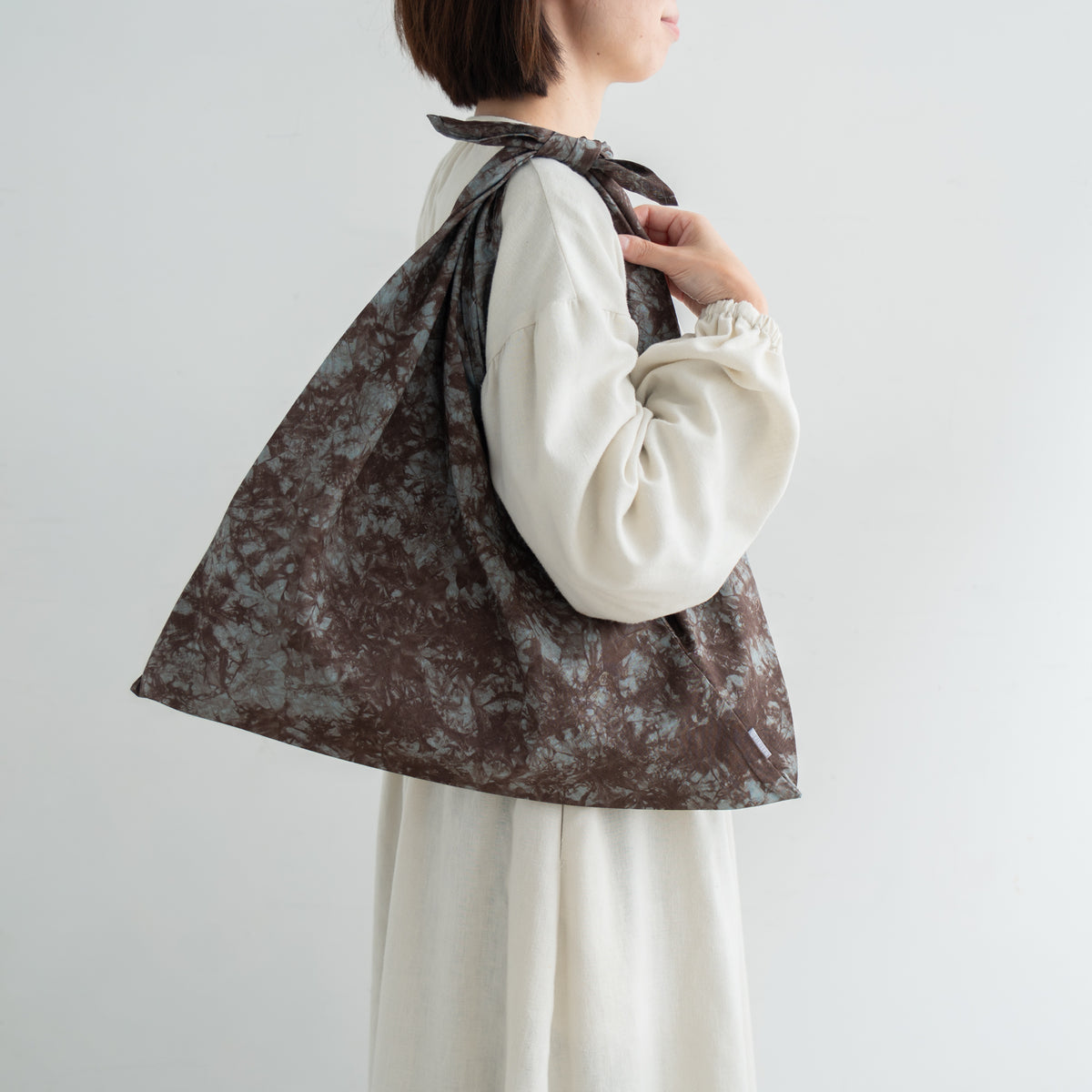
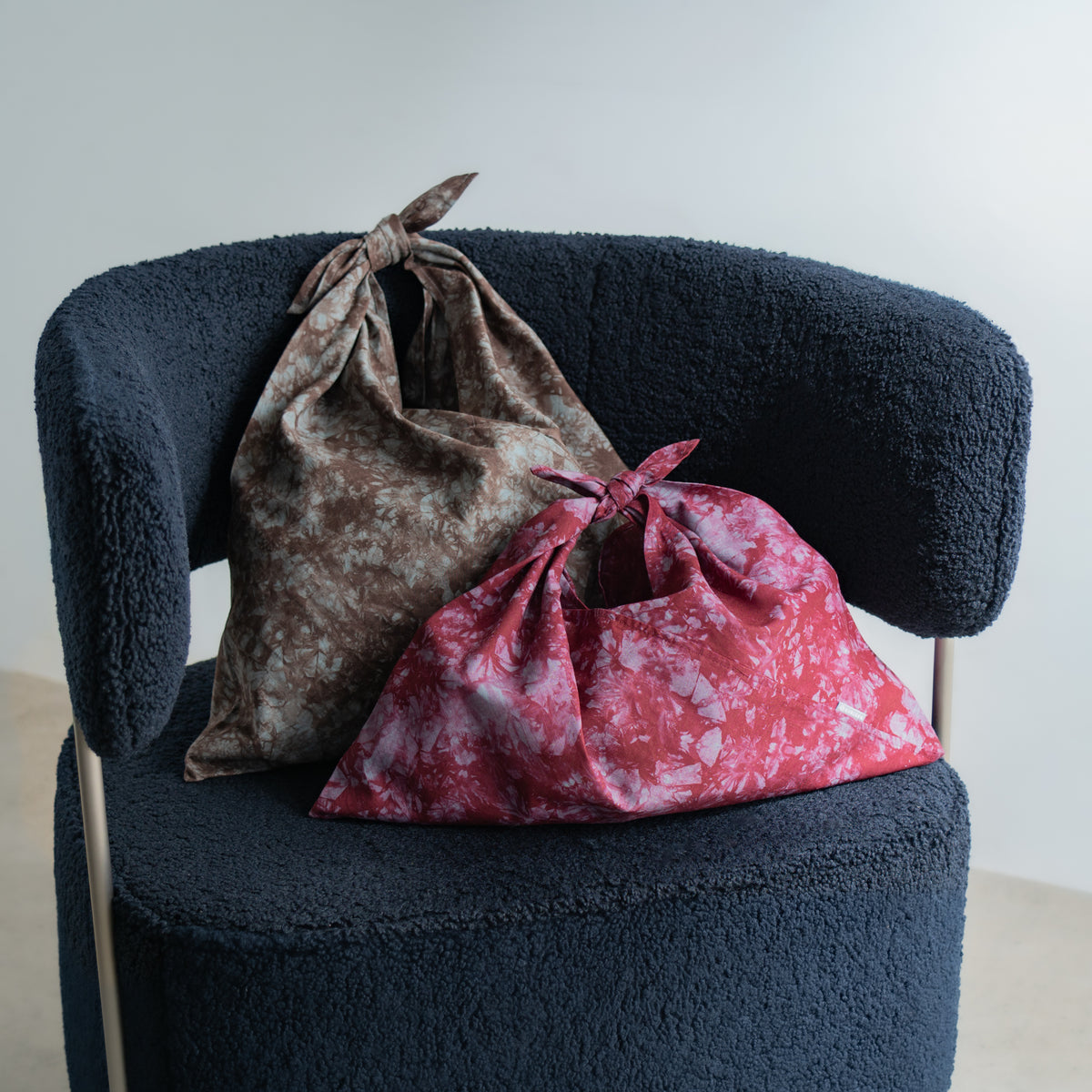
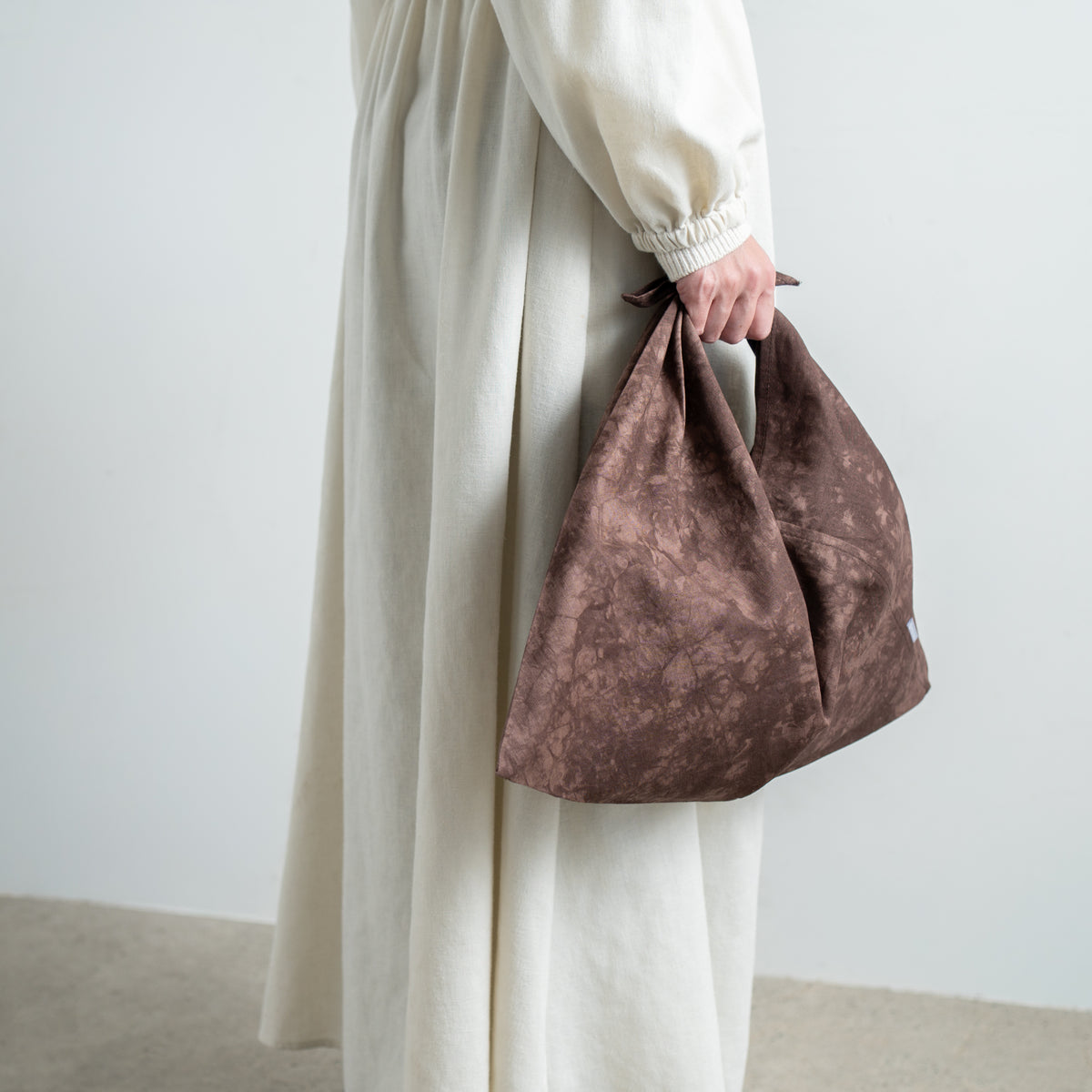
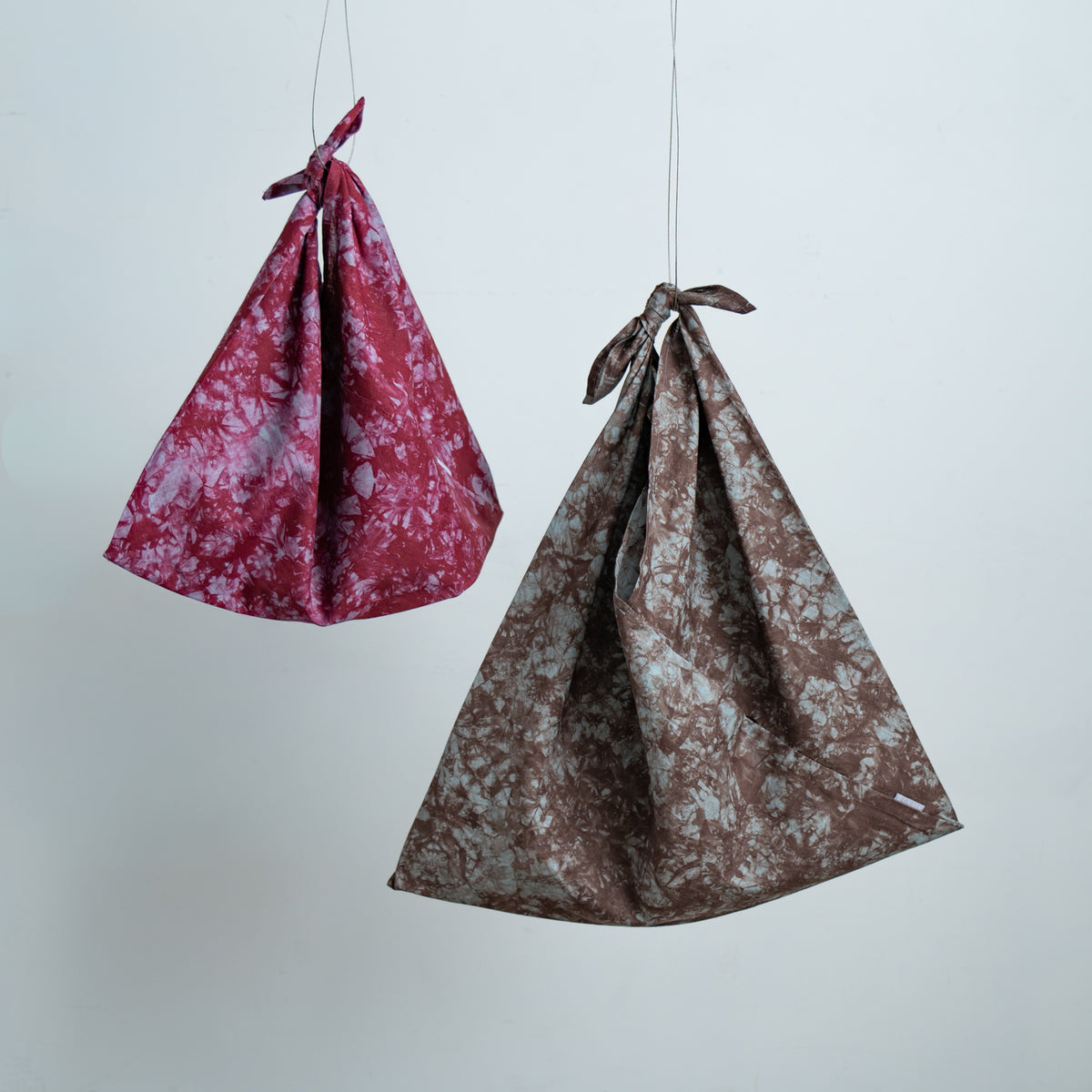
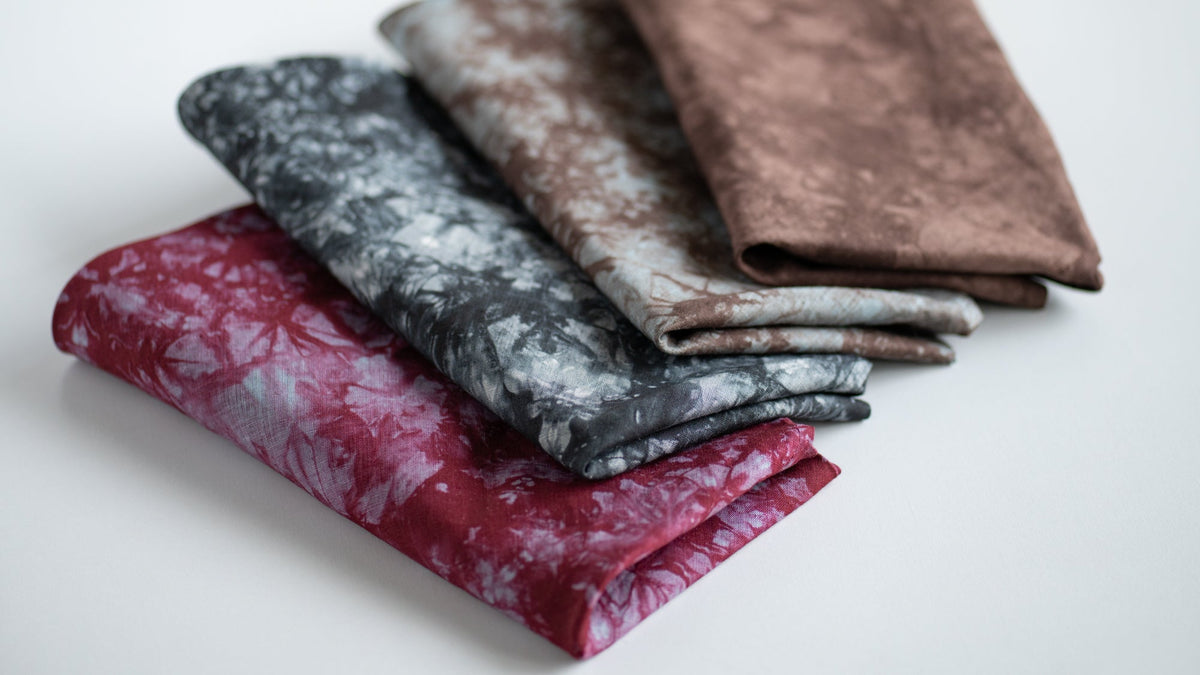
In Kiryu, Gunma Prefecture, color has long been part of the town’s textile culture. Since 1919, KIRISEN has approached dyeing not with a set palette, but with the creation of color itself. The workshop develops its own hues and explores the patterns that emerge through hand-dyeing. Today, these techniques take shape in KIRISEN’s products, where mottled designs make each piece one of a kind.
The Yamazaki family began a yarn-twisting business in Kiryu in the late Meiji era (1868–1912 CE). In 1919, Yamazaki Seishiro shifted the company’s focus entirely to dyeing. Starting with silk thread, the workshop gradually expanded into dyeing fabric and finished products, adapting its techniques to the changing needs of the times.
The second-generation head, Yamazaki Sadaharu, was certified as a Traditional Craftsperson in Kiryu textile dyeing. He dedicated himself not only to advancing the craft but also to preserving the techniques passed down through the workshop.
For most of its history, KIRISEN’s work reached customers under other names, as dyed thread and fabrics for other makers. Today, led by fourth-generation head Hiramoto Yuri, KIRISEN makes its own pieces to share the appeal of its dyeing techniques. A century of color now carries the workshop’s own name.
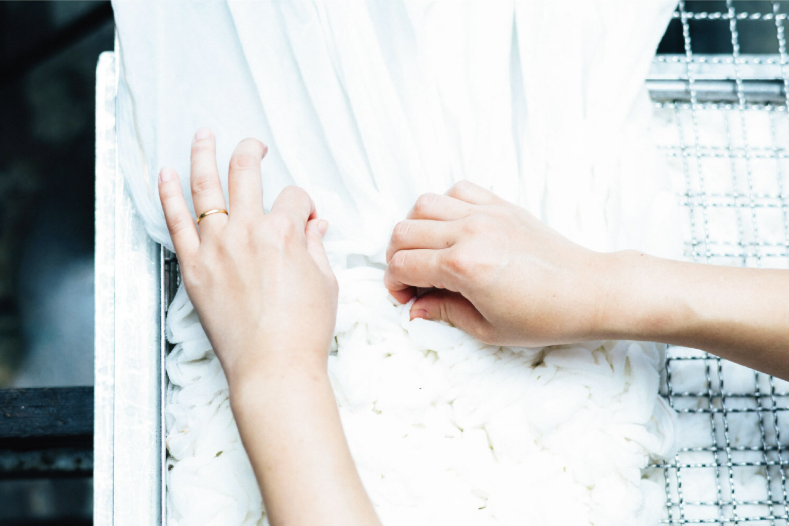
Kagozome dyeing begins with the hands. Fabric, first washed to remove oils and impurities, is gathered and packed between two specially made metal baskets, with each fold and overlap adjusted by the dyer. At this stage, the dyer anticipates how the dye will travel through the cloth and where it will be held back.
The baskets were designed and made by KIRISEN’s second-generation head, Yamazaki Sadaharu, and the technique has been carried on by the workshop ever since. While many shibori (shaped-resist dyeing) techniques bind the fabric with thread, kagozome creates its patterns through the way the fabric is gathered and pressed against itself.
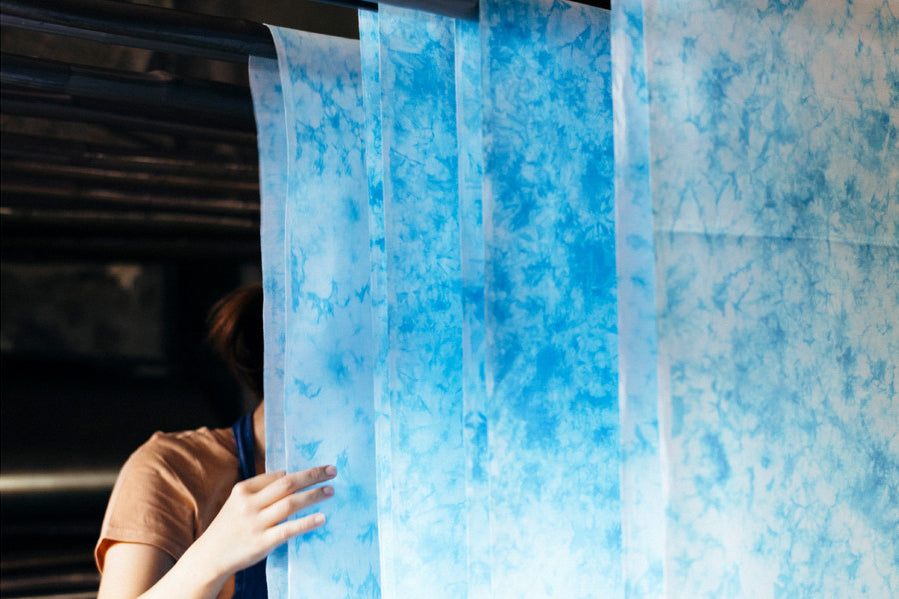
The filled baskets are then lowered into a dye bath at around 90°C (194°F) for ten to fifteen minutes, with salt added to help the dye bind to the fibers. The fabric is dyed from both sides, so each surface takes on a pattern of its own.
The results are guided by the dyer’s skill, yet never entirely predictable. Kagozome lies somewhere between intention and chance, producing organic designs reminiscent of a kaleidoscope or the cross-section of marble.
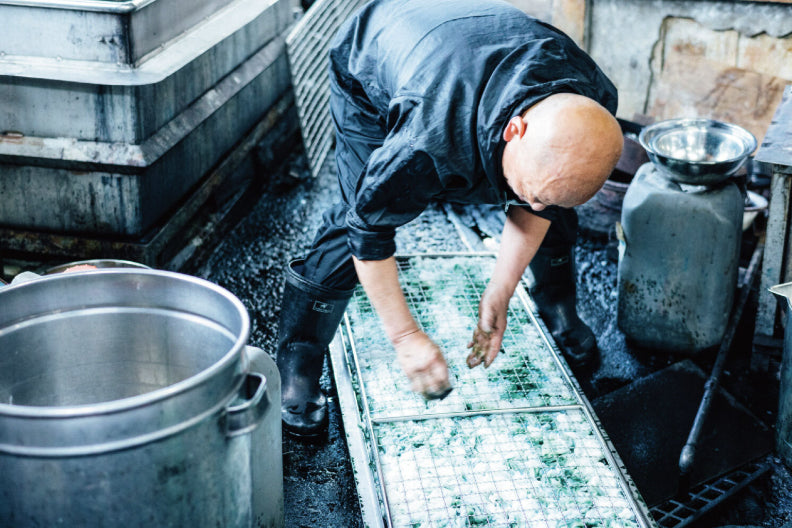
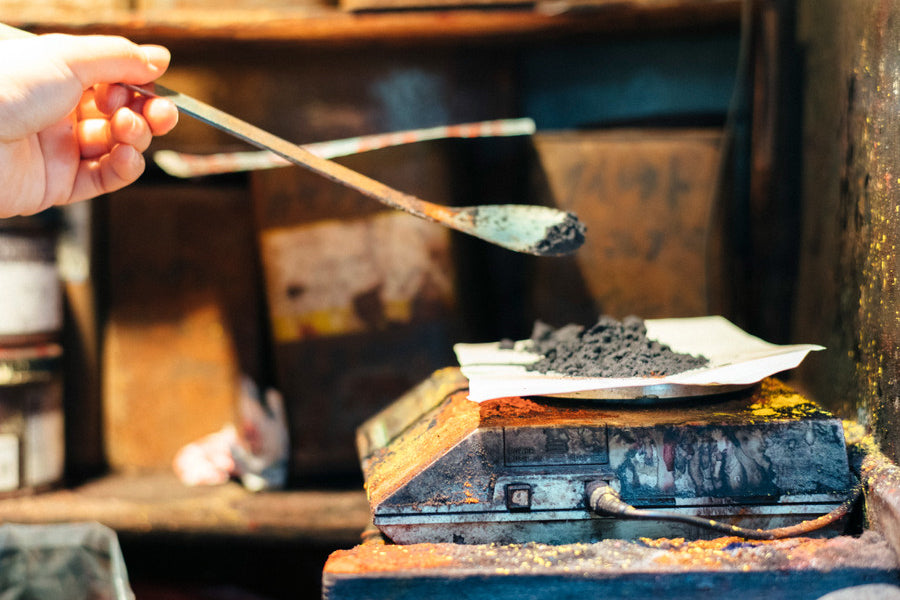
KIRISEN does not dye from a fixed set of colors, as a painter might with a box of twelve colors. Every shade is mixed from scratch, chosen from an almost limitless range of possibilities.
Ideas for new colors might come from a walk through town or in nature, or somewhere much farther away. The sea and sky of Okinawa have been a particular source of inspiration. From there, the work becomes exact. The dye is measured carefully, because a difference of even one gram can change the final shade. That balance of freedom and precision is what gives KIRISEN’s colors their character.
Filters