
Chrysanthemum Band in Gold
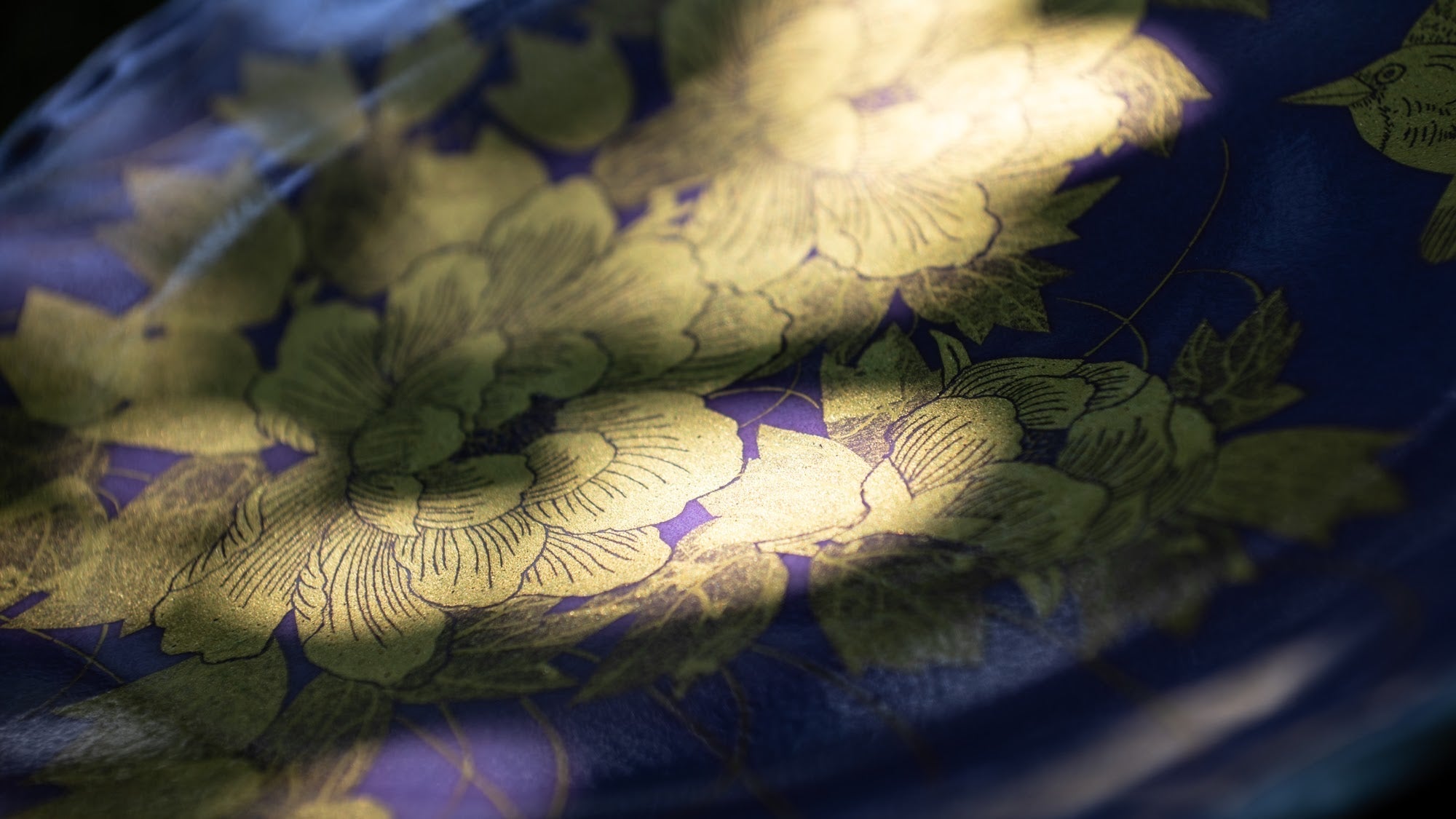
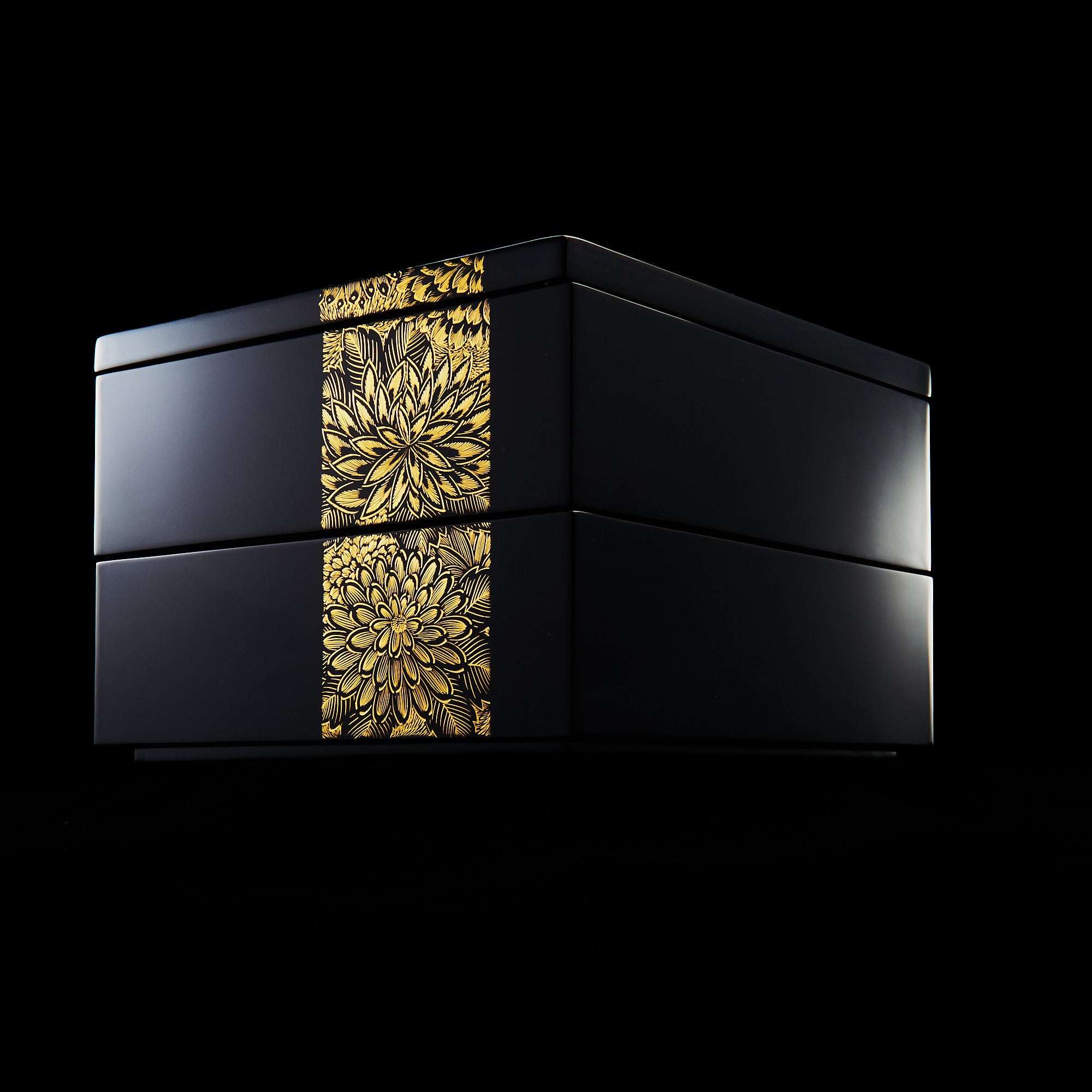
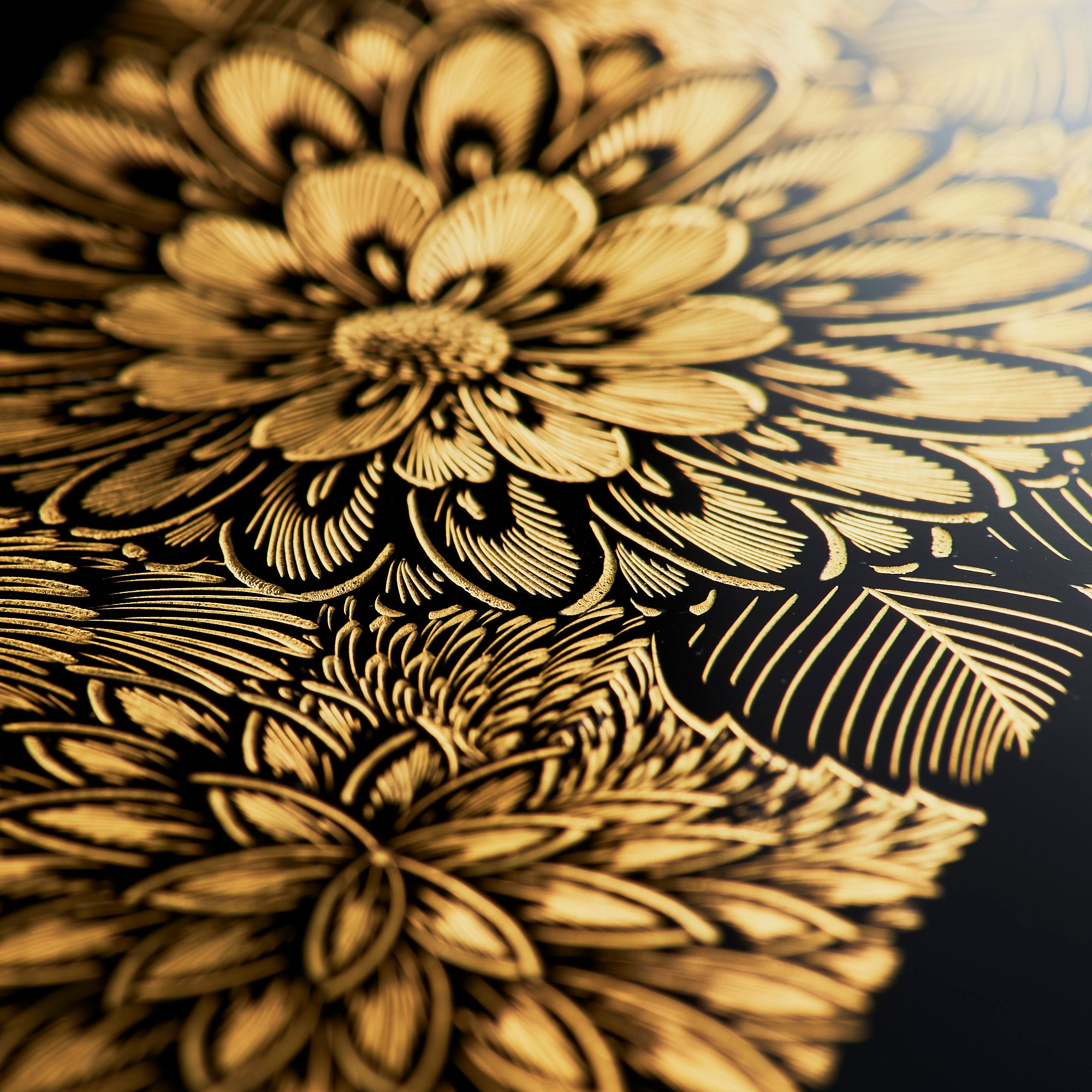
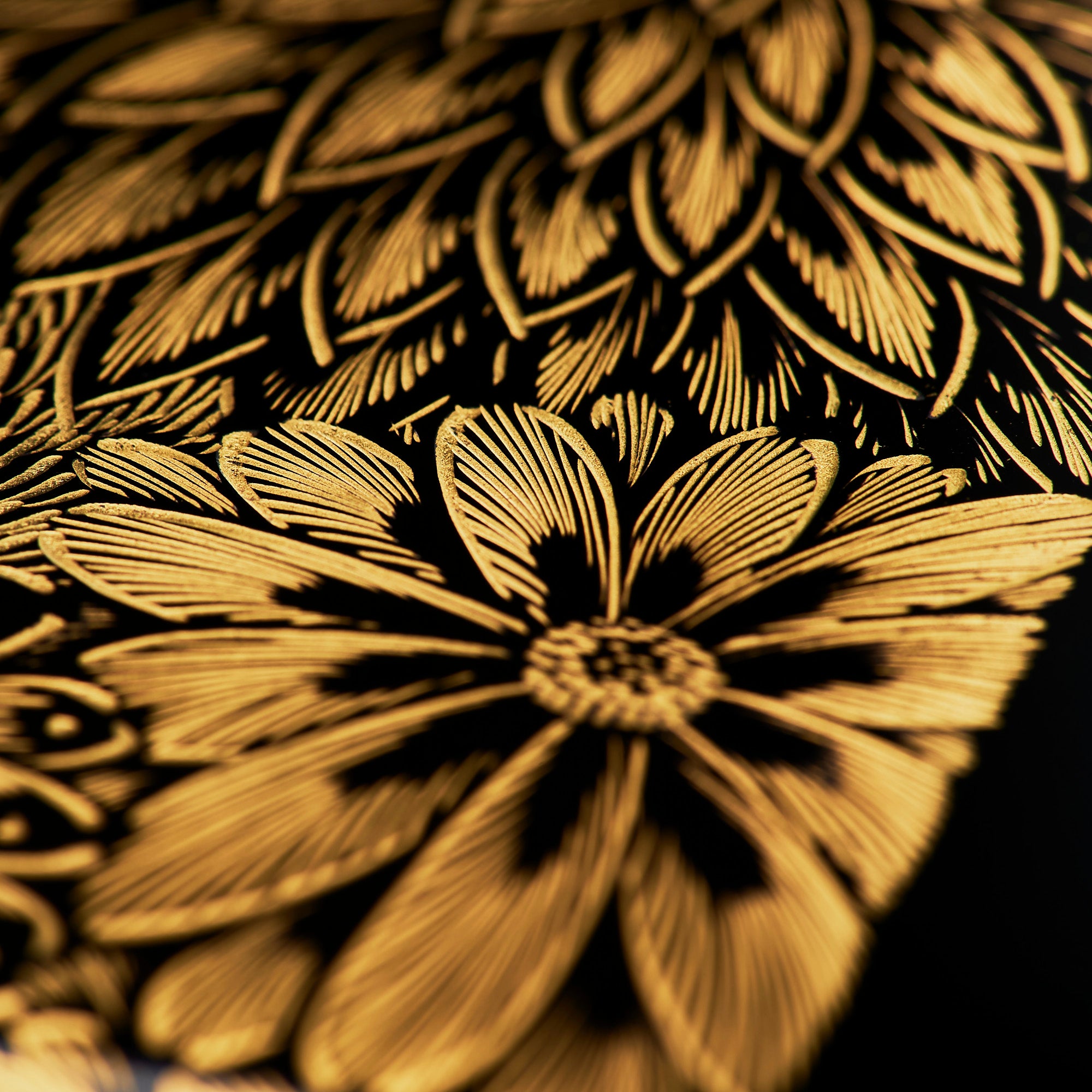
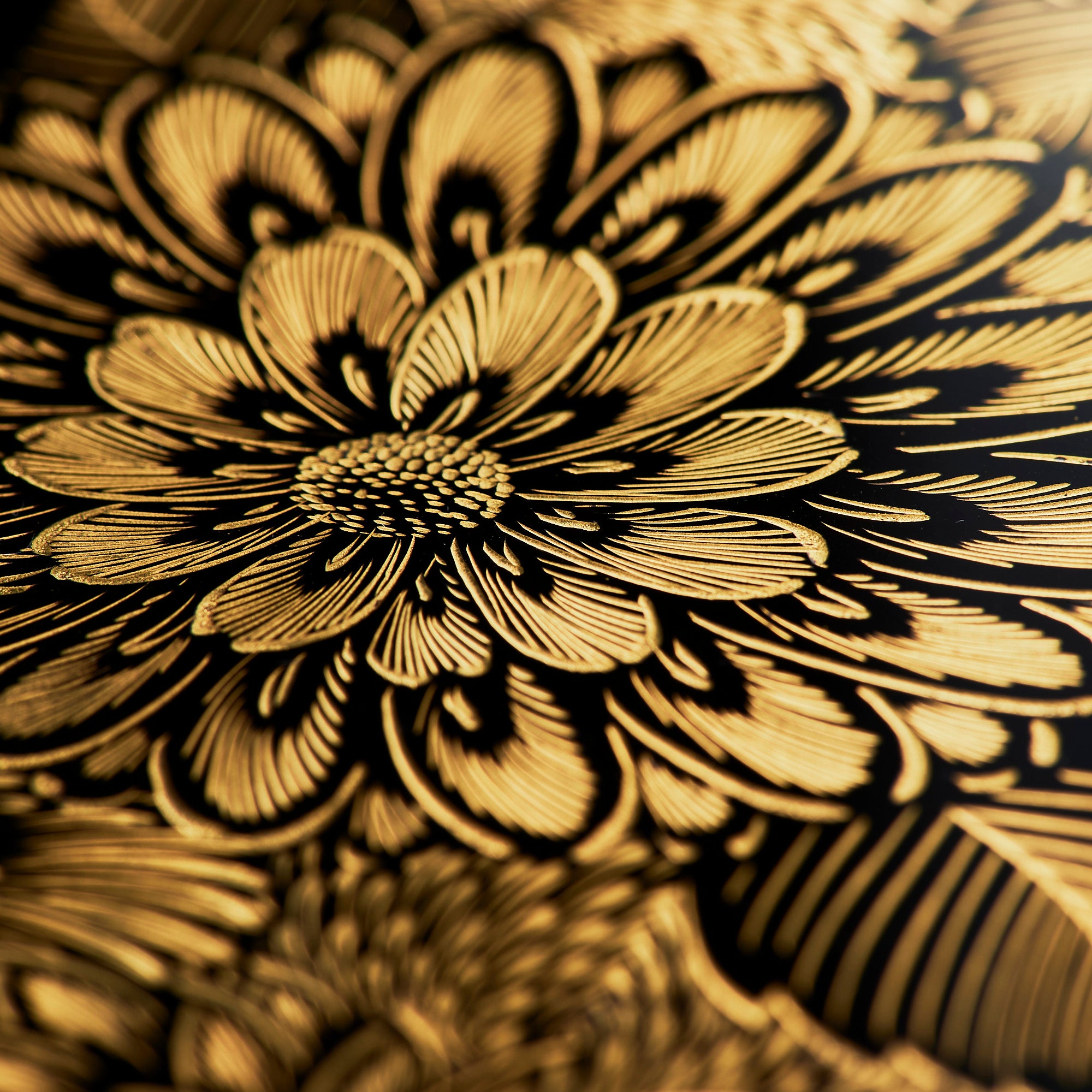
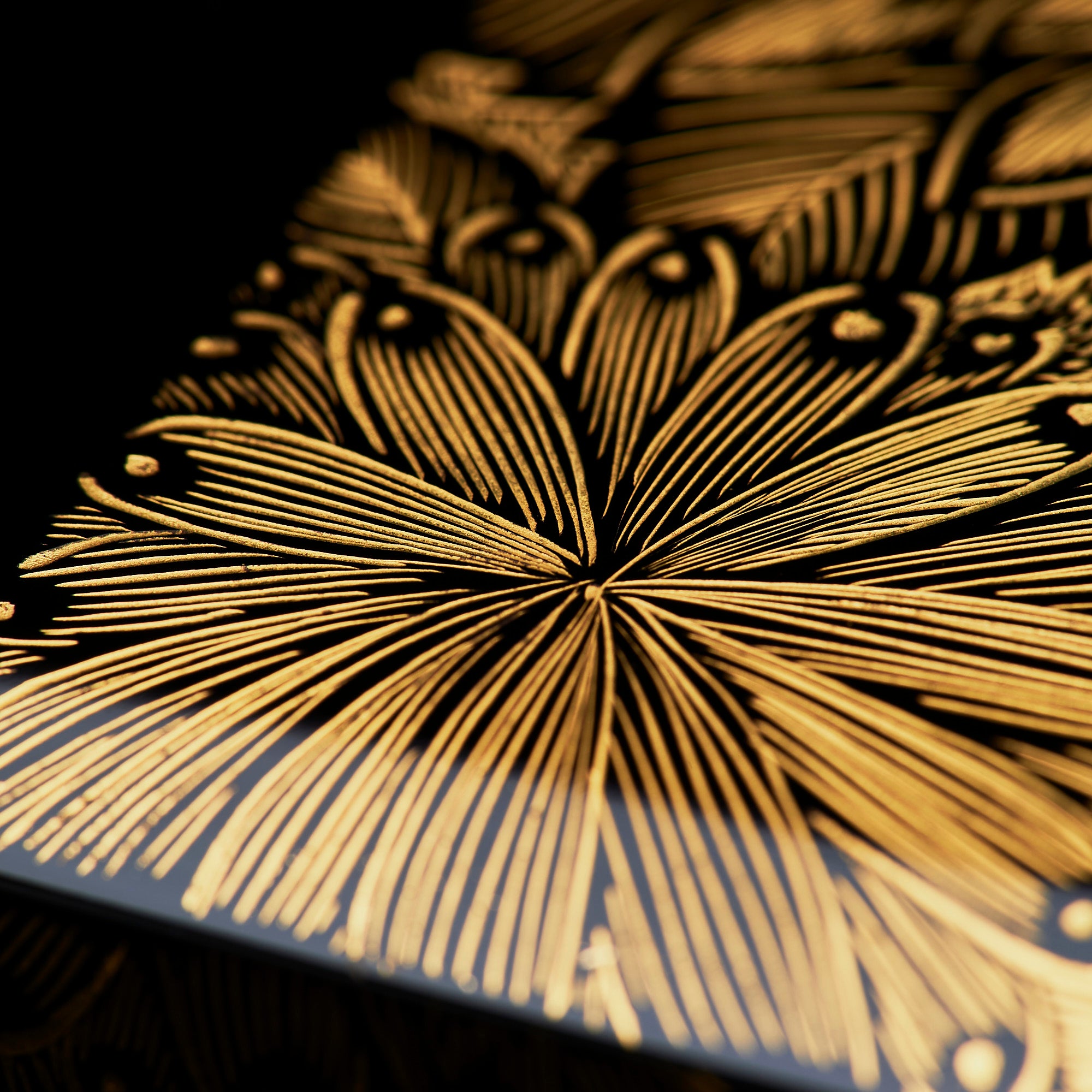
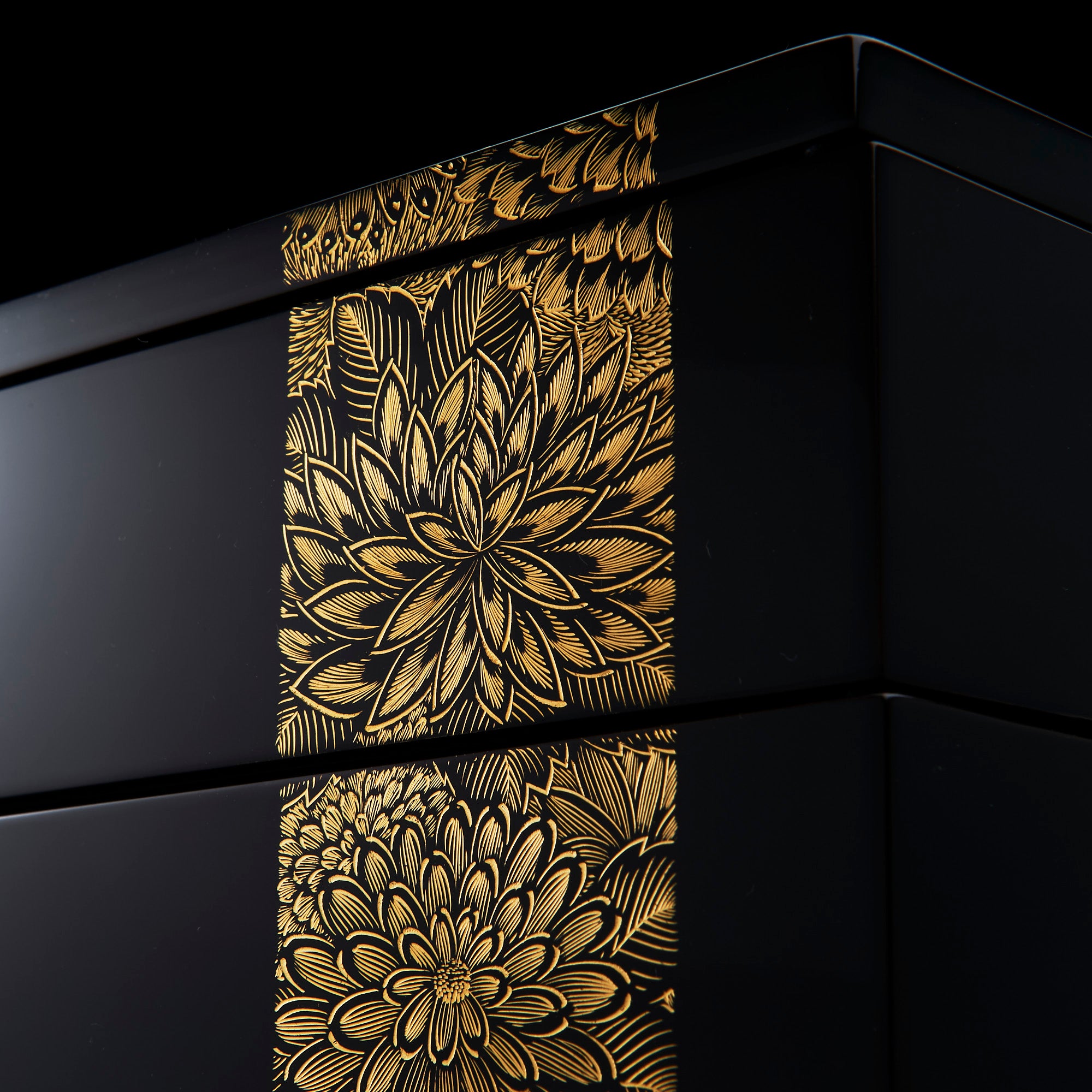
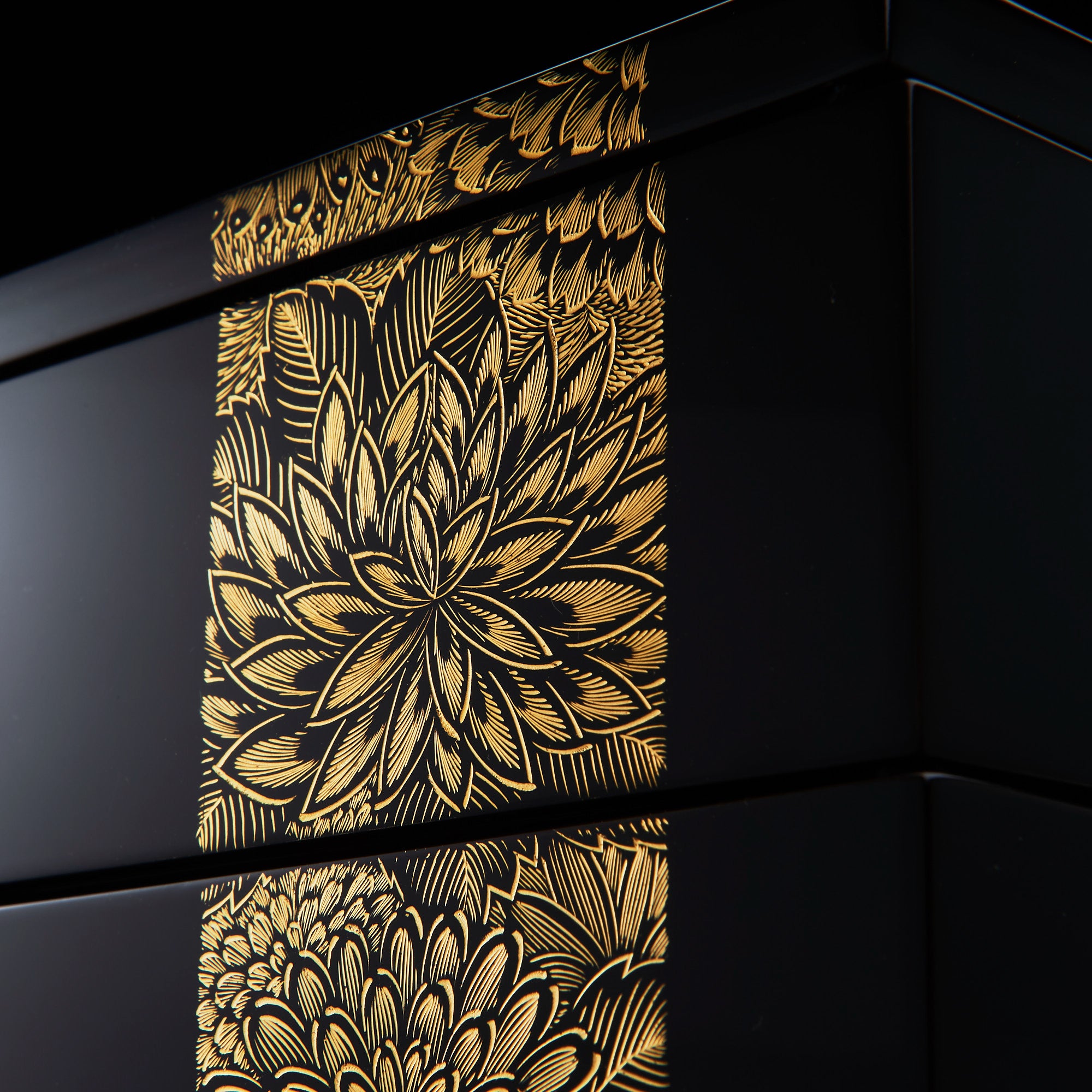
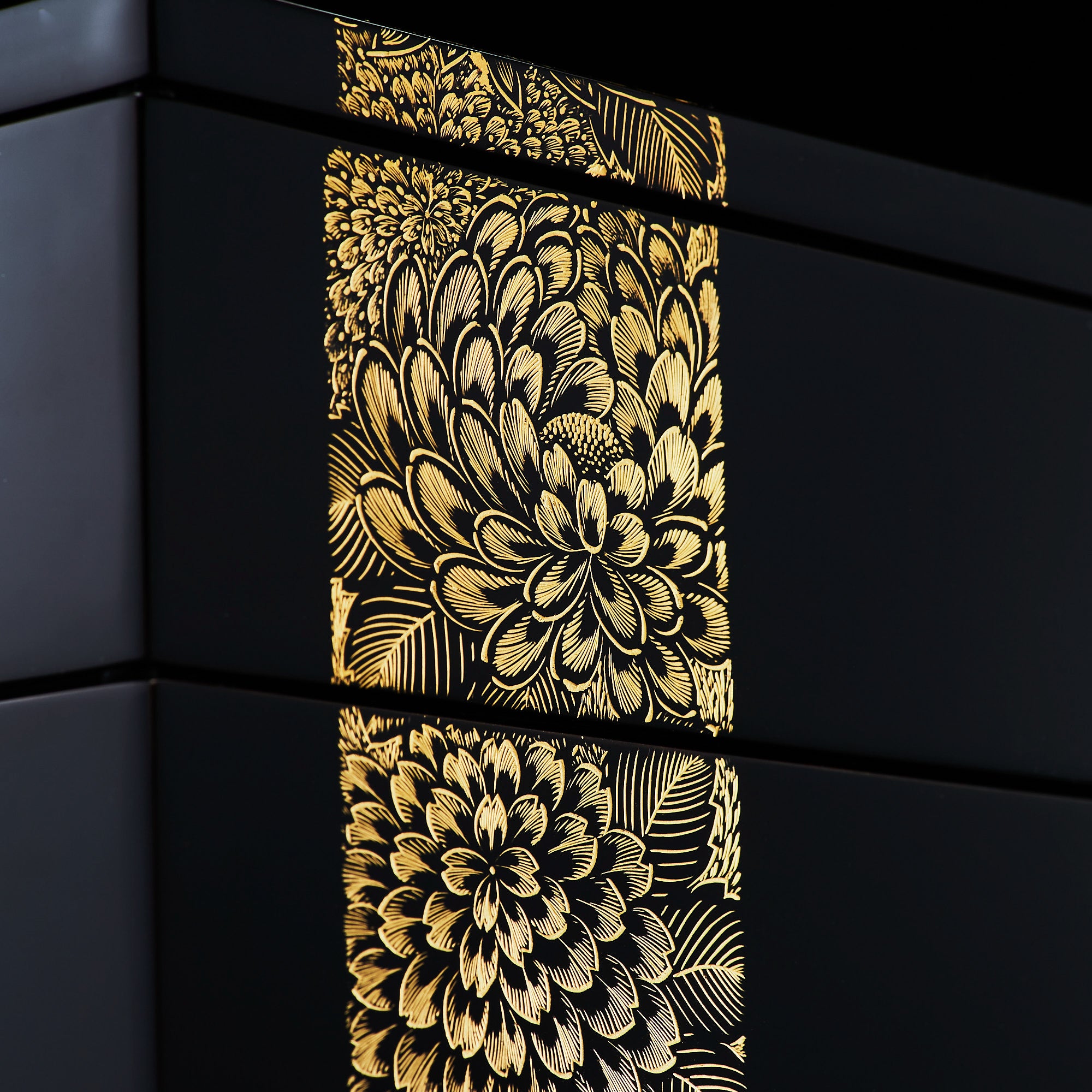
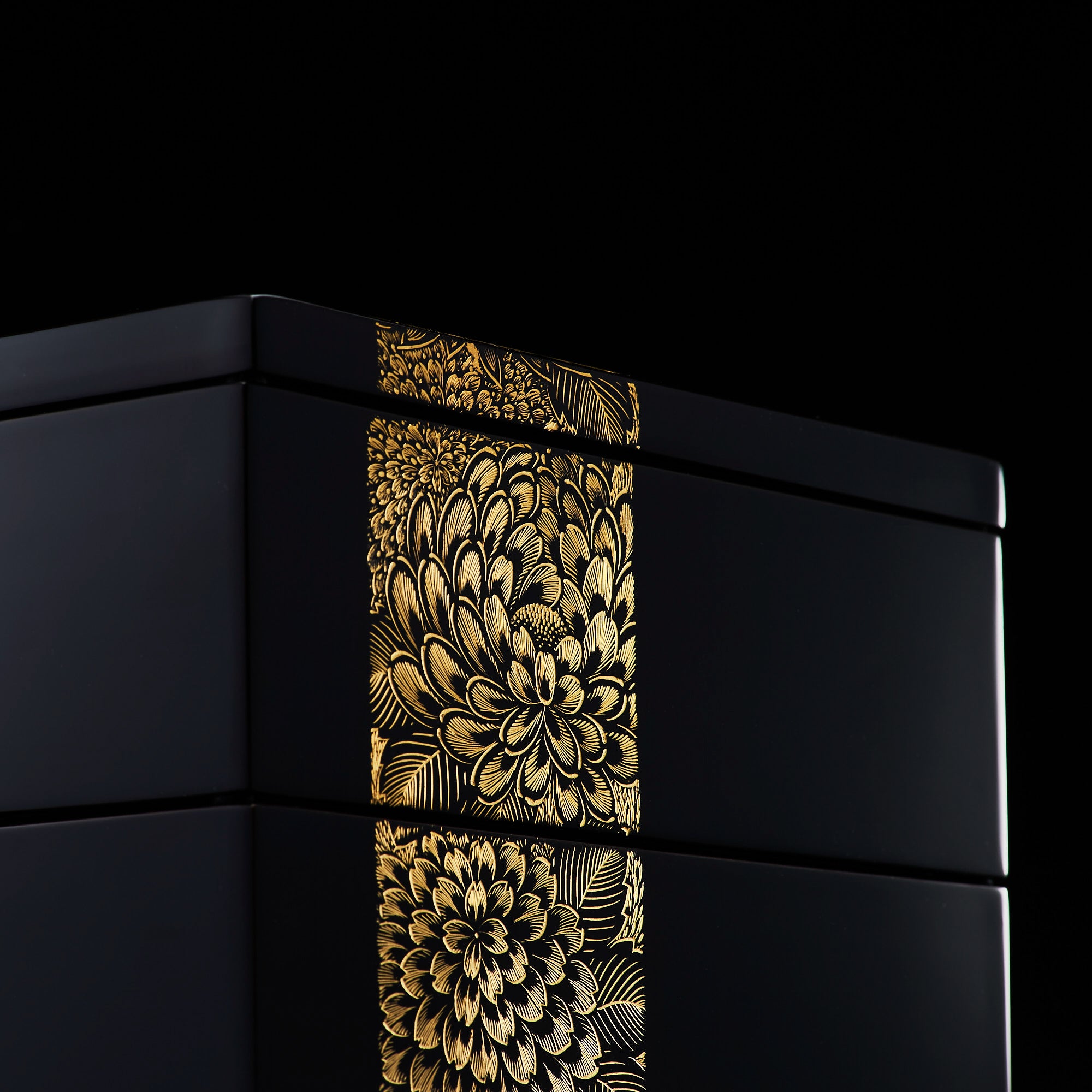
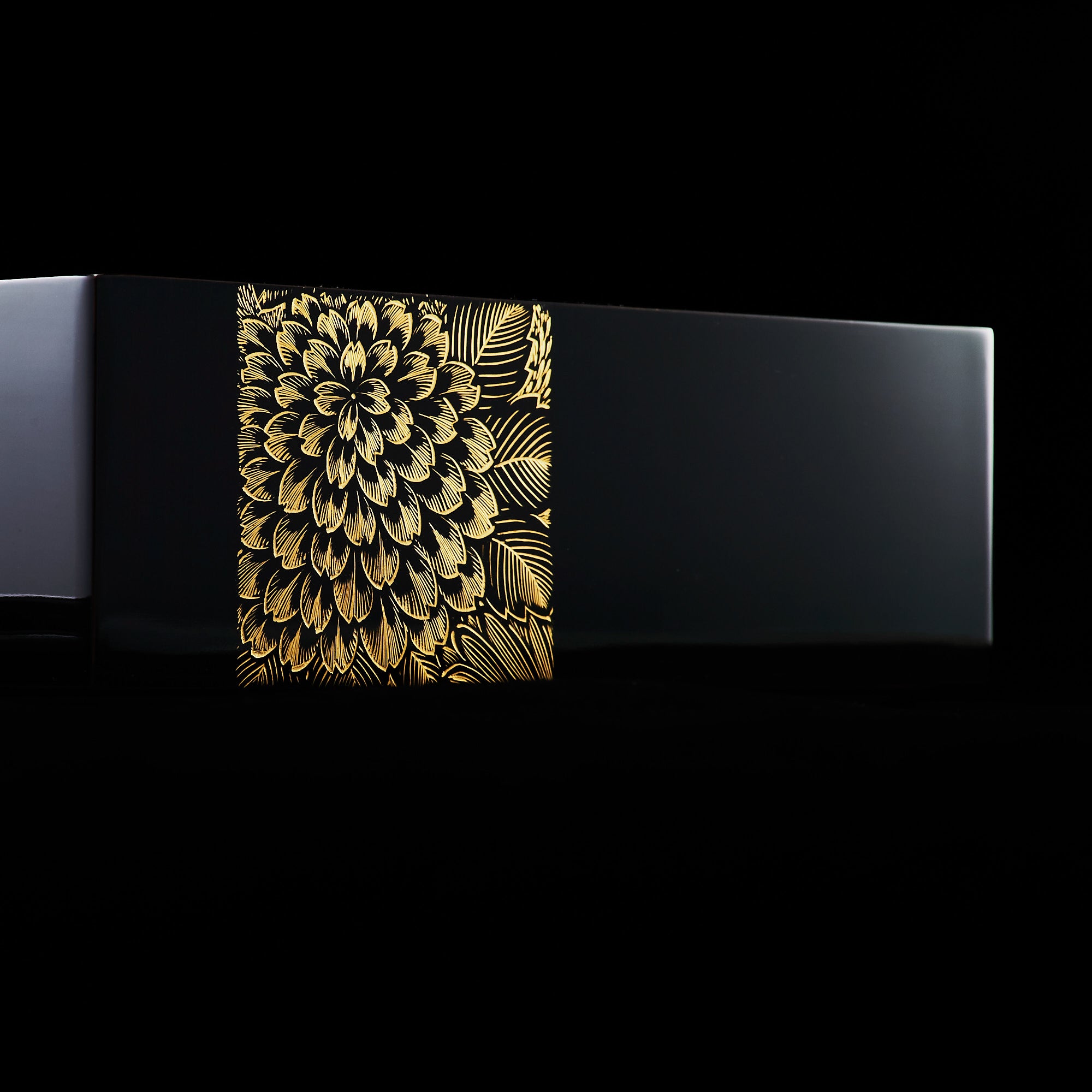
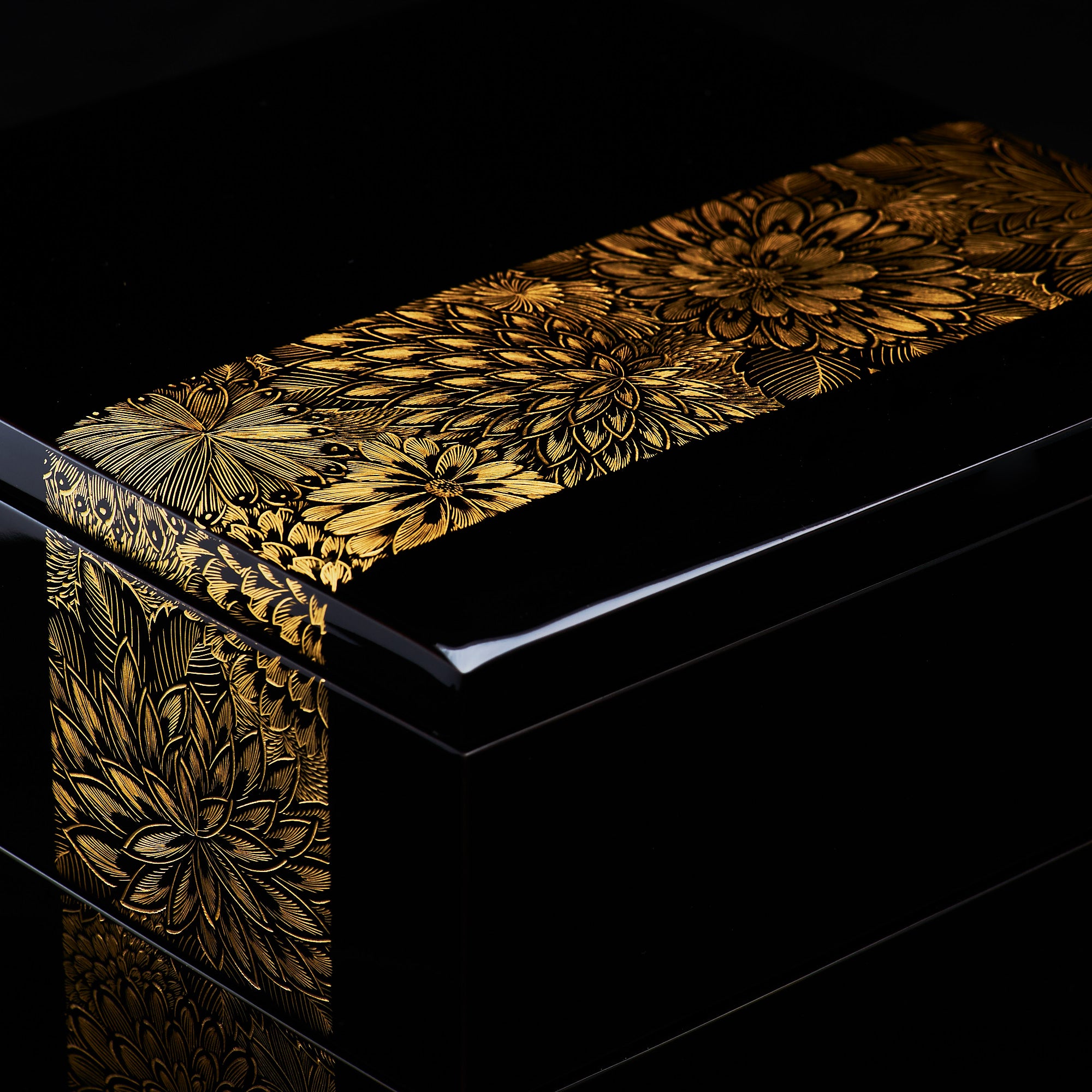
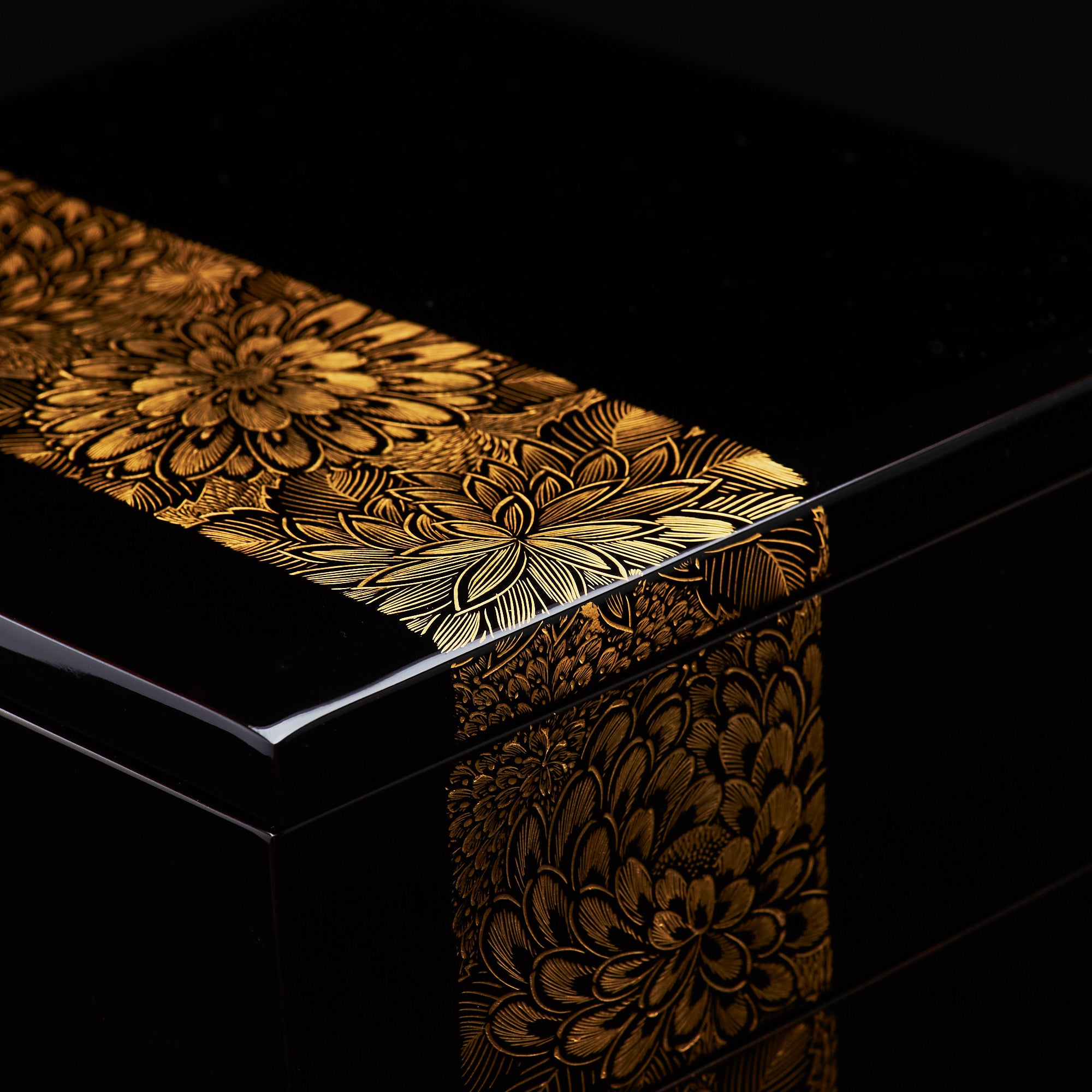
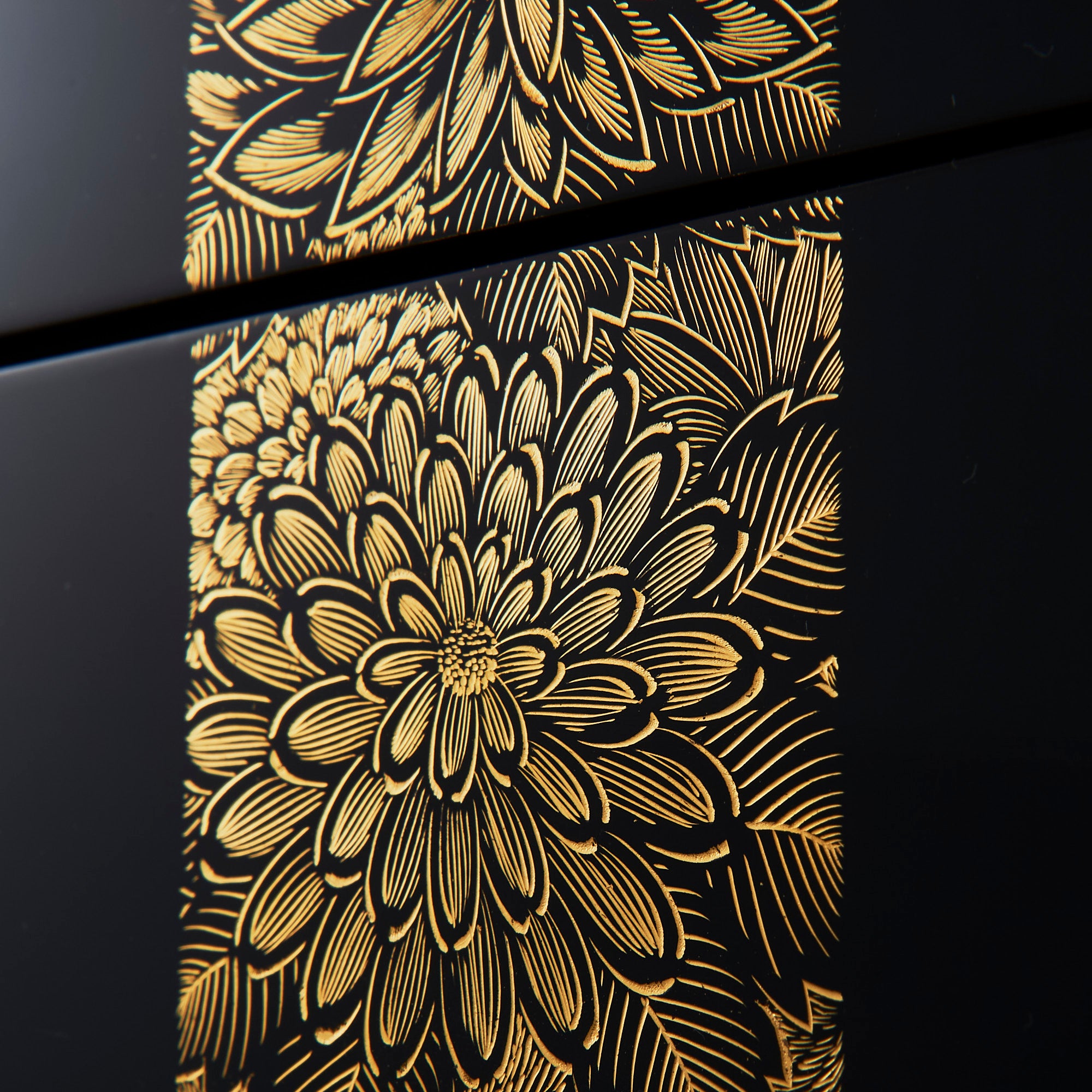
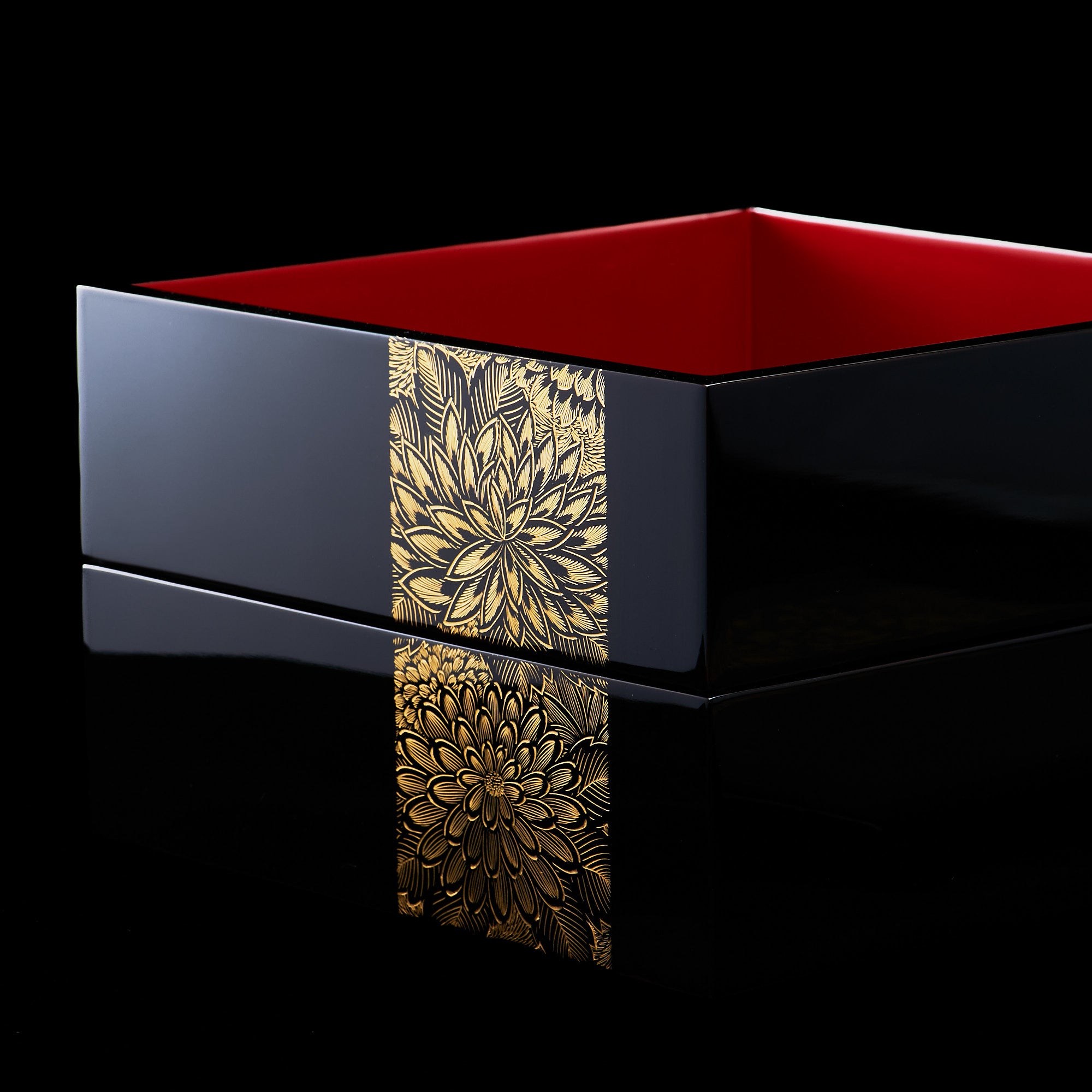
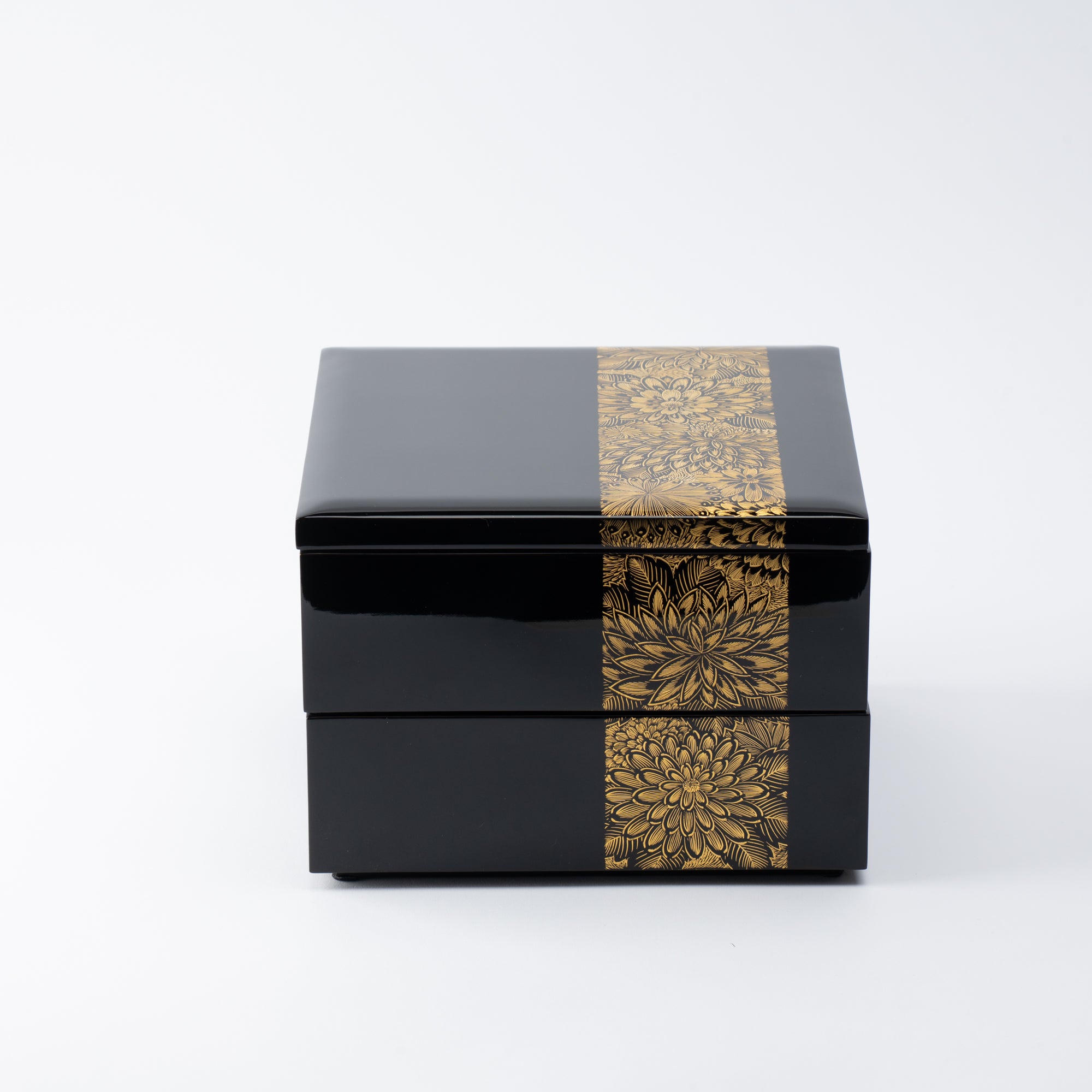
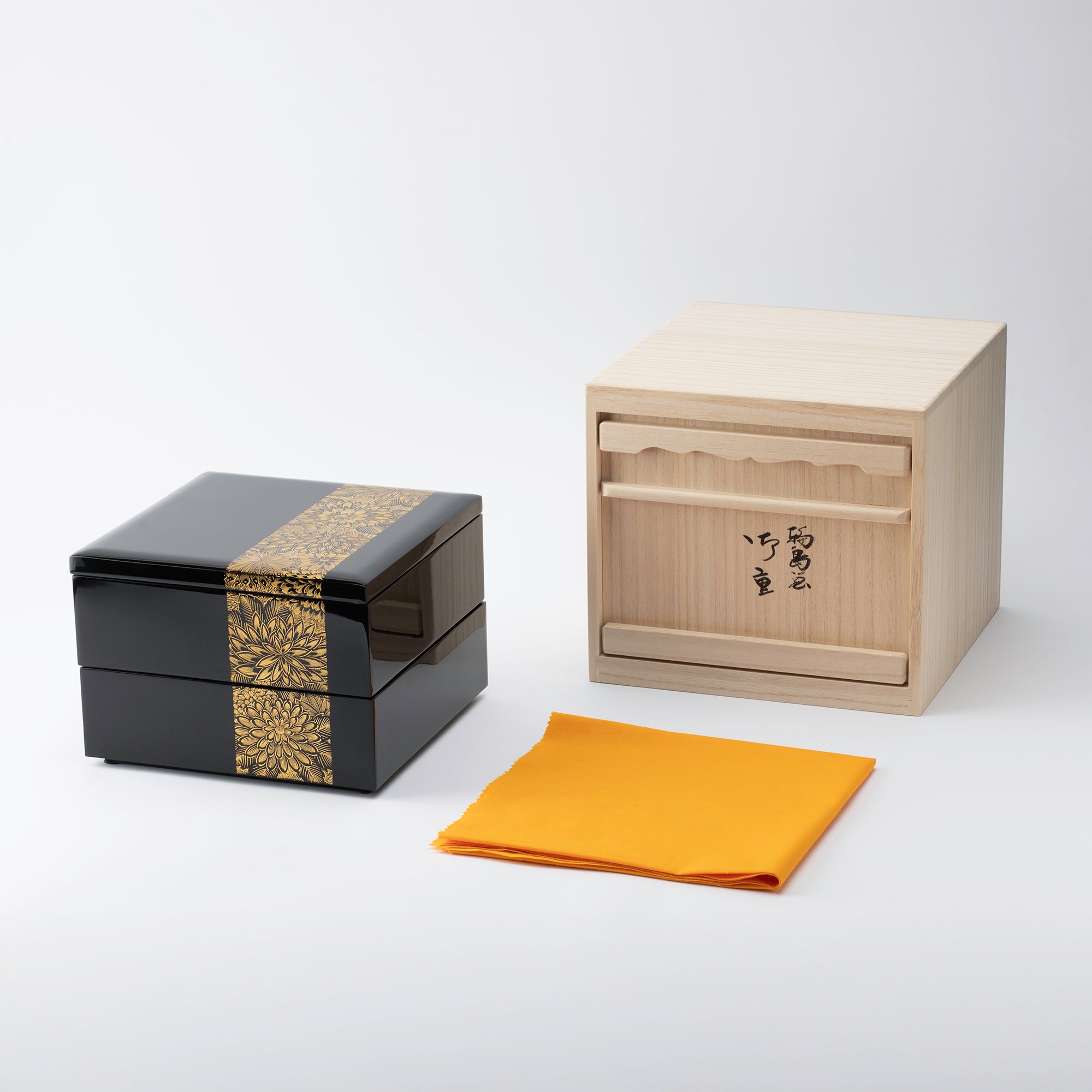
Chrysanthemums unfold across the black lacquer in a continuous band of gold. Moving along the surface, the composition brings together blossoms at different stages of bloom, each surrounded by finely worked leaves and petals.
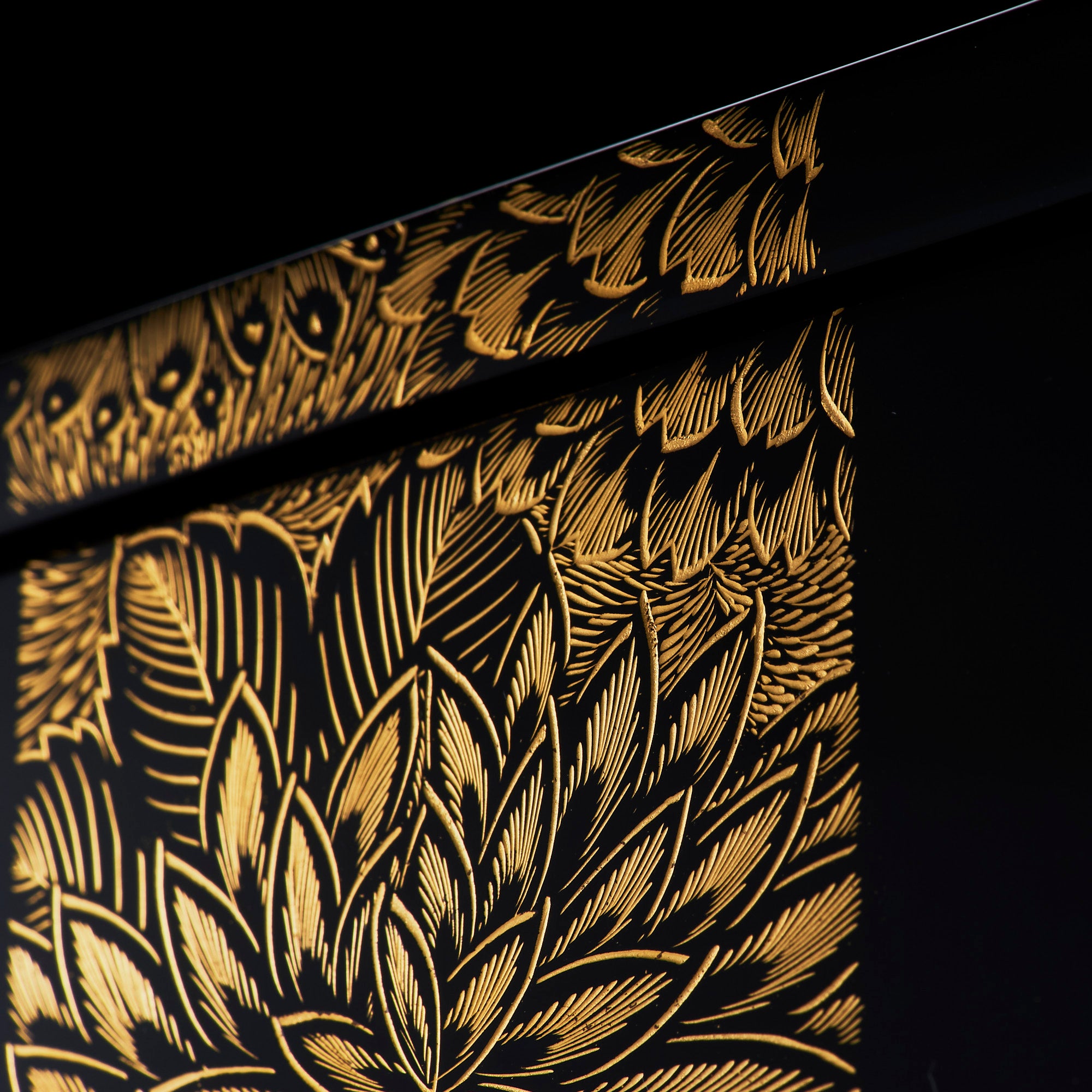
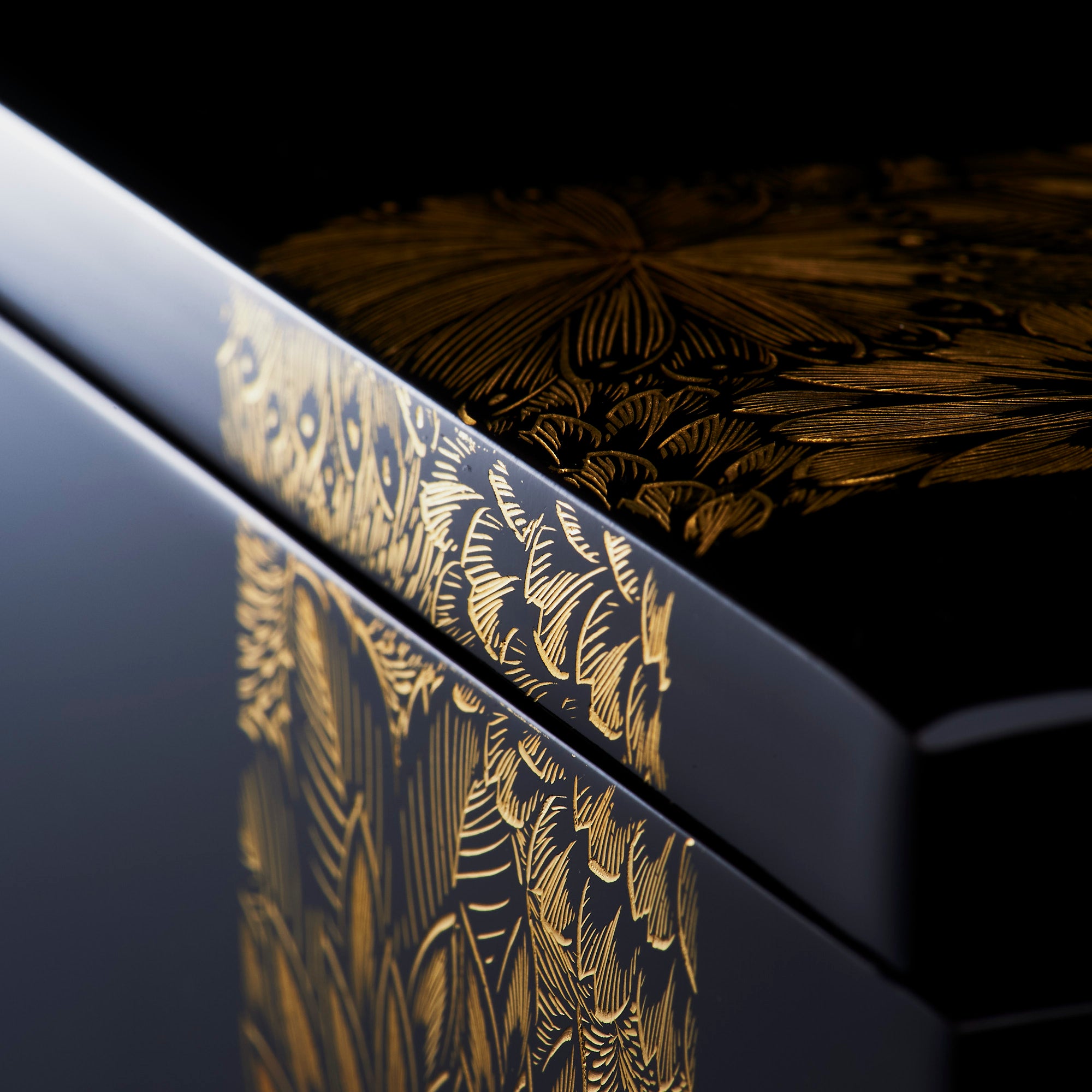
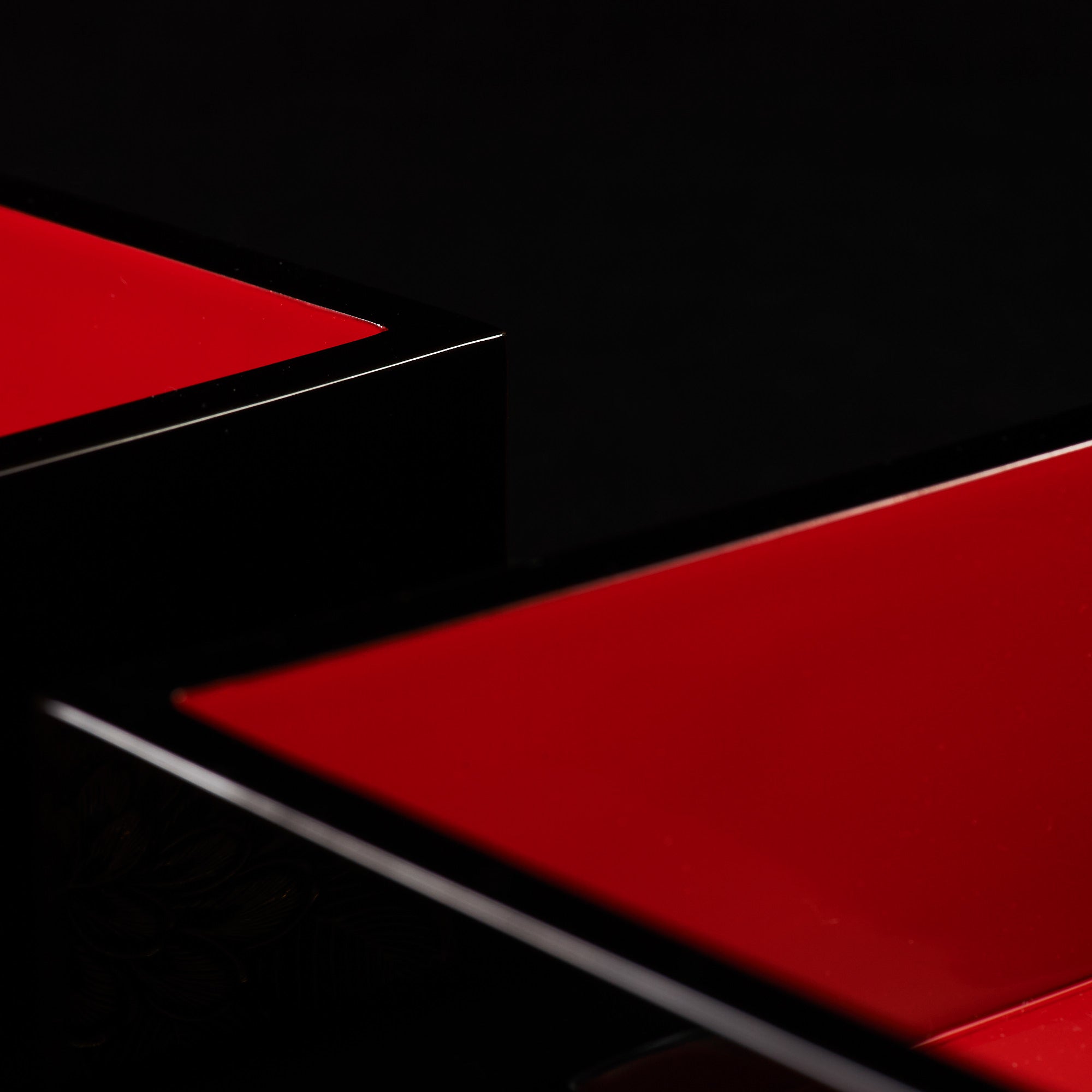
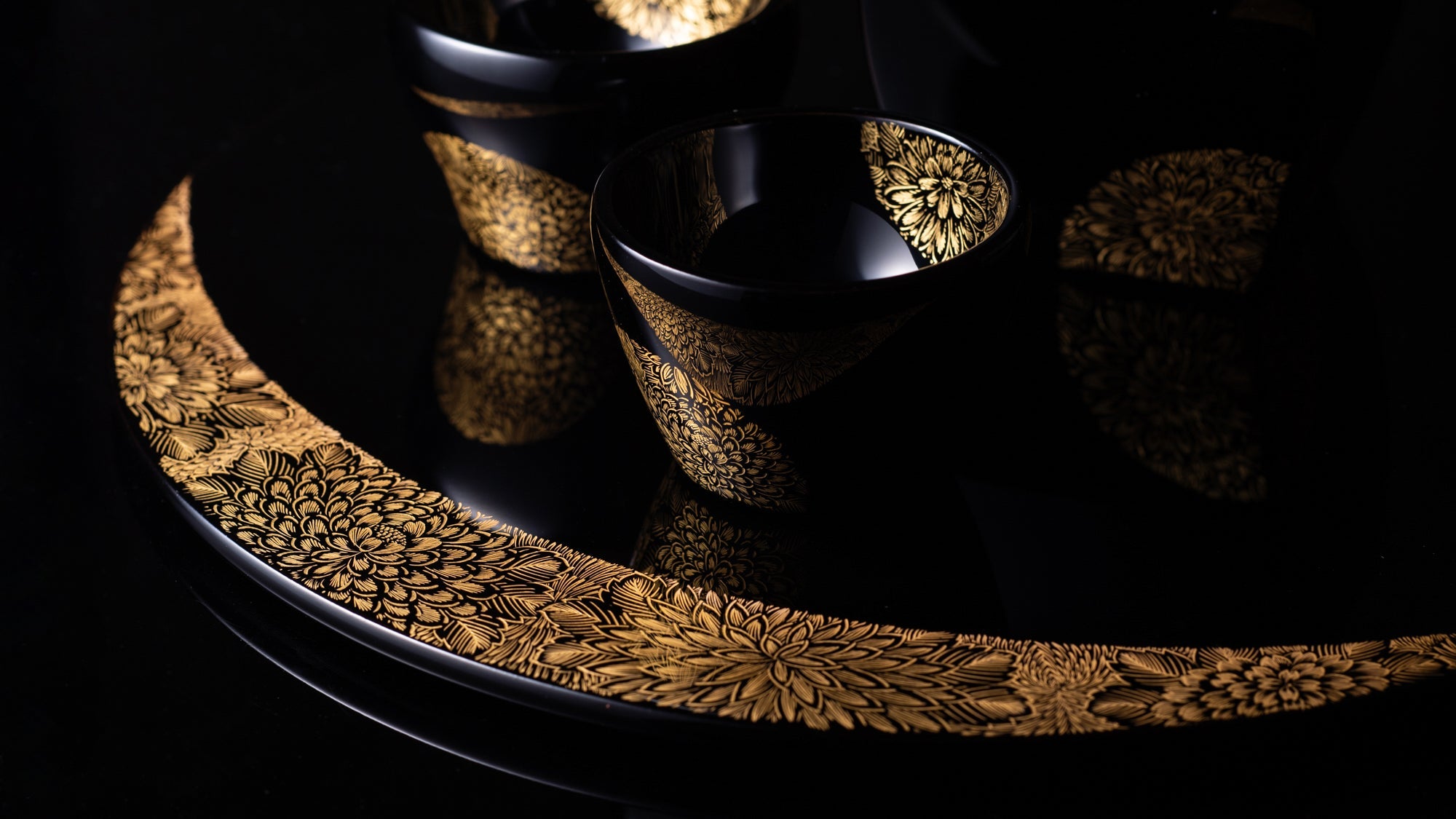
The decoration is rendered in chinkin, a technique in which designs are carved into the lacquer surface before gold leaf and gold powder are set into the incised lines. Here, Takade Eiji varies the depth, direction, and density of each cut to give definition to individual petals and leaves. The polished black surface is finished in the tradition of Wajima lacquerware, built up through successive layers of lacquer before the chinkin decoration is applied. Against this deep black, the gold reveals the intricacy of the carving with striking clarity.
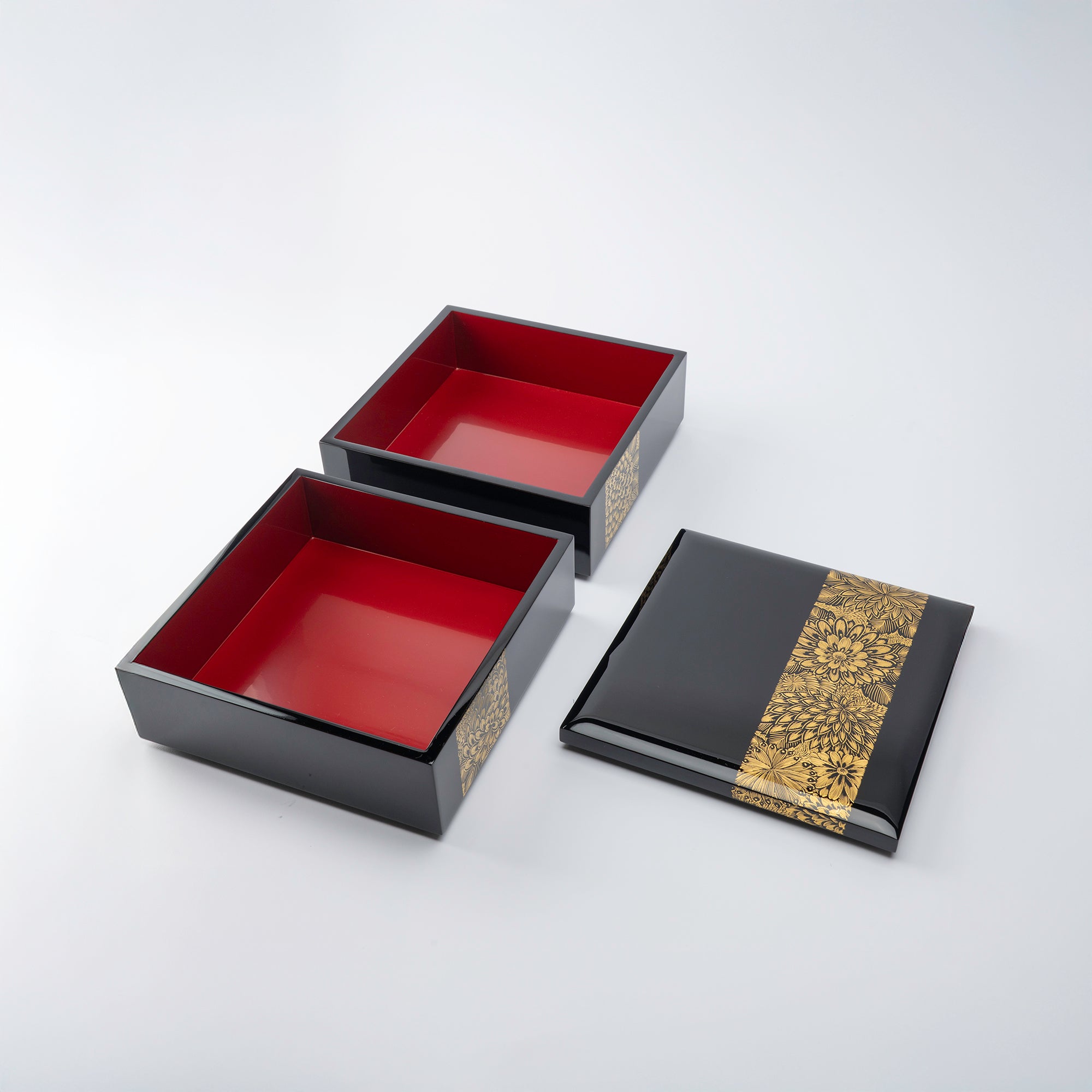
Rather than treating each section separately, the band continues vertically across the stacked form. Individual flowers are framed within each section, yet together they form a single composition, linking the surfaces through one uninterrupted field of chrysanthemums.
DETAILS
| Quantity | 1 |
| Size |
[Whole set] L 21.3 cm (8.4 in) x W 21.3 cm (8.4 in) x H 15.0 cm (5.9 in) Internal Dimensions [Each tier] L 19.5 cm (7.7 in) x W 19.5 cm (7.7 in) x H 5.5 cm (2.2 in) |
| Weight | approx. 2.9 lb (1.3 kg) |
| Material | Wood Coating: Lacquer |
| Package Type | Wooden box |
Maker / Brand
Upon the pristine surface of Wajima lacquerware, master craftsman Takade Eiji carves a world of gold with the precise strokes of his many chisels. For over fifty years, he has dedicated himself to chinkin, a meticulous craft that embellishes lacquerware with finely carved lines and dots inlaid with gold. This artistry adds a layer of refinement and intricacy. His works reveal a lifetime of skill, patience, and unwavering dedication, yet Takade remains a humble craftsman, focused solely on bringing each piece to its rightful completion.
Crafts
Wajima lacquerware, one of Japan's most esteemed lacquerwares, finds its home in Wajima City, nestled in the northwest corner of the Noto Peninsula. This illustrious craft, flourishing since the Edo period (1603 CE–1868 CE), is distinguished by its rich foundation and decorative embellishments that promise both aesthetic and functional excellence.
With an astounding number of steps in its production process, its sumptuous lacquer coat and exquisite decorations draw one into the mesmerizing world of Wajima artistry. Honored as an Important Intangible Cultural Property in 1975, Wajima lacquerware gracefully continues its evolution while maintaining the rich tapestry of its ancient traditions.
How to Care
Notes
Choose options
About Artist
Musubi Gallery
Since its inception, MUSUBI KILN has strived to introduce the world to the finest traditional crafts from masters all around Japan.
Here, in the Gallery, we seek to showcase the highest echelon of traditional techniques passed down through generations. You can discover works from masters who have not only perfected those methods, but added their imagination to innovate the craft even further.
Some of these masters have even been named Holder of Important Intangible Cultural Heritage, a title bestowed upon them by the Japanese government to formally recognize their contribution to crafts and culture—thereby cementing their legacy and making them an important part of art history.
Each piece is meticulously handcrafted over many months to create a timeless treasure that's unlike any other. And when it's in your home, you, too, will become part of that history.
Welcome to the Gallery. Please, peruse at your leisure.