

Hiyaoroshi: Sake Rested Through the Summer
Explore why sake rested through summer tastes rounder in autumn, and the stoneware sake ware that suits it.
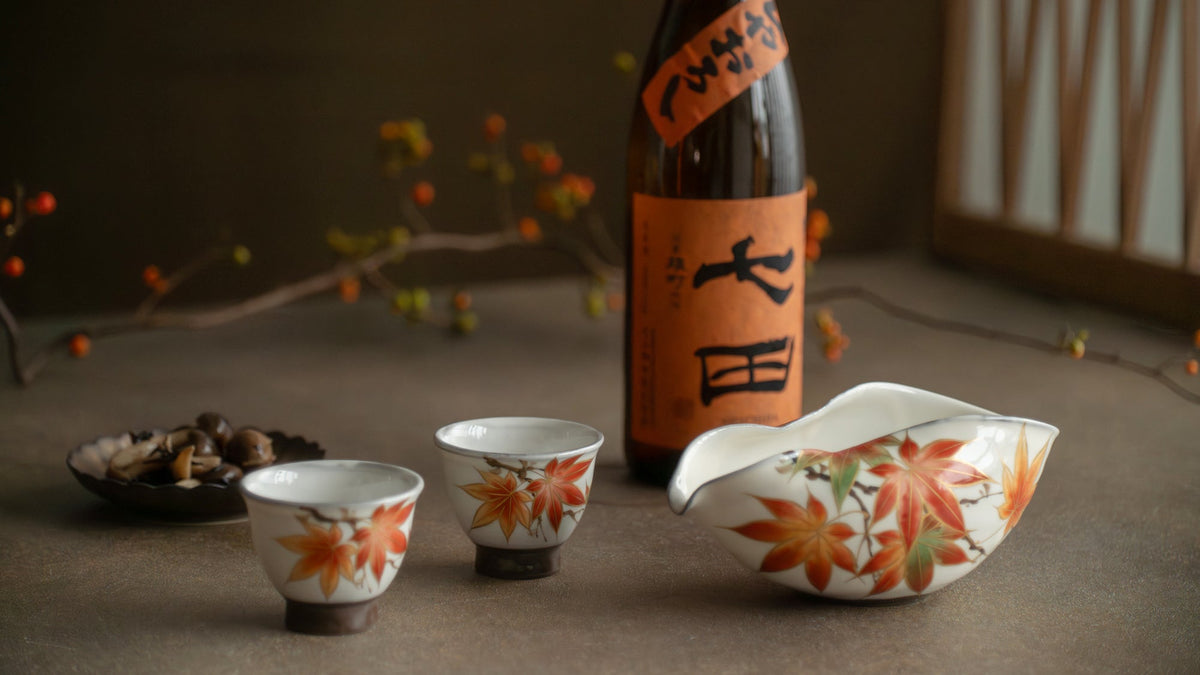
As autumn begins and cooler breezes arrive, bottles labeled hiyaoroshi start appearing on the shelves of sake shops across Japan. Absent during the summer, this seasonal sake is available only at this time of year.
Hiyaoroshi is sake brewed from winter through spring, then stored at the brewery to mature over the summer. During those months, the brewer waits as time gradually changes its flavor.
So what happens to sake after a summer of waiting? Here, we look at hiyaoroshi, a sake made for autumn, and the sake ware that pairs well with its rounded, umami-rich flavors.
What Is Hiyaoroshi?

Hiyaoroshi is a seasonal sake released in autumn. Brewed from winter through spring, it spends the warmer months maturing at the brewery before appearing in shops from around September through November.
One of the defining features of hiyaoroshi is the number of times it undergoes hi-ire, or pasteurization. Hi-ire is the process of heating finished sake to around 60°C (140°F) to stabilize it and help preserve its quality over time.
Most sake undergoes hi-ire twice: once soon after brewing and again just before shipment. Hiyaoroshi, however, traditionally undergoes the process only once, soon after it is made. Compared with sake pasteurized twice, the changes brought about by aging over the summer are more apparent.
The name “hiyaoroshi” comes from the time when the sake has matured and is ready to drink. In sake terminology, hiya refers to room temperature, while oroshi refers to releasing or shipping sake from the brewery.
During summer, the inside of the brewery remains cooler than the air outside. As the weather cools in autumn, the temperatures inside and outside draw closer. Once it becomes cool enough, the sake is ready to be shipped at room temperature—hiya—and released from the brewery—oroshi. This is where the name “hiyaoroshi” comes from.
The Flavors of Hiyaoroshi

Sake takes on different flavors with the seasons. Winter brings freshly pressed shiboritate, followed by haruzake in the spring, natsuzake in the summer, and hiyaoroshi in autumn.
Shiboritate is known for its fresh, lively taste and expressive aroma. Over the course of a summer, that sake is allowed to mature slowly at the brewery.
As it ages, the sharper edges of the young sake begin to soften, giving it a softer, smoother taste. Its umami becomes more pronounced, and the finish lingers longer.
The sake continues to develop slowly in the bottle throughout autumn. In September, while the summer heat still lingers, hiyaoroshi may retain some of its youthful freshness. By October and November, its flavors become rounder and deeper, sometimes undergoing a surprising change in just a few months.
With its pronounced umami, hiyaoroshi pairs particularly well with autumn ingredients.

One example is sanma, or Pacific saury. Salt-grilled sanma served with grated daikon and sudachi citrus is one of Japan’s classic autumn dishes. The rich taste of the fatty fish pairs well with the depth of hiyaoroshi that has spent the summer aging.
Mushrooms are another representative ingredient of the season. Grilled shiitake, matsutake cooked with rice, and maitake tempura are full of aroma and savory flavor, making them a natural match for hiyaoroshi.
How to Enjoy Hiyaoroshi

While summer sake is often served chilled, hiyaoroshi is well suited to room temperature or nurukan, sake warmed to around 40°C (104°F). Raising the temperature brings out aromas that are less apparent when the sake is cold and allows the umami developed during aging to come through more fully.
Sake served at these temperatures pairs well with different vessels from those used in summer. Glass and porcelain sake ware suit chilled summer sake, both in their appearance and in the cool sensation they offer when held.
For hiyaoroshi, which is often enjoyed warm, stoneware sake ware is a good match. The warmth of the sake passes gradually through the vessel into the hands, while the thickness of the clay can be felt at the rim. These qualities pair well with the taste of hiyaoroshi. The ash gray, dark brown, and other subdued colors often found in stoneware fit naturally into the autumn and early winter table.

For warming sake, a chirori is another good choice. A chirori is a cylindrical metal container with a handle and pouring spout, commonly made from tin or copper. Sake is poured inside, and the vessel is then placed in a pot of hot water. Because metal conducts heat well, the sake warms quickly and evenly.
The Wait Behind an Autumn Sake

What makes hiyaoroshi special is the depth and mellowness it develops through months of aging. The time spent waiting through an entire summer makes opening a bottle in autumn feel all the more special.
Just as sake changes with the seasons, the vessels used to enjoy it have their own seasonal place. With the arrival of autumn, the cool-looking glass sake ware used in summer can be put away and replaced with stoneware pieces that carry warmth to the hands. Even this simple change marks the shift from summer to autumn during an everyday evening drink.
This autumn, choose a bottle of hiyaoroshi and try changing the sake ware along with it.
Stay close to the craft
Now and then, a quiet letter — new stories, seasonal notes, and the hands behind the work.
What is Japanese Sake? A Comprehensive Guide
Discover the history, brewing process, and types of Japanese sake. Learn how to enjoy…
Hirata Paku Kayoko
Guide to Japanese Sake Items
Explore traditional Japanese sake cups and carafes, their unique forms, and how to enjoy…
Summer Sake Guide: Why Japanese Sake Shines in the Heat
A guide to natsuzake, Japan's newest sake season, and three ways to enjoy it…
Leave a comment