

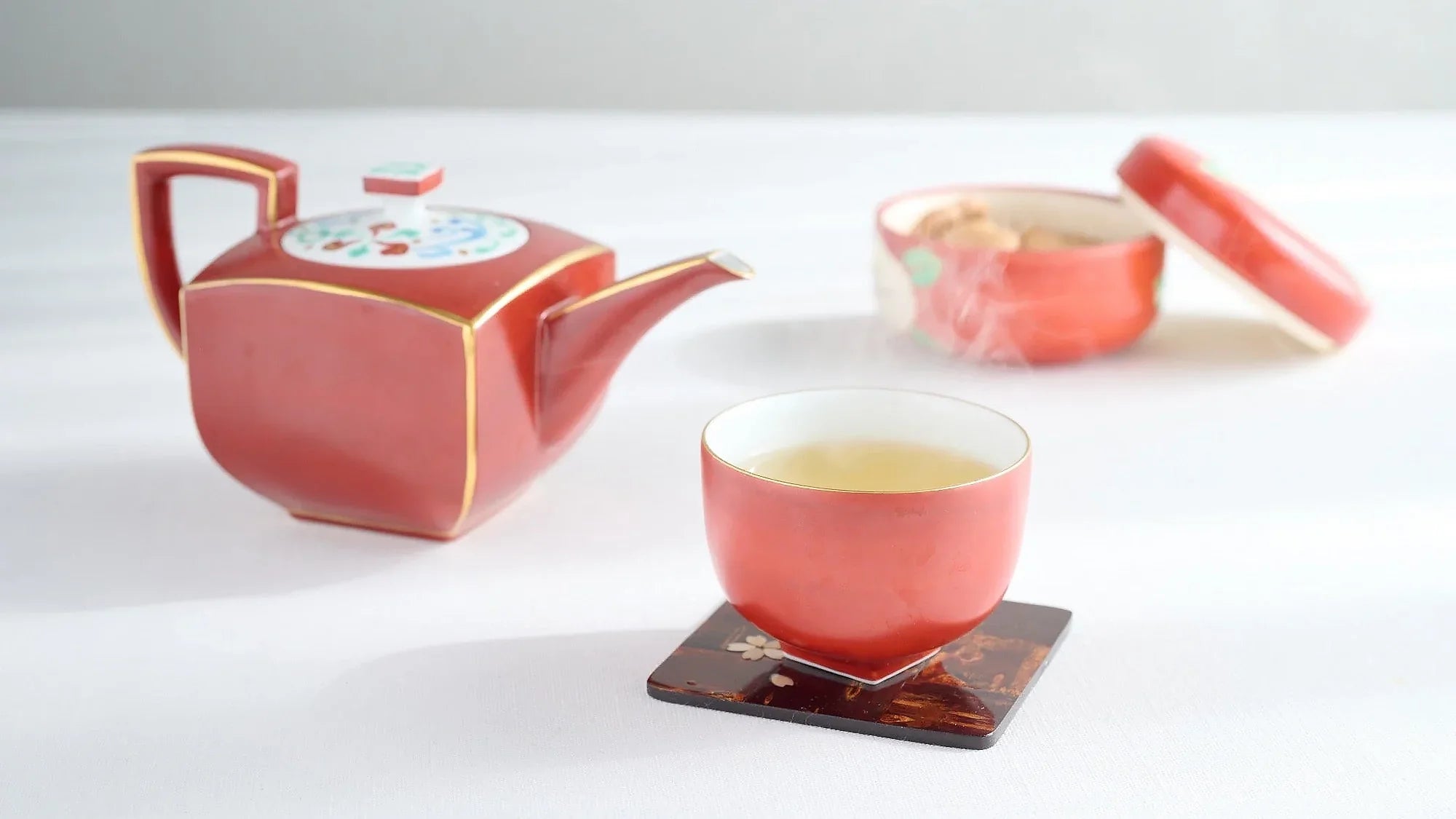
Stay Warm with Traditional Japanese Hot Drinks
What could be more delightful than savoring a delicious hot drink in the comfort of your home instead of braving the cold for your usual latte to go? Japan offers a wide variety of beverages that warm you from the inside out, many of which also provide wonderful health benefits.
Here, we introduce six hot Japanese drinks that gently warm both the body and the heart.
Japanese Green Tea


Japanese green tea is known for its fragrant aroma and vibrant green color. It brings a refreshing lift during the colder months while offering wonderful health benefits. Catechins, the compounds that give green tea its slight bitterness, are known to have natural antibacterial and antiviral properties that help support the immune system.

For the perfect brew, water temperature is key. For sencha, use water at around 80°C (176°F), and for gyokuro, brew it slowly at a lower temperature of about 60°C (140°F). Adjusting the temperature allows the tea’s mellow sweetness and rich aroma to unfold beautifully.
Use this Tokoname ware teapot, crafted from iron-rich clay that softens any sharpness. Served in a pale pink teacup, the translucent green hue becomes even more vivid, and the warm steam eases the mind as you hold the cup in your hands.
Obukucha


Obukucha is a traditional tea enjoyed at the start of the new year to wish for good health and happiness. The custom began in the Heian period (794–1185 CE) when a monk named Kuya served Japanese tea with plum and kelp to people suffering during an epidemic. As the story goes, the illness subsided, and the tea became known as obukucha, meaning “good fortune tea.”

Today, some people still drink this tea on New Year’s Day in hopes of good luck and calm for the year ahead. The blend of plum’s tartness and kelp’s umami offers a soothing warmth, perfect for a fresh start.
As the Japanese saying goes, “Morning tea brings more fortune.” Take a moment with a cup of obukucha and begin the new year with a peaceful mind.
Hojicha


Hojicha is a type of Japanese tea made by carefully roasting sencha, bancha, or tea stems, resulting in its distinctive toasty aroma and mellow flavor. The comforting fragrance, known as baisen-ko, is produced by a compound called pyrazine and is said to have a calming effect. In addition, the amino acid theanine enhances relaxation, leaving you with a gentle sense of contentment.
We recommend sturdy stoneware teacups that hold warmth well and feel just right.

The Mino ware cups from Musashi Kiln match perfectly, their earthy tones and natural glaze complementing the tea’s rich flavor.
Matcha


Many readers may already be familiar with matcha, but it might come as a surprise that winter is one of the best seasons to savor its rich aroma and deep flavor.
The first tea leaves for matcha are harvested from late April to May. These young, umami-rich leaves are aged for about five months before being finely ground into the vibrant green powder used for preparing matcha.
Every November, tea practitioners celebrate the Kuchikiri-no-Chaji, a traditional tea ceremony marking the opening of freshly ground matcha powder from that year’s harvest. This event is often regarded as the “New Year” of the tea world—a moment to honor the season’s first tea and share its blessings.

A matcha bowl adorned with plum blossoms is especially fitting for the New Year season. As you pour hot water and whisk the tea with a chasen, your breath naturally slows down. MUSUBI KILN offers matcha sets that allow you to experience this peaceful ritual at home. Discover your favorite matcha bowl and utensils to create your own moment of harmony.
Amazake

Amazake is a traditional Japanese fermented drink with a history spanning over 1,300 years. Made from rice koji or sake lees, it can be enjoyed either hot or chilled, though it is traditionally served hot. Amazake made with rice koji is non-alcoholic, and is known for its natural sweetness and mild flavor.
Rich in nutrients, it is often called a “drinkable IV drip,” a nickname that reflects its long-standing reputation in Japan for supporting overall wellness. Its creamy texture and sweetness are especially delightful in winter.

To drink amazake at home, we recommend this charming Japanese teacup featuring two rabbits nestled together. The delicate design invites you to relax and unwind as you savor each sip.
Oshiruko

Oshiruko is a Japanese hot sweet made primarily from red bean paste (anko). Its name originates from shirugayu, a porridge that was enjoyed during the Heian period. By the Edo period (1603–1868 CE), with the spread of sugar, the modern, sweeter version of oshiruko became popular and has since been cherished as a classic winter dessert and a lucky New Year’s treat.
The main ingredient is anko, made from boiled azuki beans, either smooth (koshian) or chunky (tsubuan), known for their refined sweetness and texture. Depending on the region or season, oshiruko may include grilled mochi, shiratama rice dumplings, or chestnuts for extra richness and flavor.

On a cold day, savor oshiruko in this Japanese bowl featuring an adorable Shiba Inu motif. The mix of toasty mochi and sweet bean paste makes a tasty treat to enjoy at home. Serve it on a bright red lacquer tray to add a festive touch to your winter tea time.
Relax and warm up from the inside out with a delicious Japanese hot drink. A favorite tea set can make even the simplest moments feel special. Why not add something new to your collection this season? Explore our Japanese Tea Ware Collection and find the perfect piece to upgrade your tea time.
And if you’re a sweets lover, please check our article on traditional Japanese winter treats—perfect companions for your cozy tea moments.
Popular posts
Popular posts


Categories
Categories





Leave a comment
This site is protected by hCaptcha and the hCaptcha Privacy Policy and Terms of Service apply.