

The Many Moments of Japanese Tea
Discover how sencha, gyokuro, and hojicha are brewed differently to bring out each tea's distinct character.
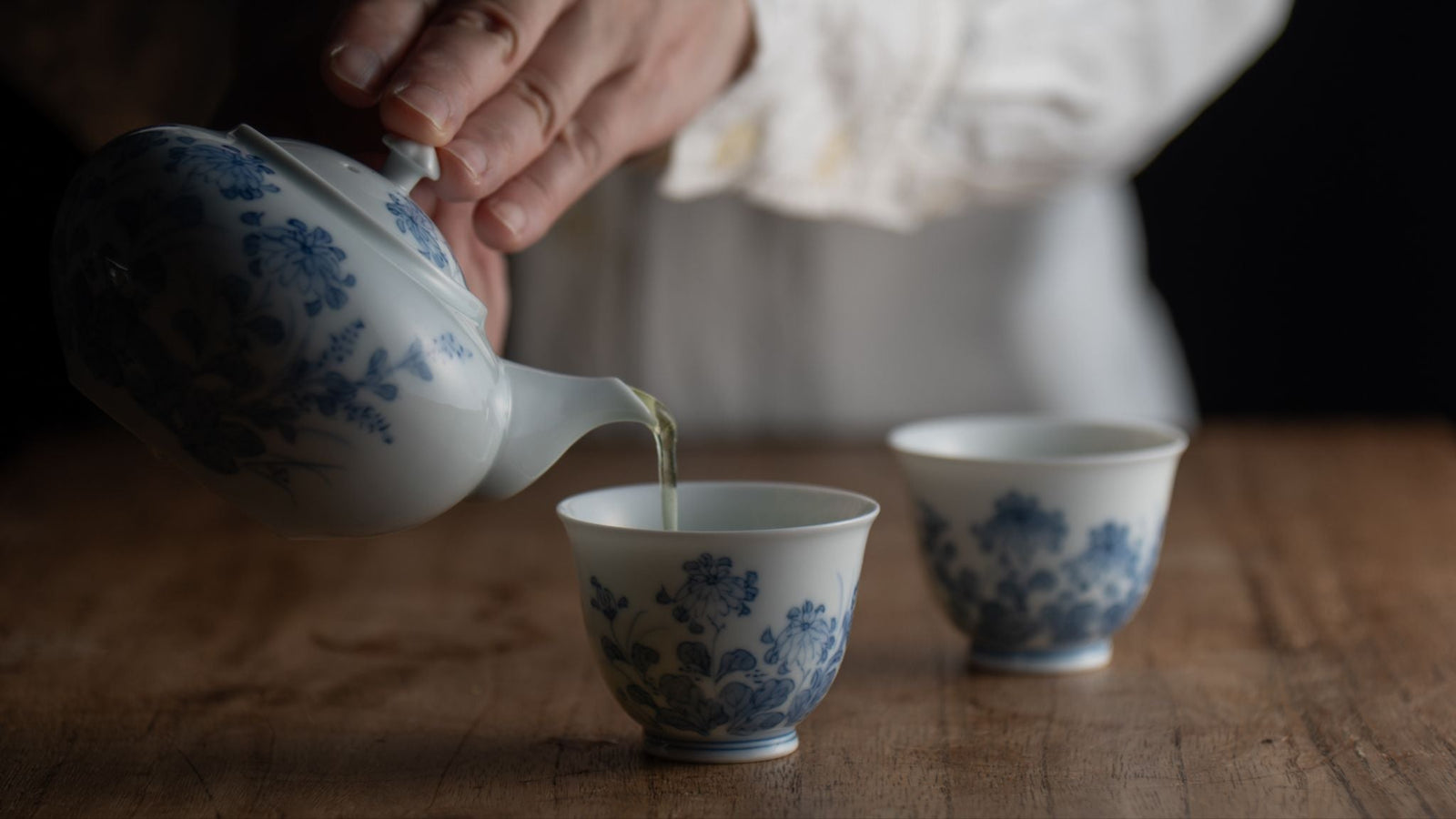
Leaves are measured into a teapot. Hot water is poured. A few moments later, the first sip arrives. Bright and green in the first brew, richer and more mellow in the second.
A label can tell you whether the tea is sencha, gyokuro, or hojicha. It can tell you where it was grown and offer some sense of what to expect. Yet the experience of drinking tea extends beyond the variety itself. A little attention to how to make each pot can reveal surprisingly different characteristics in the same tea.
What follows is a way into that range. Not a ranking of which tea is best, but an introduction to different Japanese teas and the preparations that bring out their distinctive qualities.
Different Teas, Different Moments
Many outside Japan meet Japanese tea as a single idea: a green, slightly grassy drink. Yet it encompasses a wide range of flavors and aromas, from the savory depth of gyokuro to the roasted notes of hojicha. Although they all begin with tea leaves, the paths they take afterward are quite distinct.
Sencha is grown in open sun and steamed soon after harvest, which gives it its fresh, green character. Gyokuro is shaded for several weeks before picking; protected from full sunlight, the leaves develop greater sweetness and savory depth. Hojicha takes green tea in another direction through roasting, exchanging grassy notes for aromas that are warm and toasty. Genmaicha combines tea leaves with roasted rice, whose nutty flavor becomes an important part of the blend.


These distinctions are not arbitrary, nor are they a matter of quality. A roasted tea is not a lesser tea than a shaded one. Each offers something of its own, finding its place in daily life, from pours shared with guests to hojicha served after a meal.
A Map of Flavors
Teas are often chosen by type—leaf shape, region, processing, or seasonality. Shincha, the year's first harvest, is one example. Type tells you what a tea is. It does not tell you whether you will like it.
A more useful sort is by taste. The chart below offers one way of visualizing how several common Japanese teas relate to one another in flavor and aroma. For example, gyokuro appears toward the savory end of the spectrum, reflecting its rich umami and lingering depth. Placed that way, the field stops being a list of names to memorize and becomes a map shaped by the senses.

Once you know roughly where your taste sits, the rest of this guide is about getting the cup to land there.
Brewing for the Moment
Knowing where a tea sits on the flavor map is only part of the story. The way it is prepared is equally important in determining what reaches the cup.
The same leaves can reveal different qualities depending on water temperature, steeping time, and the vessel used.
The guide below outlines how to brew sencha, gyokuro, and hojicha, along with the teaware and temperatures commonly associated with each.
Sencha
Sencha is the tea most households reach for every day. Typically brewed at 70–80°C (158–176°F), a range that balances freshness, sweetness, and gentle astringency.
Begin by warming the teapot with hot water. Pour the water from the teapot into the teacups and allow it to cool slightly.

Place about 2 tsp (4 g) of sencha leaves into the warmed teapot. Return the cooled water from the cups to the teapot and steep for about 1 minute. If the water is still quite hot, a shorter steep of around 30 seconds may be sufficient.

When serving, pour a little tea in turn rather than filling one cup at a time. This helps distribute the flavor evenly. For the second infusion, use slightly hotter water and a shorter steep.

Gyokuro
Gyokuro is the case where restraint changes everything. It is brewed at a much lower temperature, around 50–60°C (122–140°F), to emphasize umami while limiting bitterness. A shiboridashi teapot is particularly well suited to this style of brewing. Its shallow shape accommodates the small amount of water used for gyokuro, helping to draw out a concentrated, flavorful infusion.
Warm the shiboridashi with hot water, then pour the water into the cups and allow it to cool until it reaches the desired temperature.

Add about 2 tsp (5–6 g) of gyokuro leaves to the shiboridashi. Pour the cooled water over the leaves and steep for 1 to 2 minutes.

Pour evenly, taking care to extract every last drop. For the second infusion, use hotter water, around 60°C (140°F), and steep for approximately 1 minute.

Hojicha
Roasted teas take near-boiling water and a quick steep. Hojicha is generally brewed with near-boiling water, around 90–100°C (194–212°F).
As with sencha, begin by warming the teaware with hot water. Discard the water, then add about 1 heaping Tbsp (5–6 g) of leaves to the teapot.


Pour in about 240 ml (1 cup) of hot water and steep for roughly 30 seconds to 1 minute.

When serving, pour little by little into each cup. Unlike gyokuro, which is typically enjoyed in small amounts, hojicha is often poured generously into larger yunomi teacups and enjoyed more casually throughout the day.

Small Choices with Care
Much of tea preparation comes down to paying attention to small details. Water temperature is one of them. Cooler water tends to emphasize sweetness and umami, while hotter water brings forward aroma, bitterness, and astringency. This is why gyokuro is brewed cool, while hojicha is prepared much hotter.
A thermometer is useful, but not essential. In Japan, water is often cooled simply by transferring it between vessels before brewing. Each pour lowers the temperature slightly, making it possible to reach the range suited to a particular tea without measuring it directly.

The vessel matters, too. Hojicha is often enjoyed in generous pours from larger teapots and cups, while sencha and gyokuro are more commonly prepared in smaller vessels that concentrate their flavor.
Even after the kettle has been put away, attention continues. Tea is best kept away from light, heat, and moisture, preserving the aromas that make each variety distinct. Small habits such as transferring leaves using the lid of a tea canister help keep the remaining tea fresh for the next brew.

Japanese tea is often described by variety, region, or method of production. While its flavors and aromas are what first draw attention, many of its pleasures reveal themselves in the making and drinking as well.
Discovering a tea that suits a particular moment, finding a vessel that feels right in the hand, and returning to familiar leaves in different ways are all part of the experience. These small rituals remain among the enduring pleasures of Japanese tea.
Stay close to the craft
Now and then, a quiet letter — new stories, seasonal notes, and the hands behind the work.

Akari’s Sake-Steamed Hamburg Steak Recipe
Akari's sake-steamed hamburger steak with cherry tomatoes. No eggs, no breadcrumbs, just a simple,…
Hasegawa Akari
A Late Summer Afternoon at the Table
Five simple dishes, one slow afternoon. Blue-and-white porcelain, glass, and Bizen ware hold the…
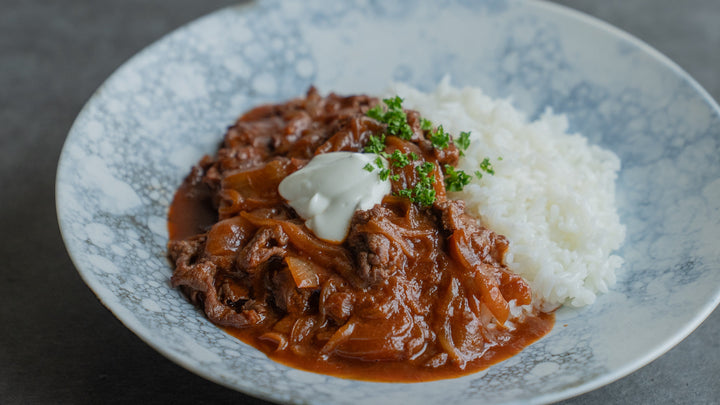
Akari’s Recipe: Hayashi Rice with Browned Soy Sauce
Cook Akari's hayashi rice from scratch using browned soy sauce for deep, comforting flavor…
Leave a comment