










Ebicha-Saibyo Palace in the Haze Flower Vase
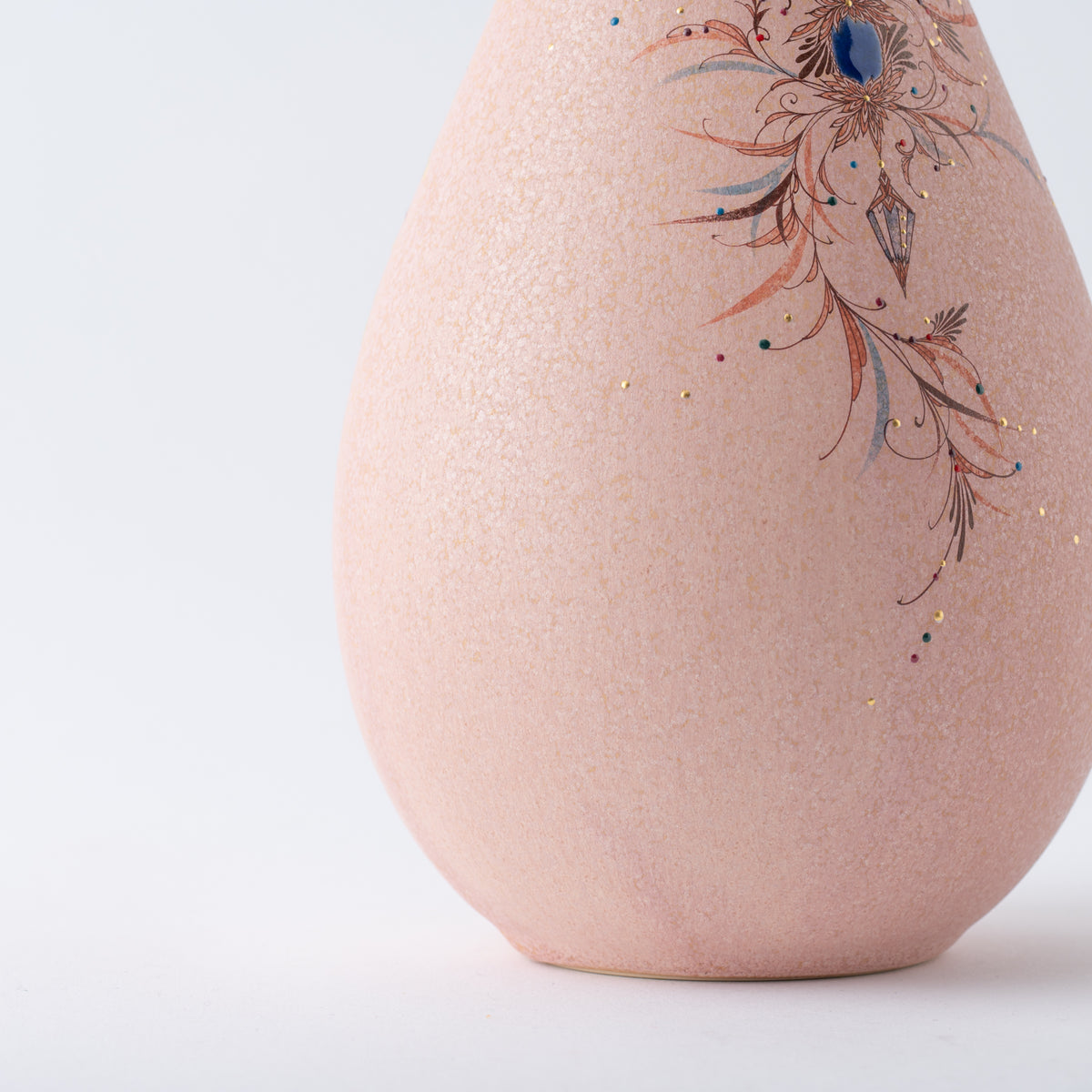
A pale pink glaze forms the backdrop of this flower vase. Kutani ware artist Kanbata Shinya had been searching for a soft, muted pink when this particular shade emerged from the kiln. He chose to give the glaze more room to show, balancing its shifting surface with the painted motifs.
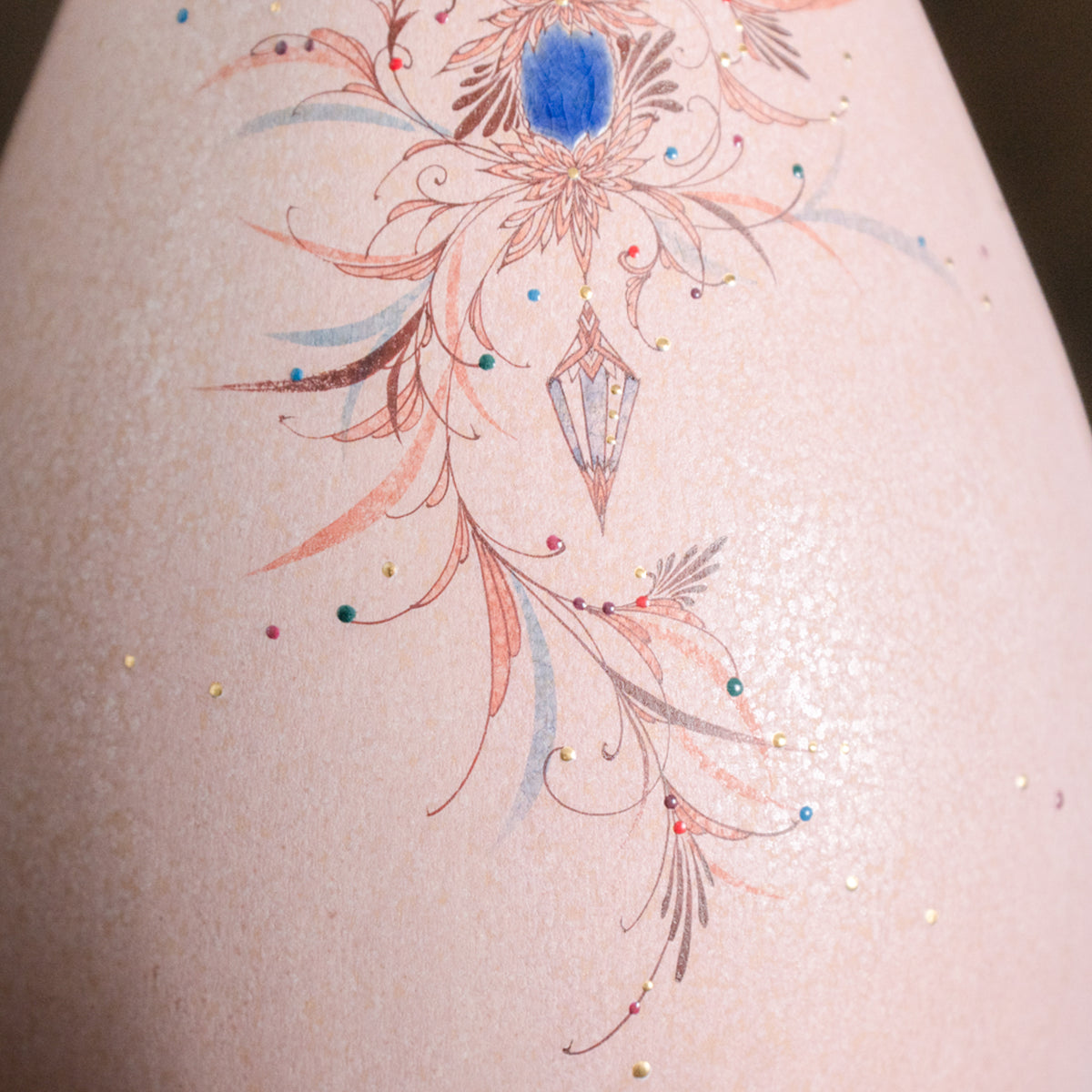
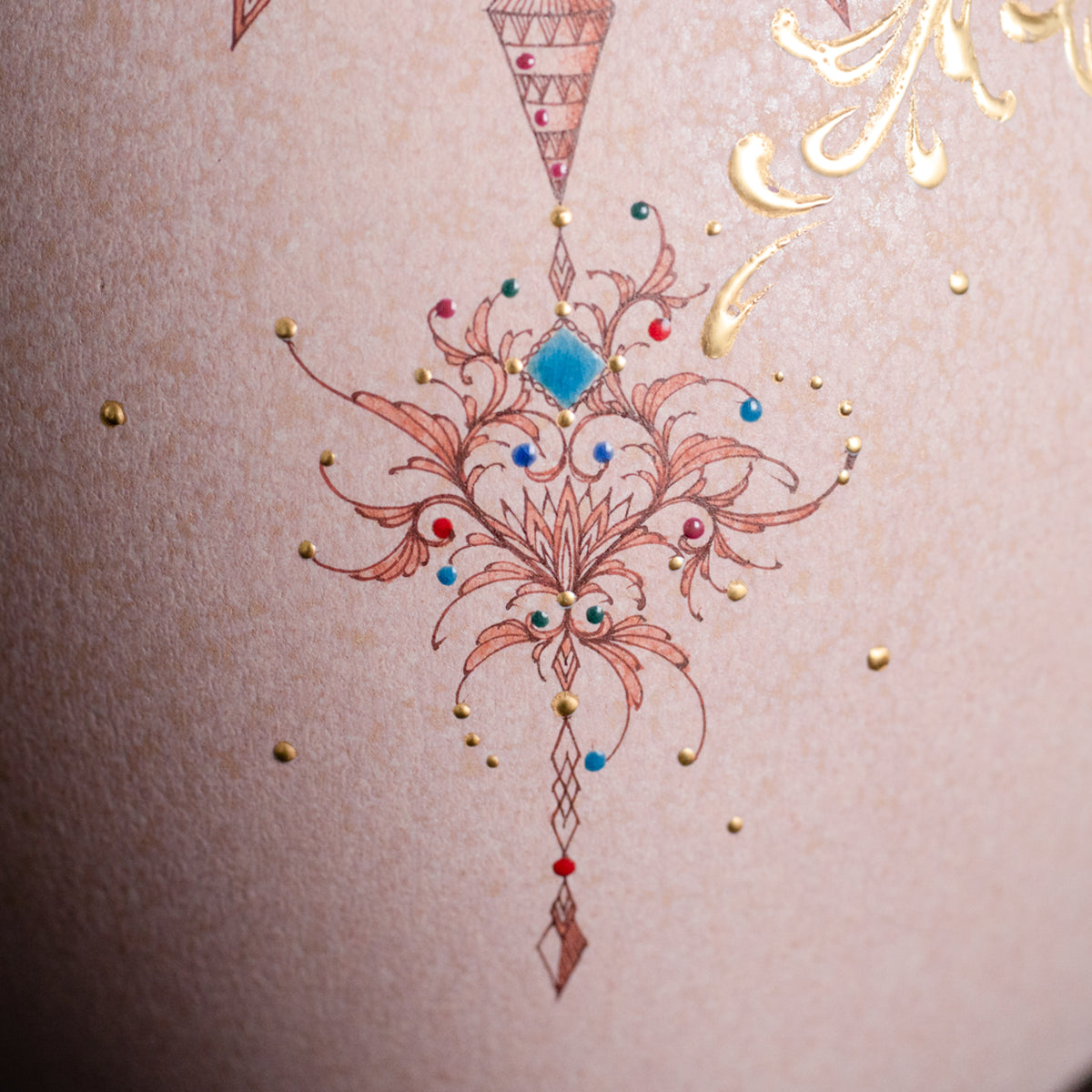
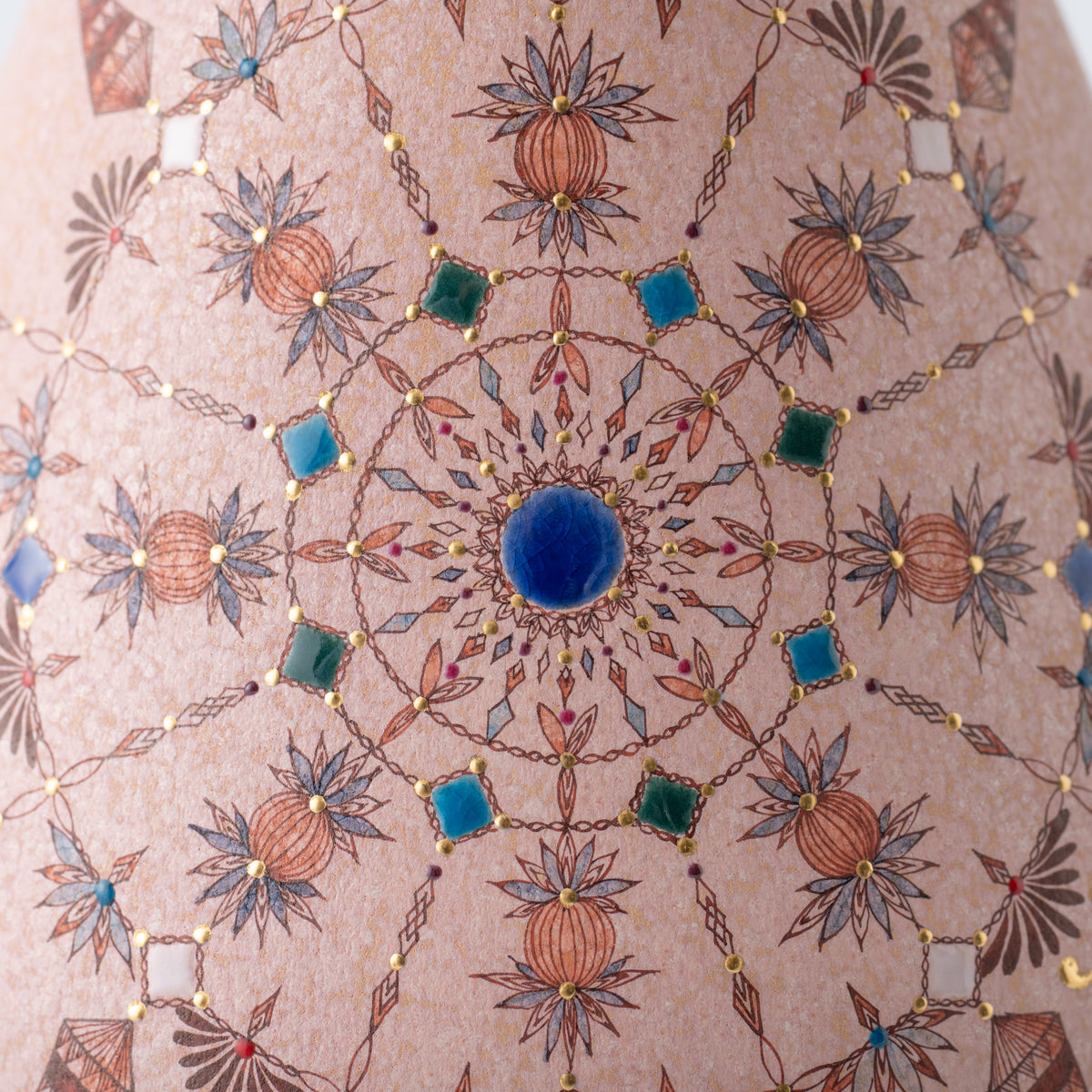
The reddish-brown lines belong to Kanbata’s signature ebicha-saibyo technique. Seeking a tone that could express impressions of historic European architecture, he mixed his own pigments and tested more than eighty variations before arriving at ebicha. Each vessel is formed on the wheel and carried through painting and gilding by Kanbata himself.
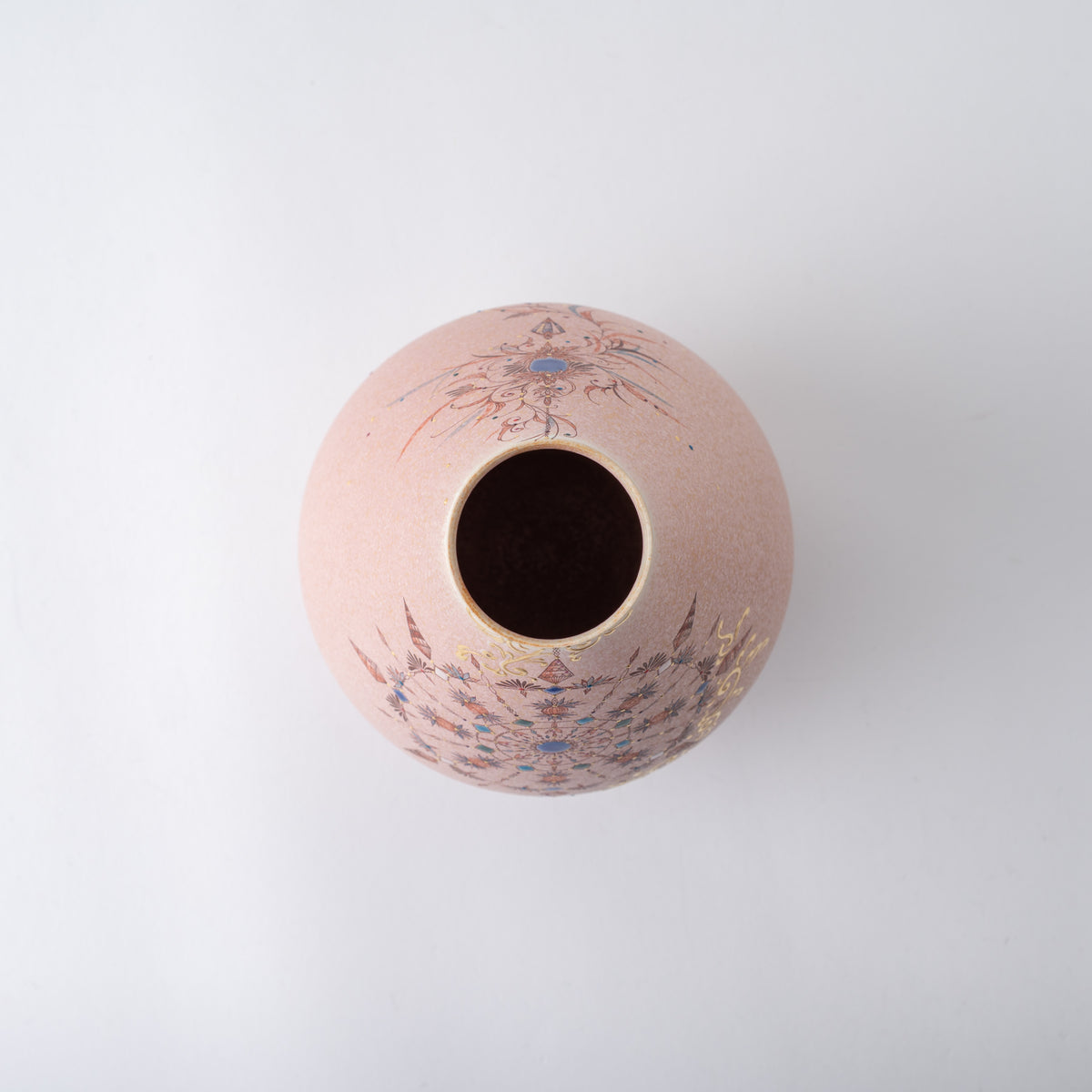
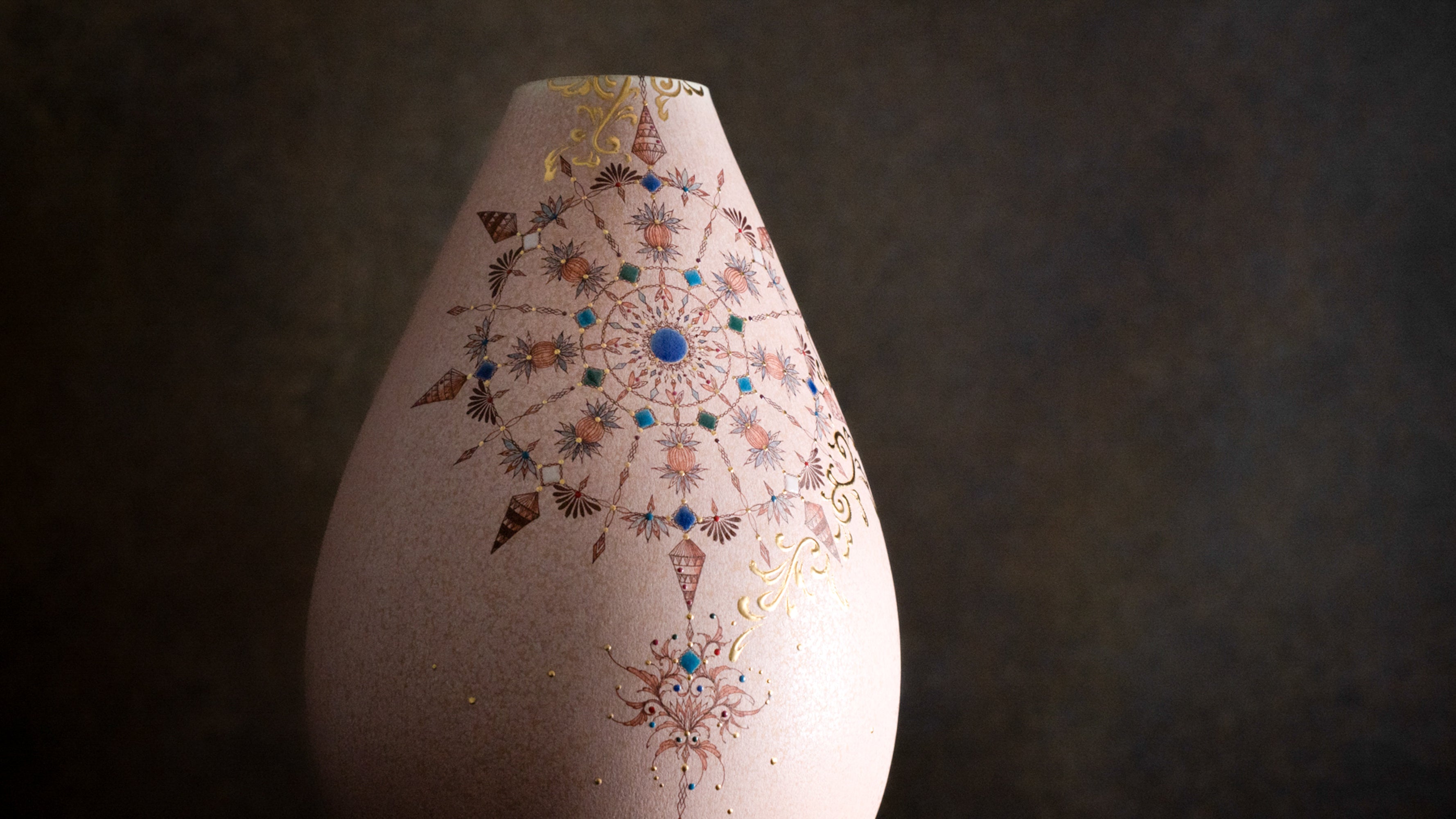
Across opposing sides, fine ebicha linework, gold arabesques, and jewel-like Kutani enamels form two distinct compositions. One centers on a blue enamel imagined as a gemstone held by points of gold, inspired by antique jewelry and royal ornaments Kanbata encountered in France. On the other, gold arabesques and feather-like lines create a feeling of movement and suspension. Rather than drawing each line with perfect uniformity, each retains slight shifts in tone and strength, valuing the momentum of the brush and the vitality of a line drawn by hand.
The designs stop before they meet, allowing the pale glaze to appear along the sides. Kanbata intentionally leaves this space open rather than filling the entire surface with decoration. Complete on its own, the vase can also be turned when flowers are arranged, bringing a different side of the work into view.
DETAILS
| Quantity | 1 |
| Size |
D 13.3 cm (5.2 in) x H 19.9 cm (7.8 in) [Size of opening] D 4.3 cm (1.7 in) [Wooden box] L 17.9 cm (7.0 in) x W 17.9 cm (7.0 in) x H 25.7 cm (10.1 in) |
| Weight | 908 g (32.0 oz) |
| Material | Stoneware |
| Package Type | Wooden box |
Maker / Brand
Kutani ware artist Kanbata Shinya brings together intricate linework, luminous color, and architectural composition in ceramic pieces. Fine reddish-brown lines connect circular geometric forms with his original technique ebicha-saibyo, while glassy Kutani enamels and polished gold bring areas of vivid color and light.
Crafts
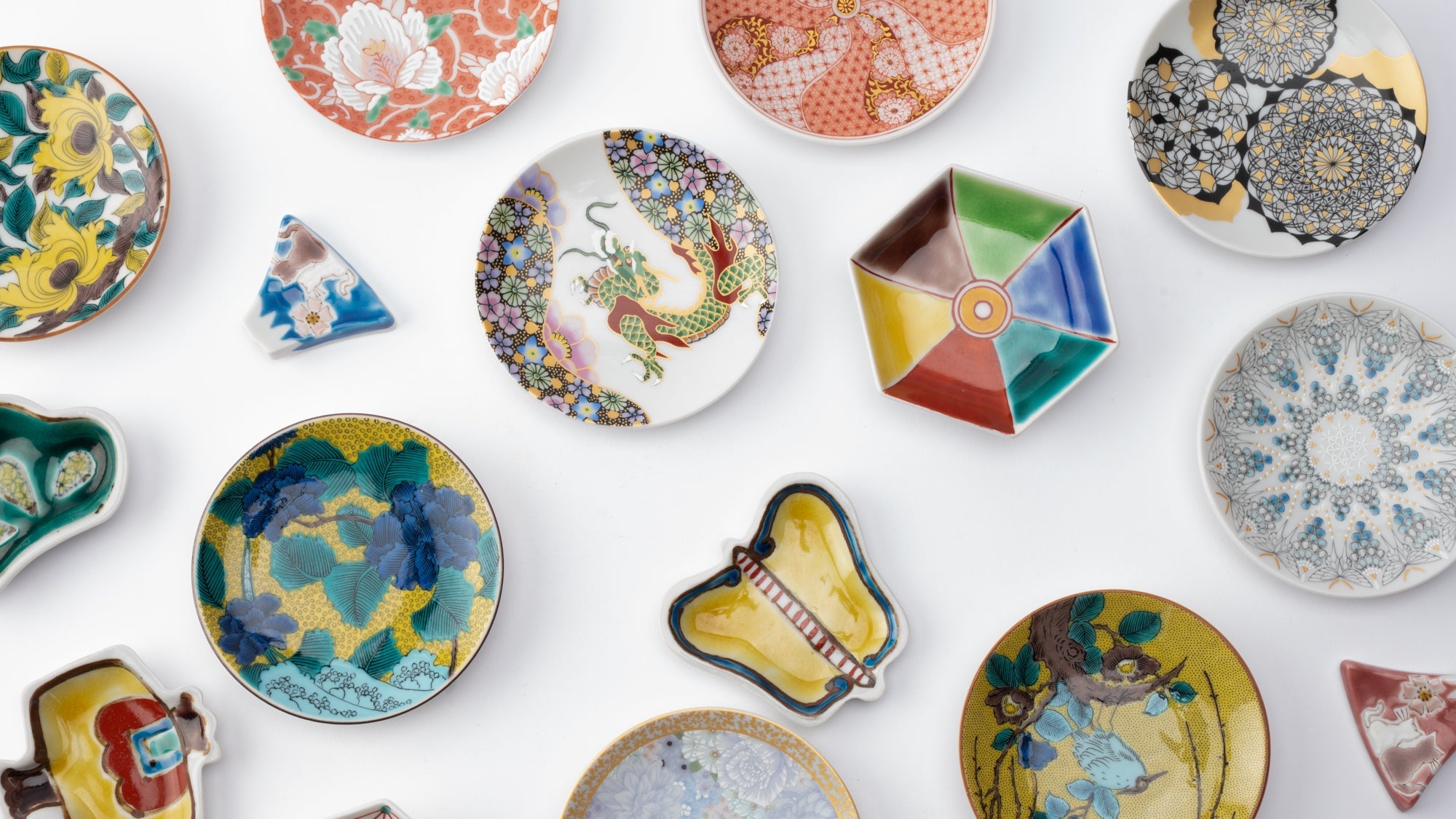
Kutani ware is a pottery produced in the Kaga region of Ishikawa Prefecture, with a history spanning over 350 years. It is characterized by the heavy brilliance of the five colors of navy blue, red, purple, green, and yellow that are applied to the bold and daring lines. Its long history has evolved through the tireless efforts and enthusiasm of people who have sought innovation while maintaining tradition.
Notes
Choose options
About Artist
Musubi Gallery
Since its inception, MUSUBI KILN has strived to introduce the world to the finest traditional crafts from masters all around Japan.
Here, in the Gallery, we seek to showcase the highest echelon of traditional techniques passed down through generations. You can discover works from masters who have not only perfected those methods, but added their imagination to innovate the craft even further.
Some of these masters have even been named Holder of Important Intangible Cultural Heritage, a title bestowed upon them by the Japanese government to formally recognize their contribution to crafts and culture—thereby cementing their legacy and making them an important part of art history.
Each piece is meticulously handcrafted over many months to create a timeless treasure that's unlike any other. And when it's in your home, you, too, will become part of that history.
Welcome to the Gallery. Please, peruse at your leisure.