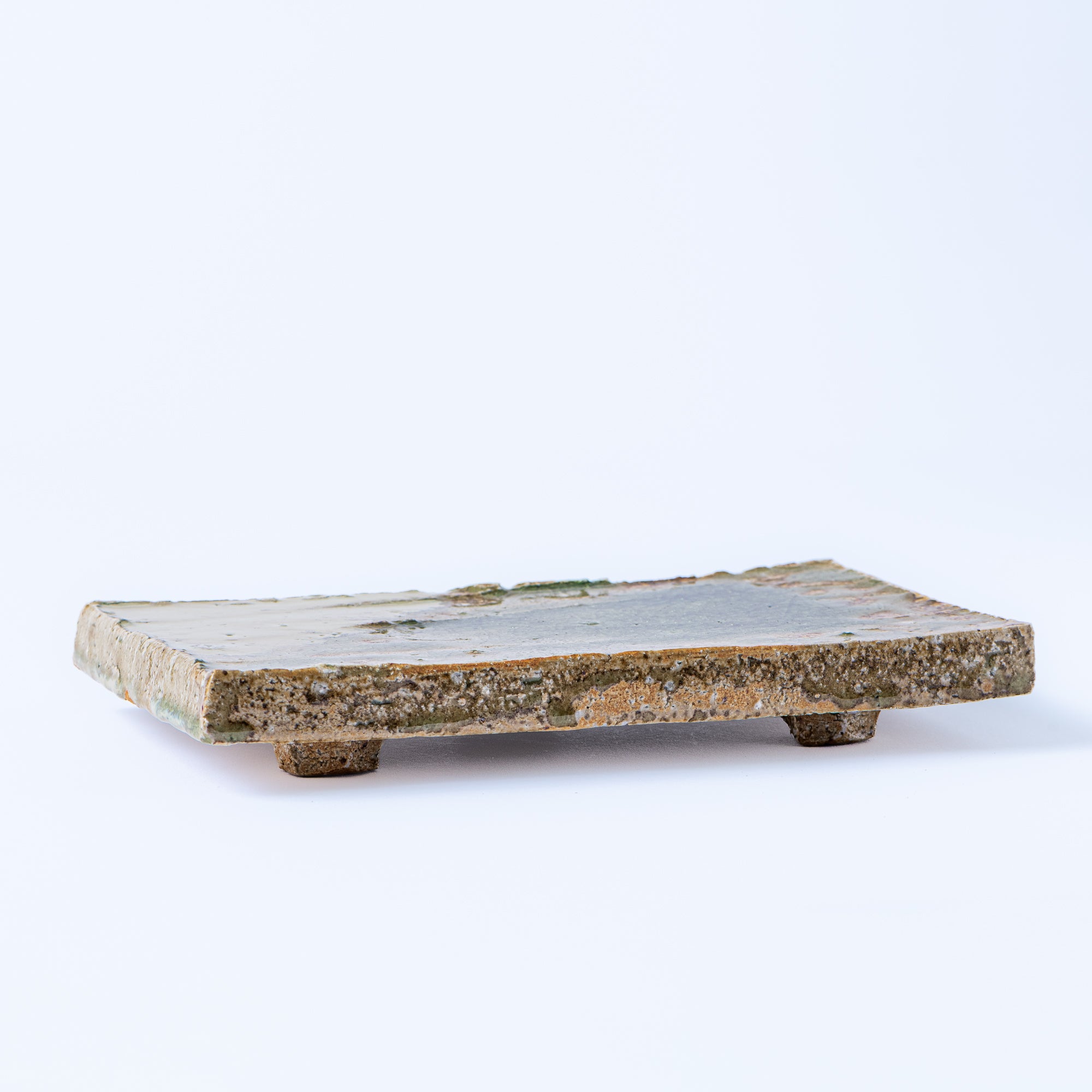
Iga Faceted Long Dinner Plate
Ships from Japan · Free shipping on orders over $250 USD
Estimated Shipping Widget will be displayed here!
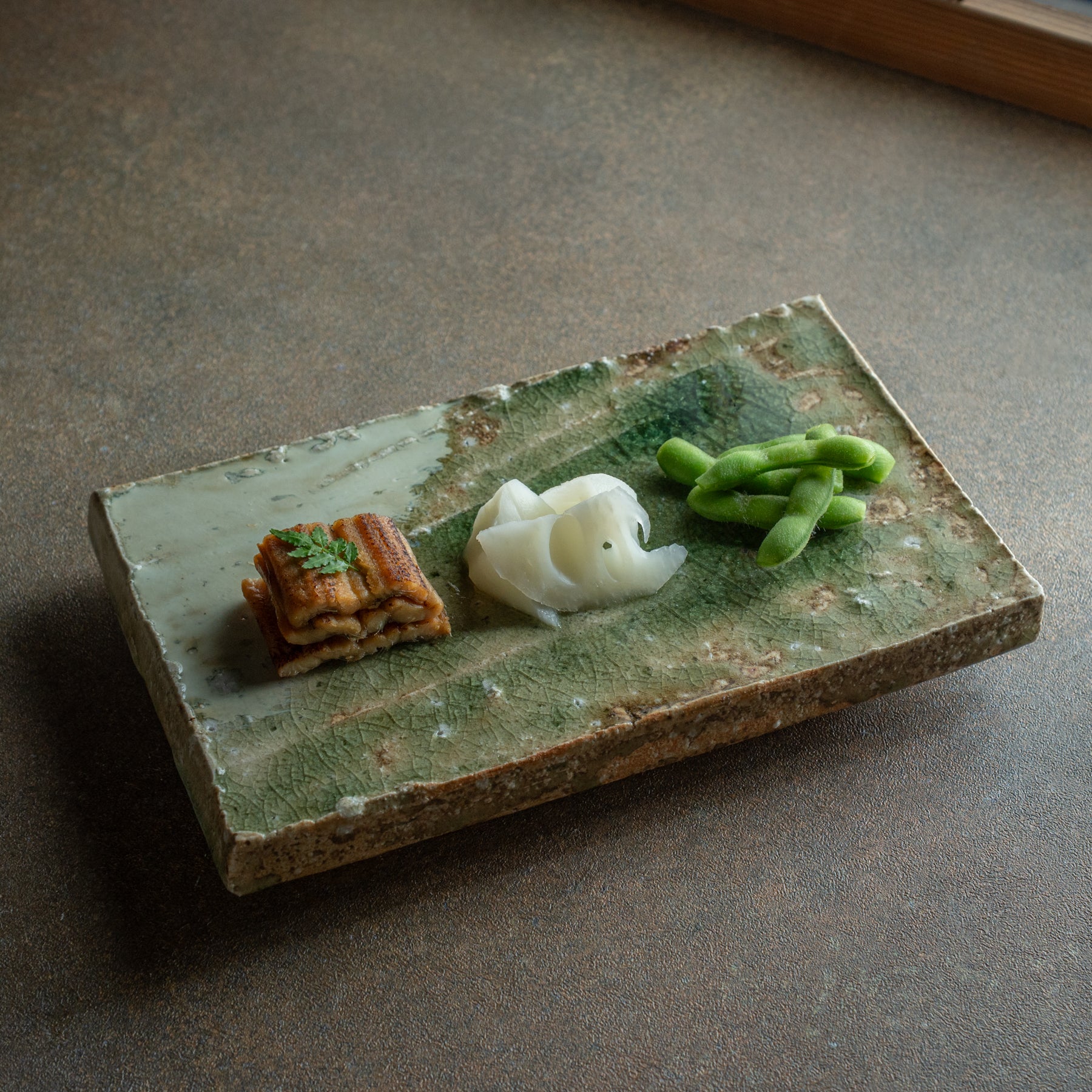
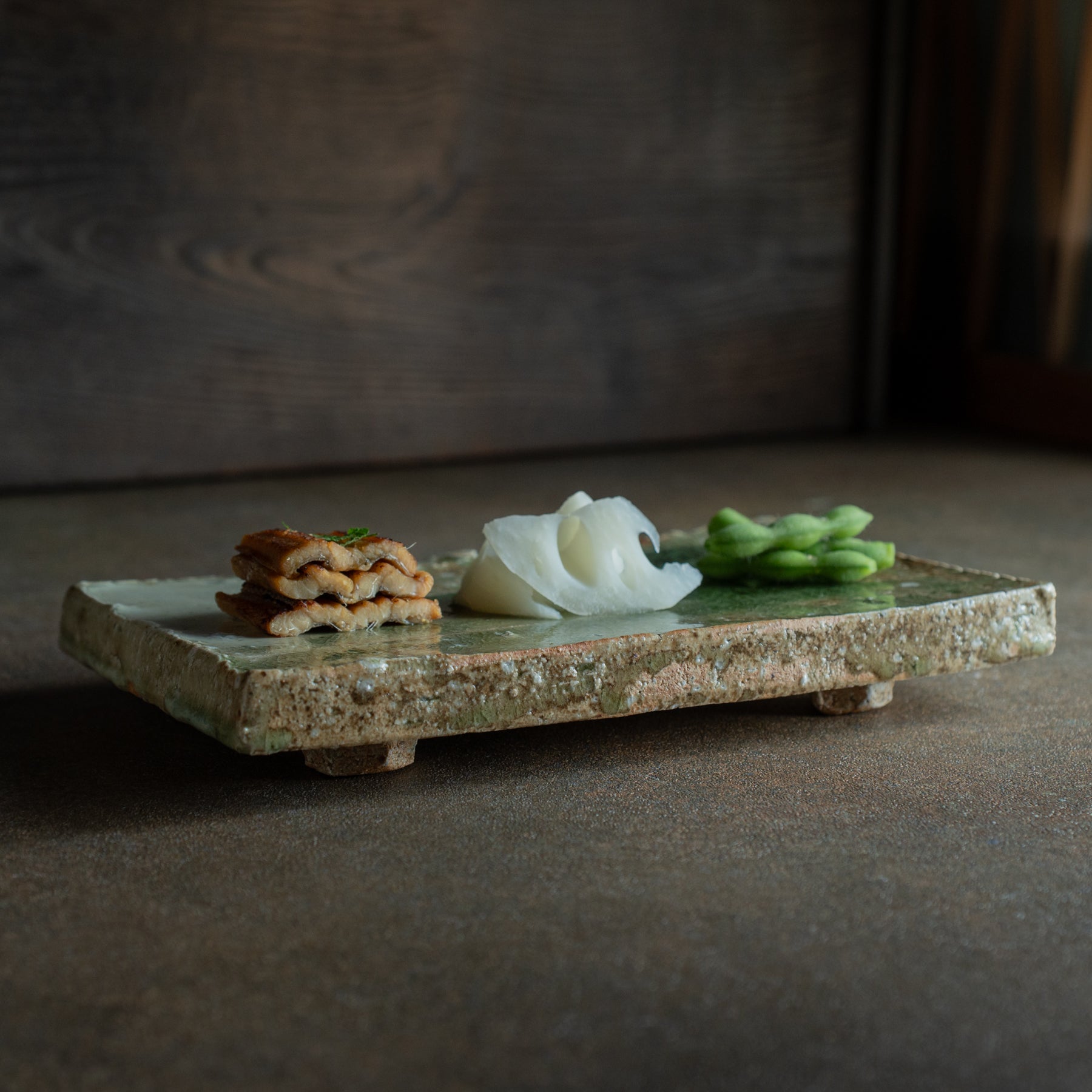
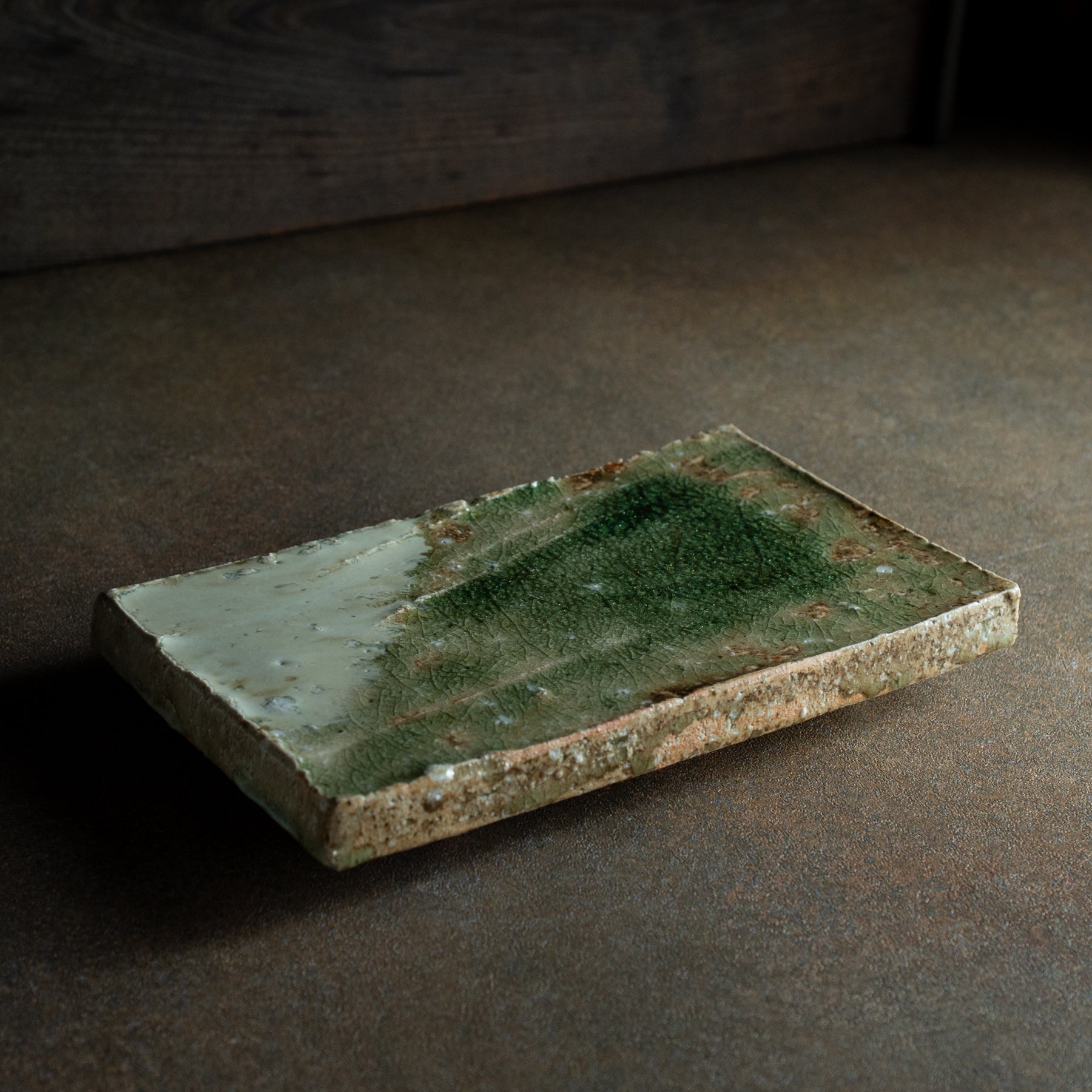
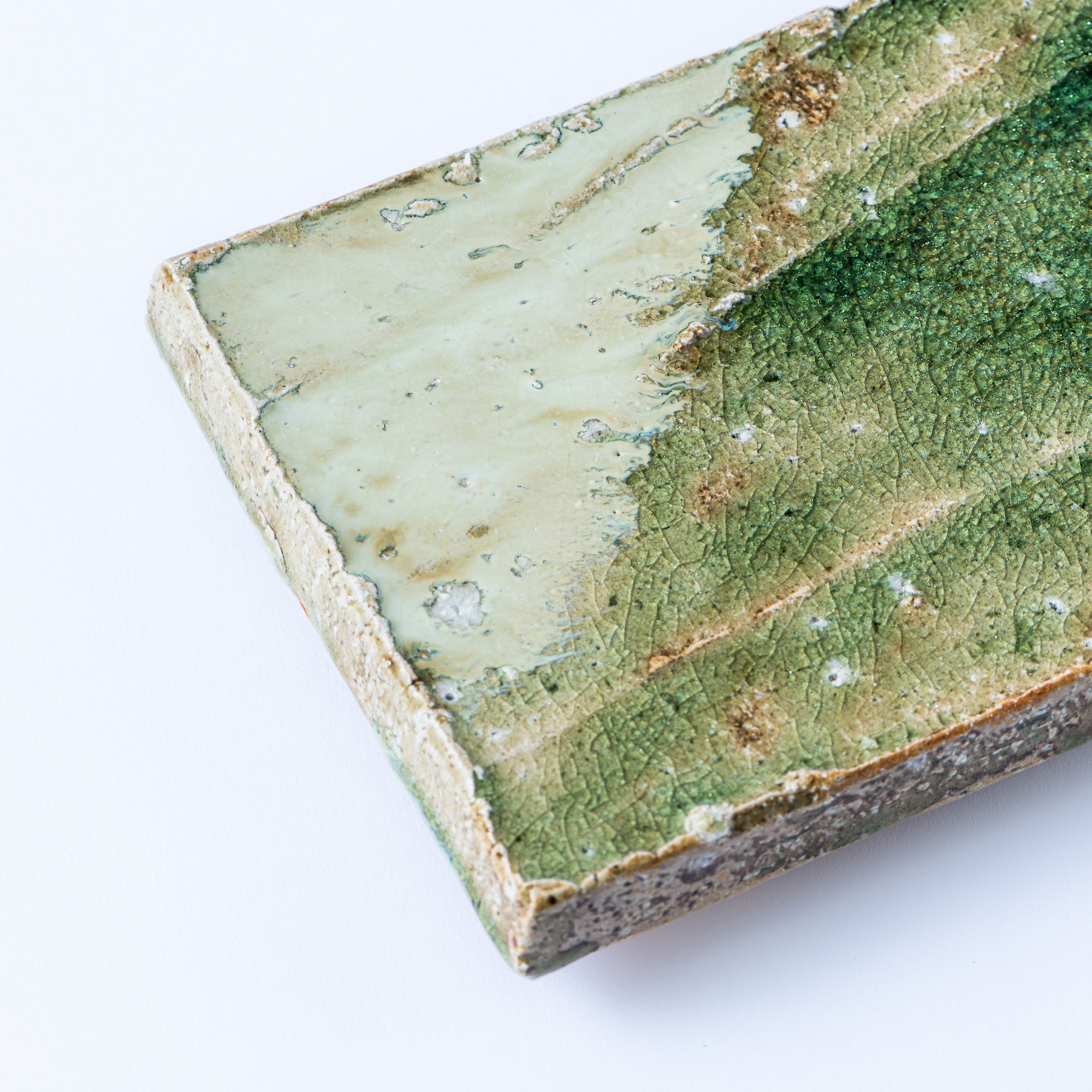
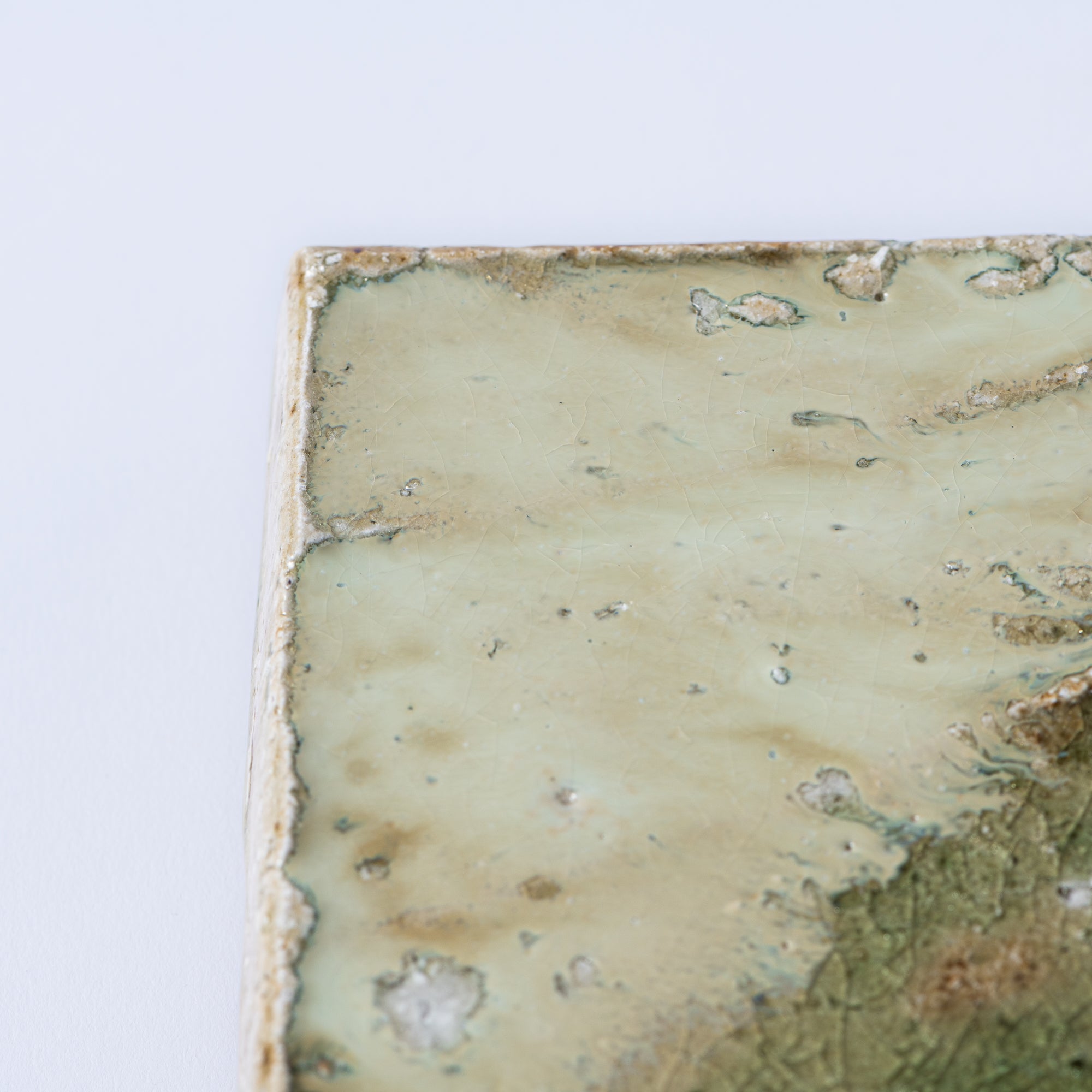
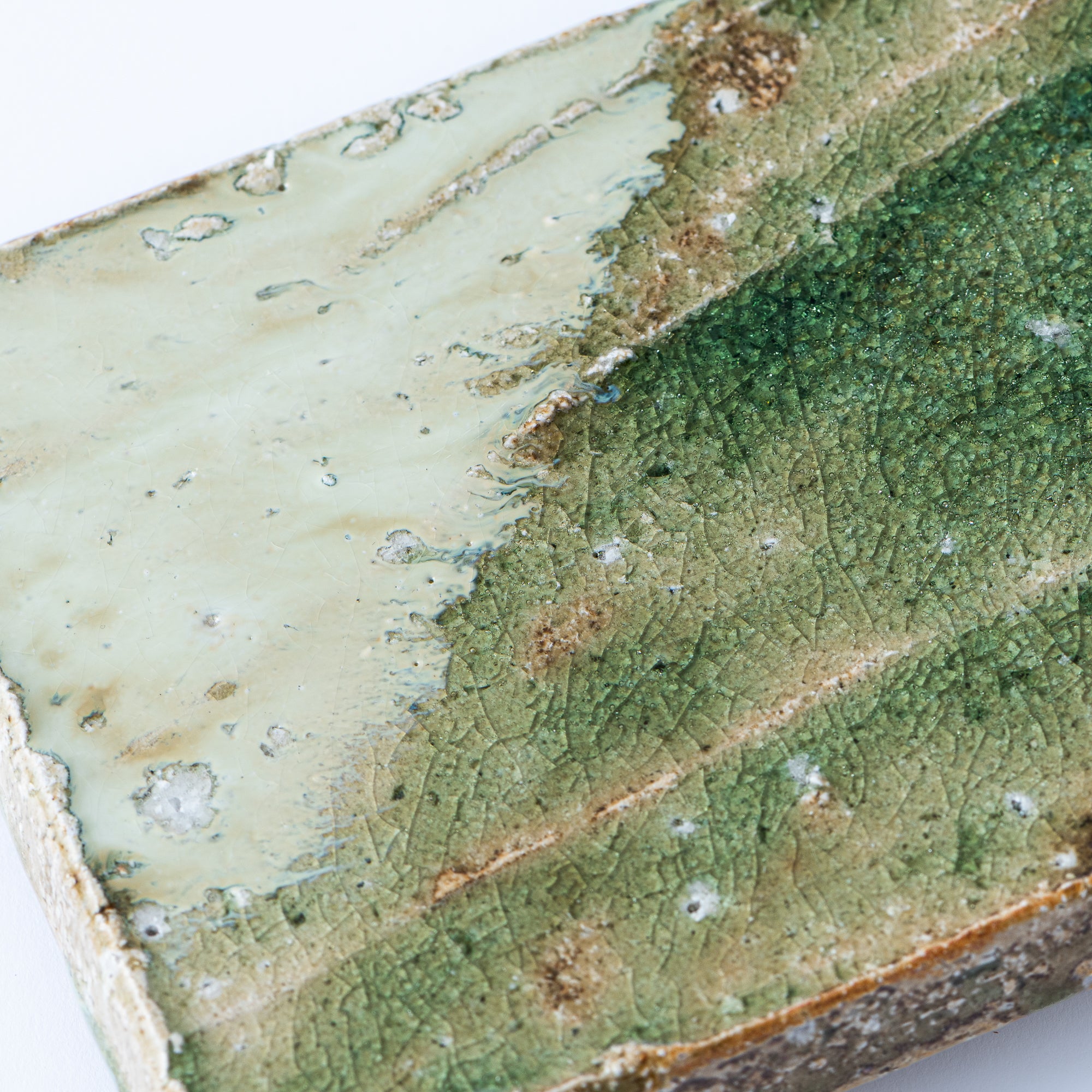
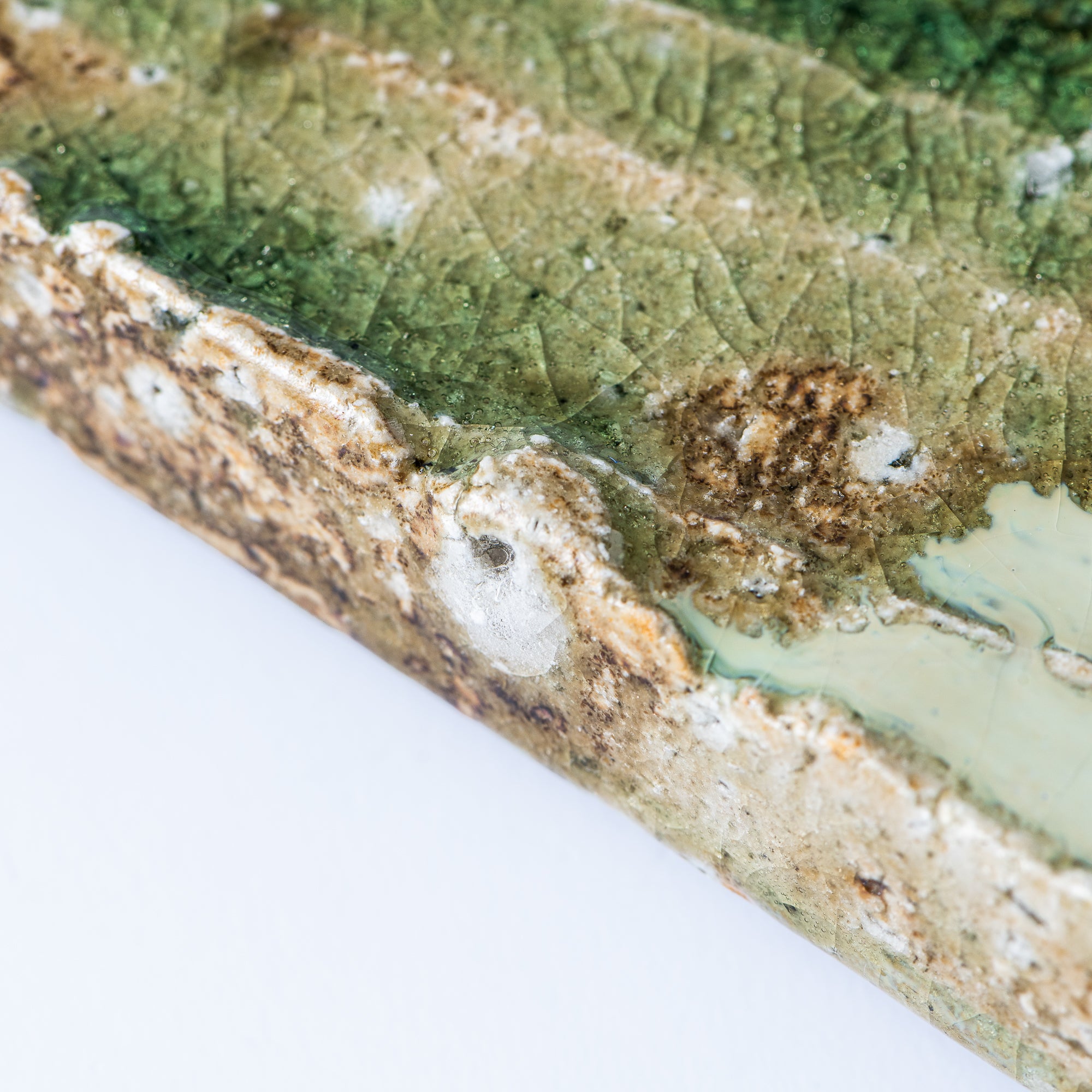
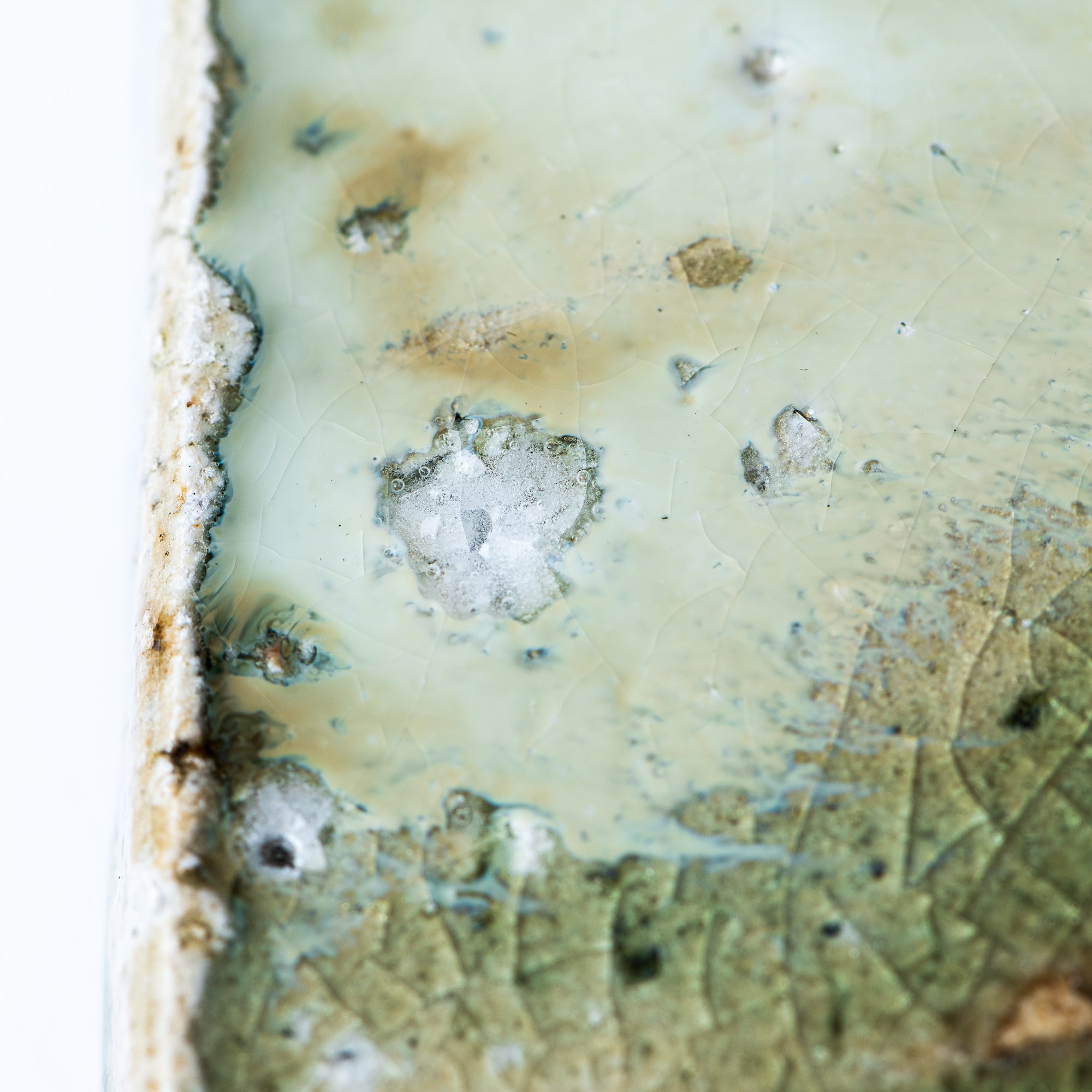
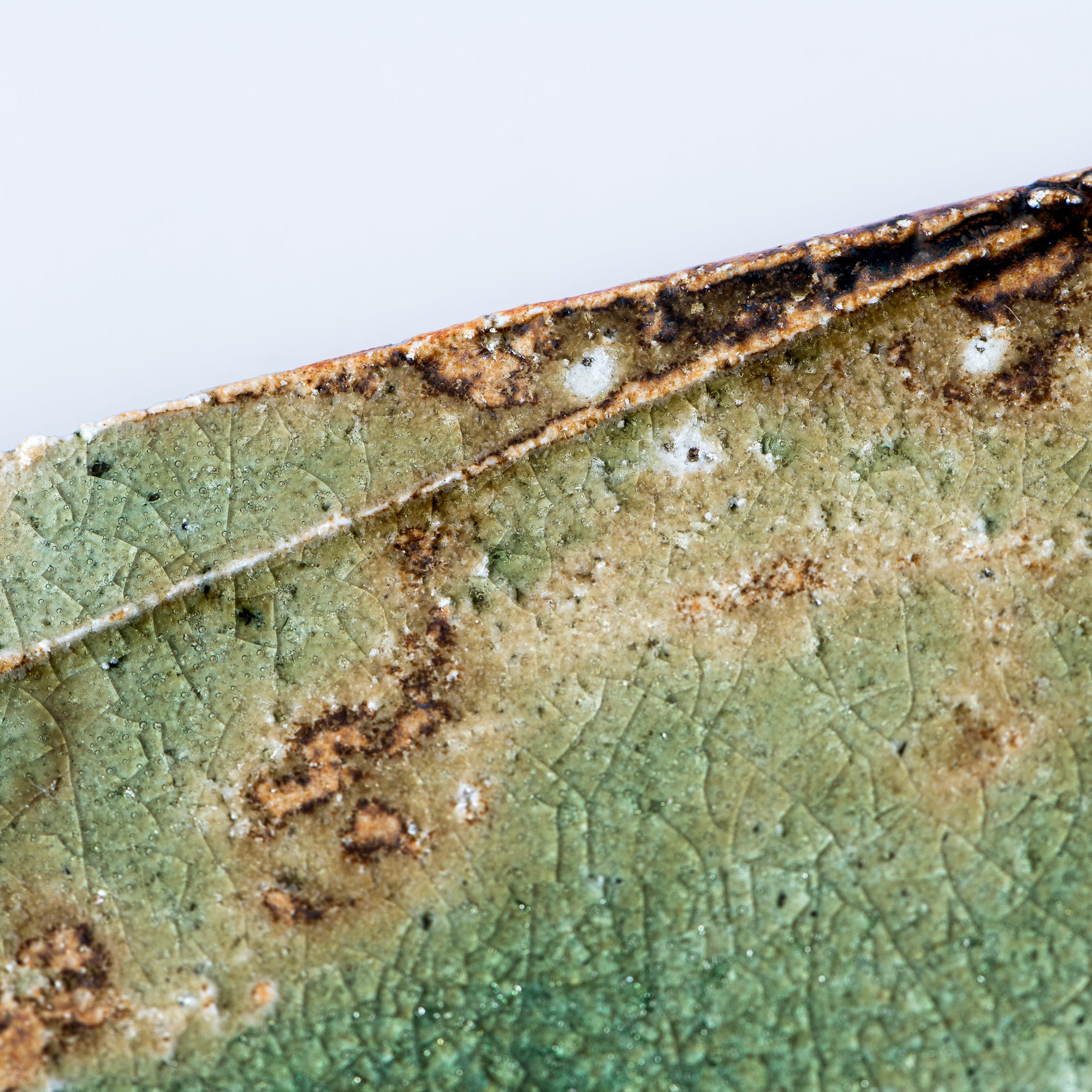
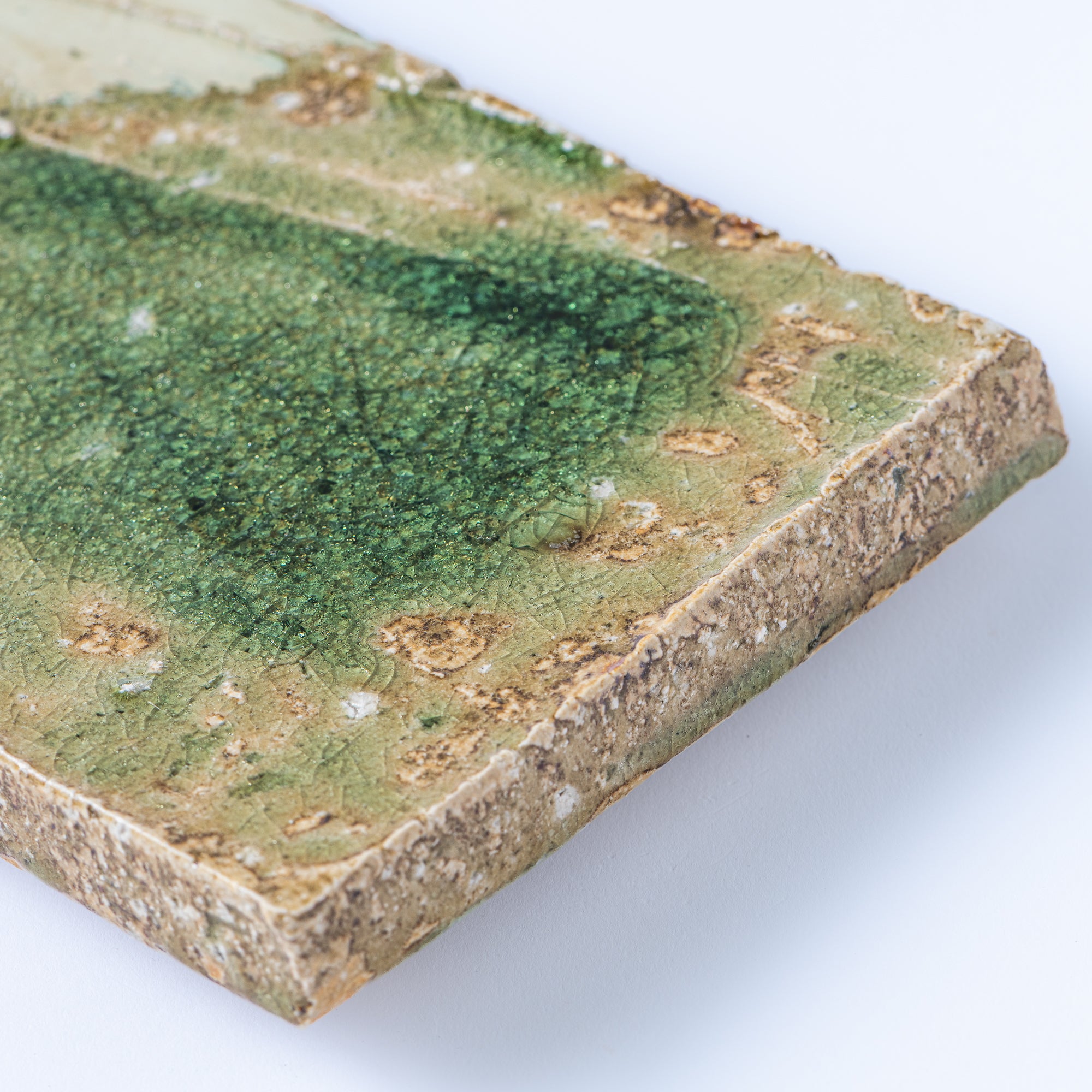
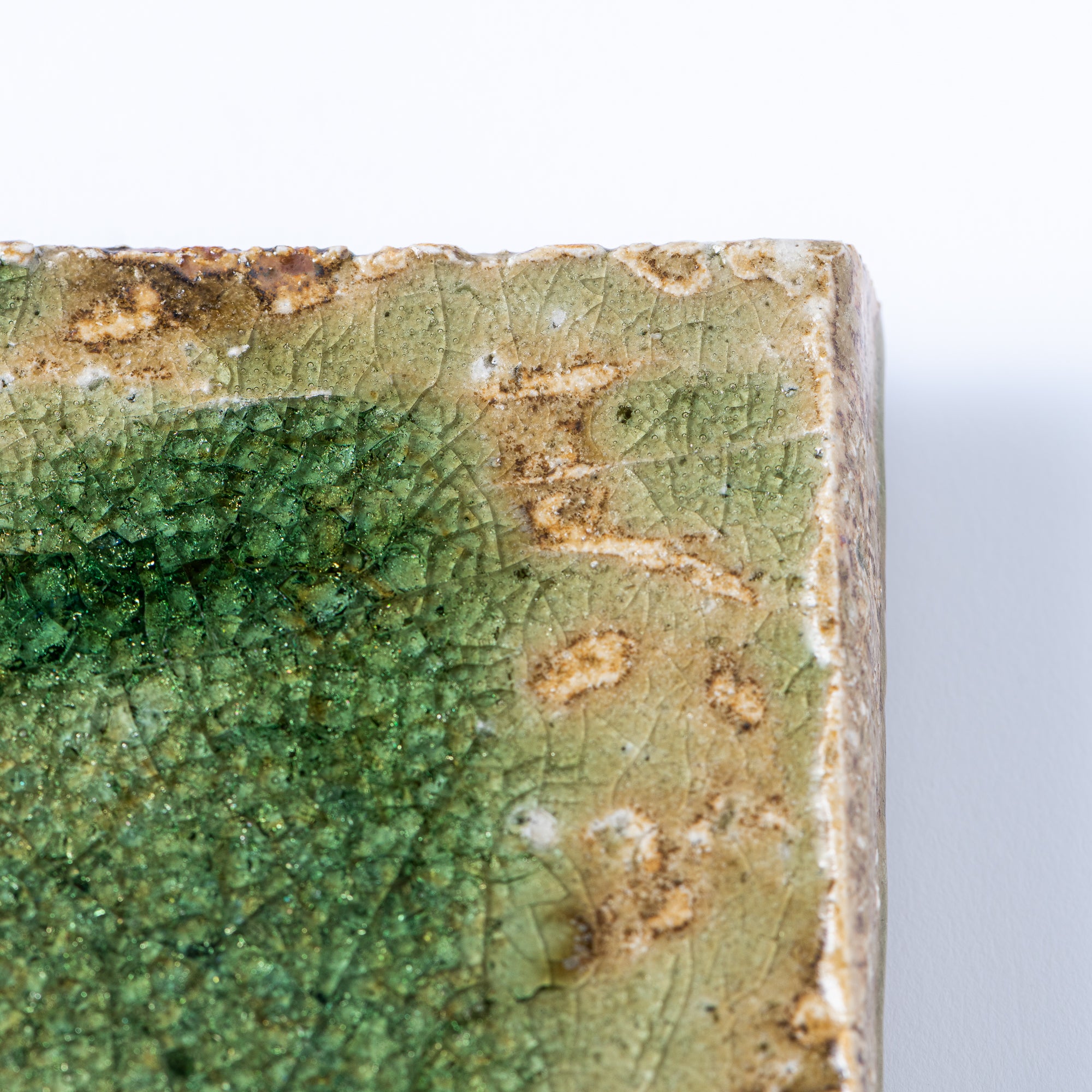
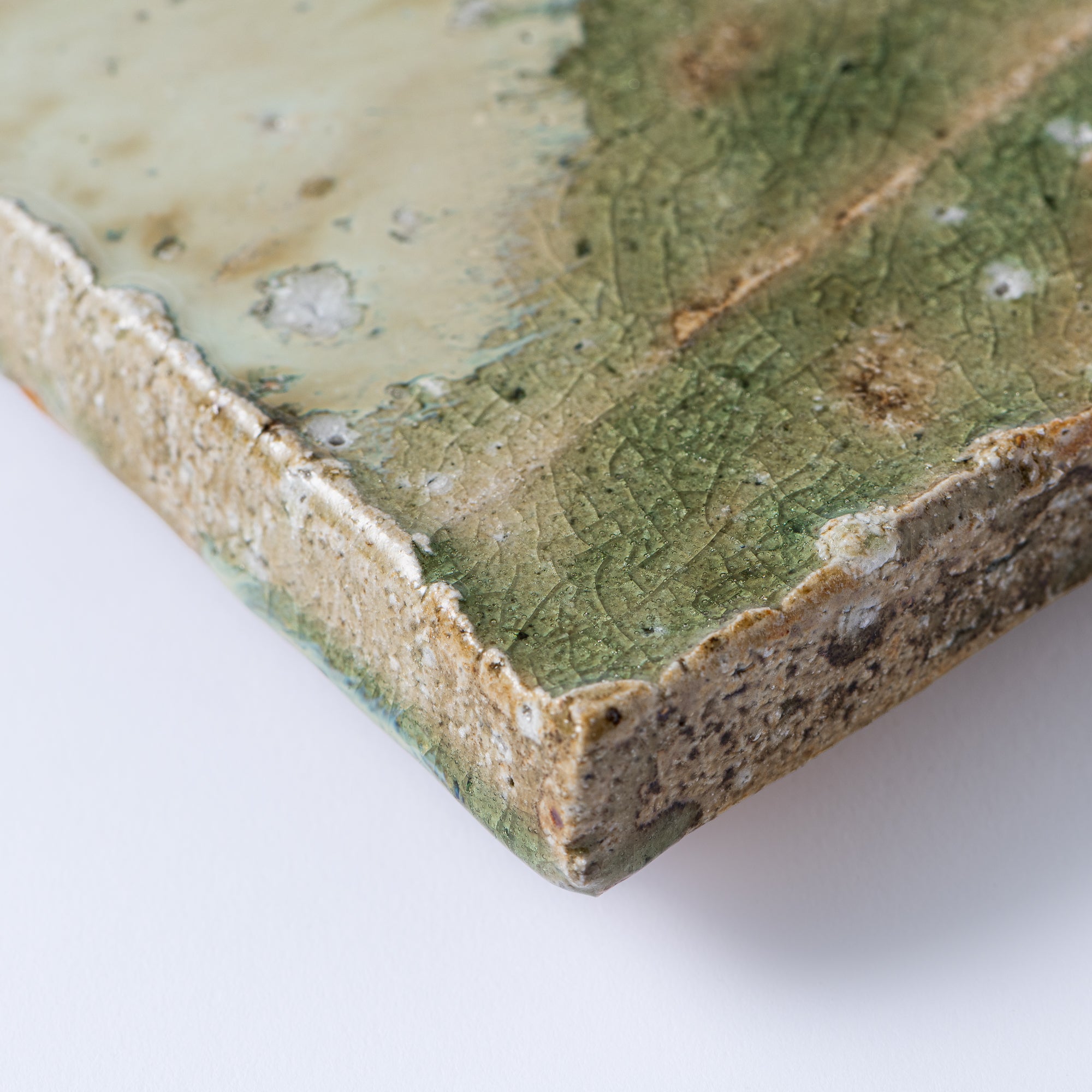
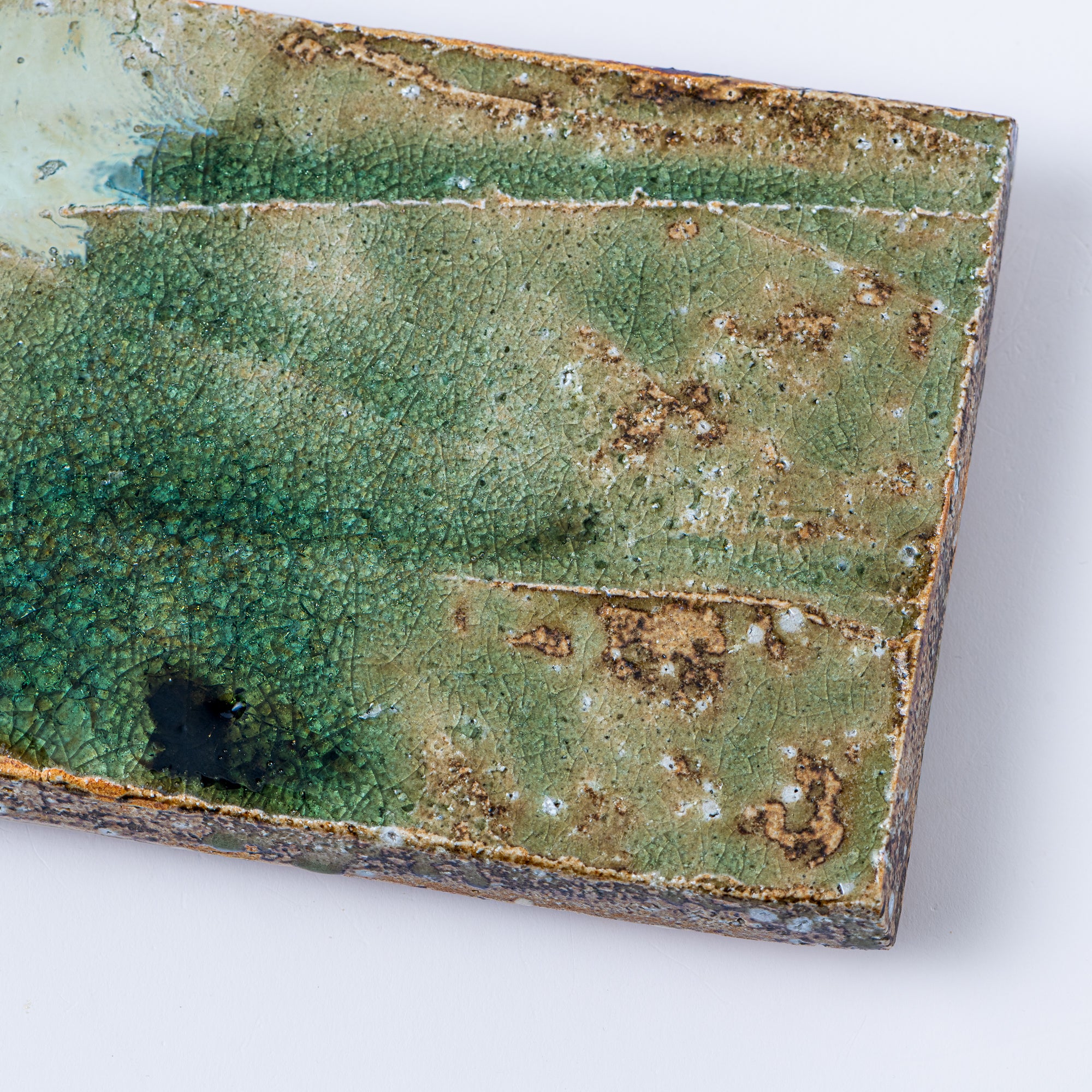
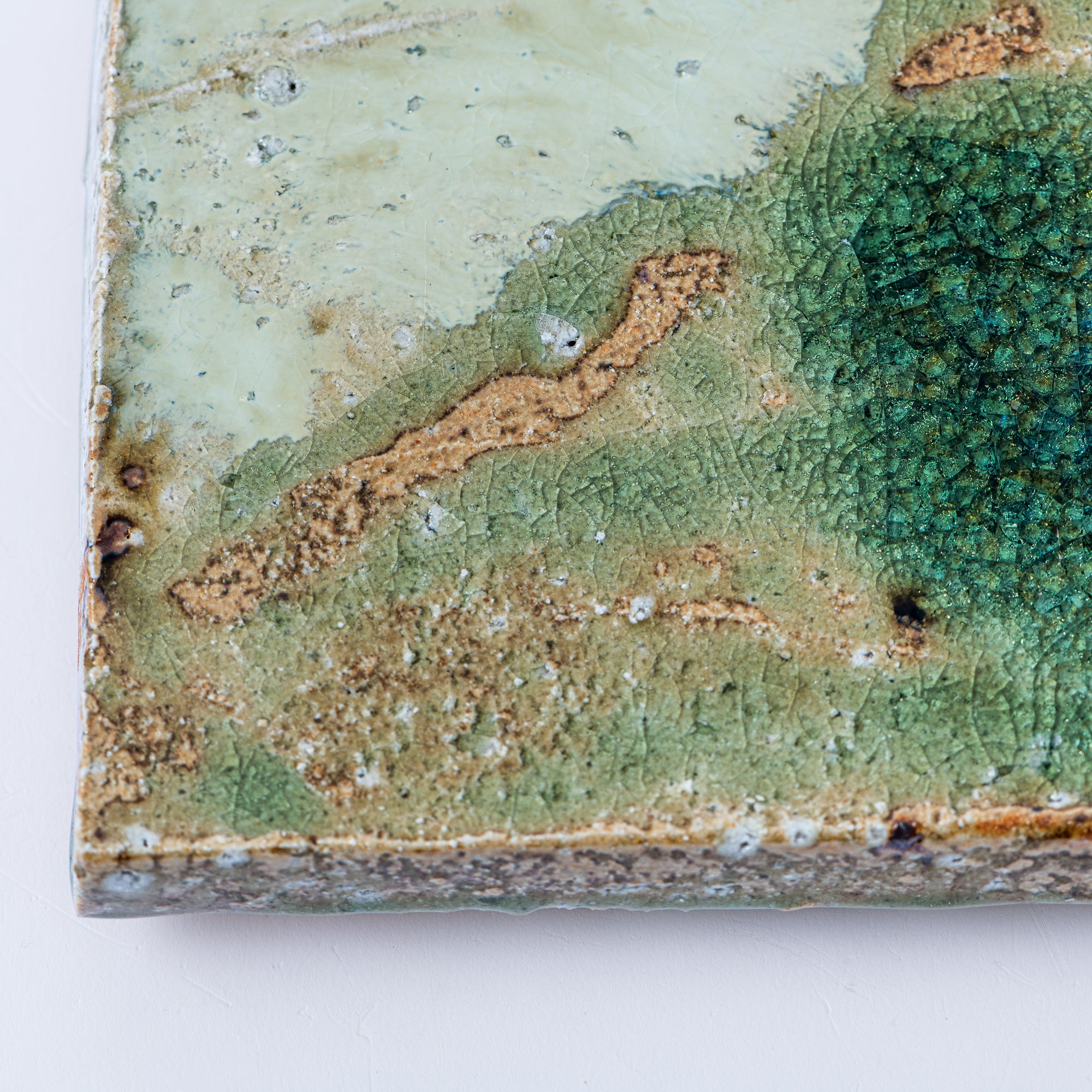
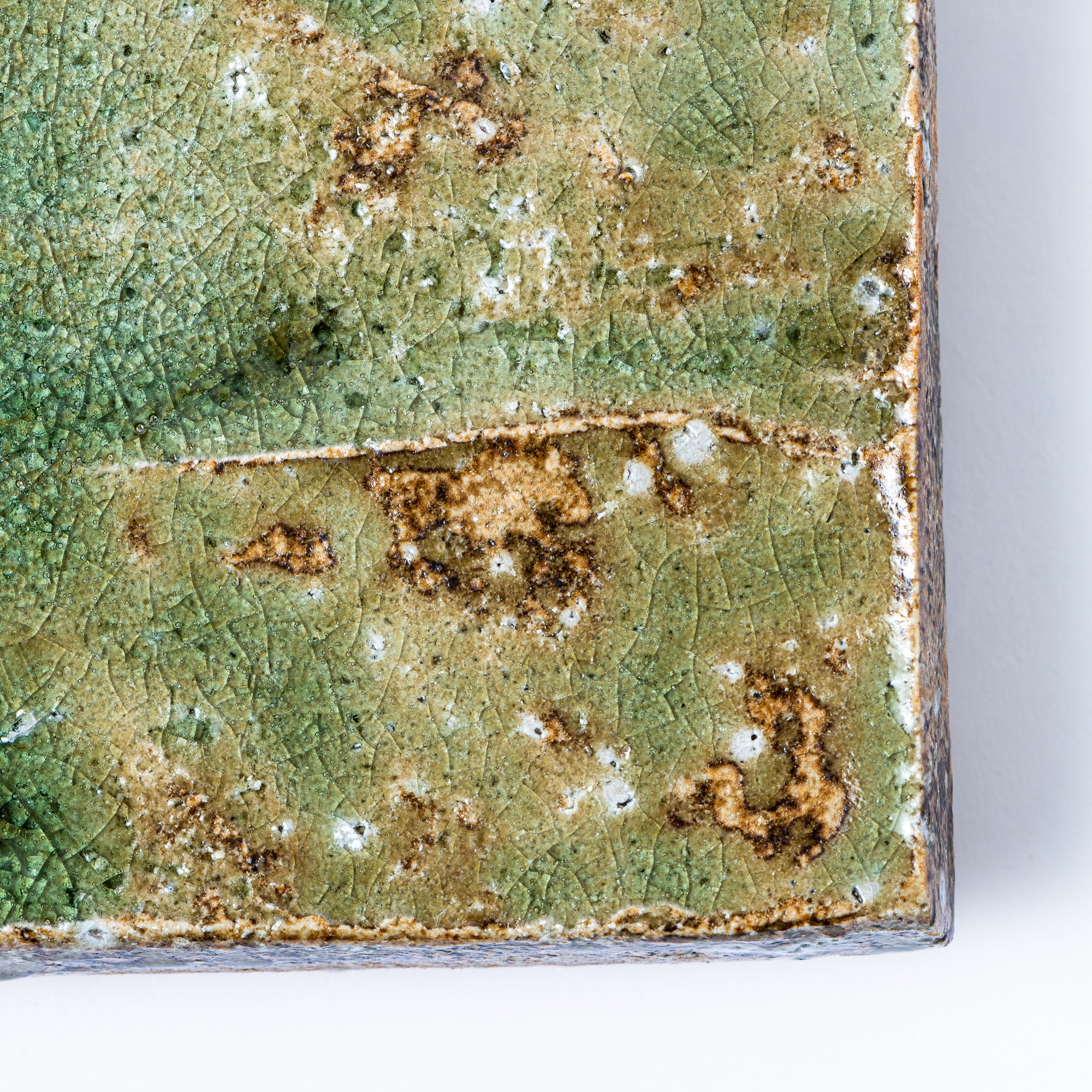
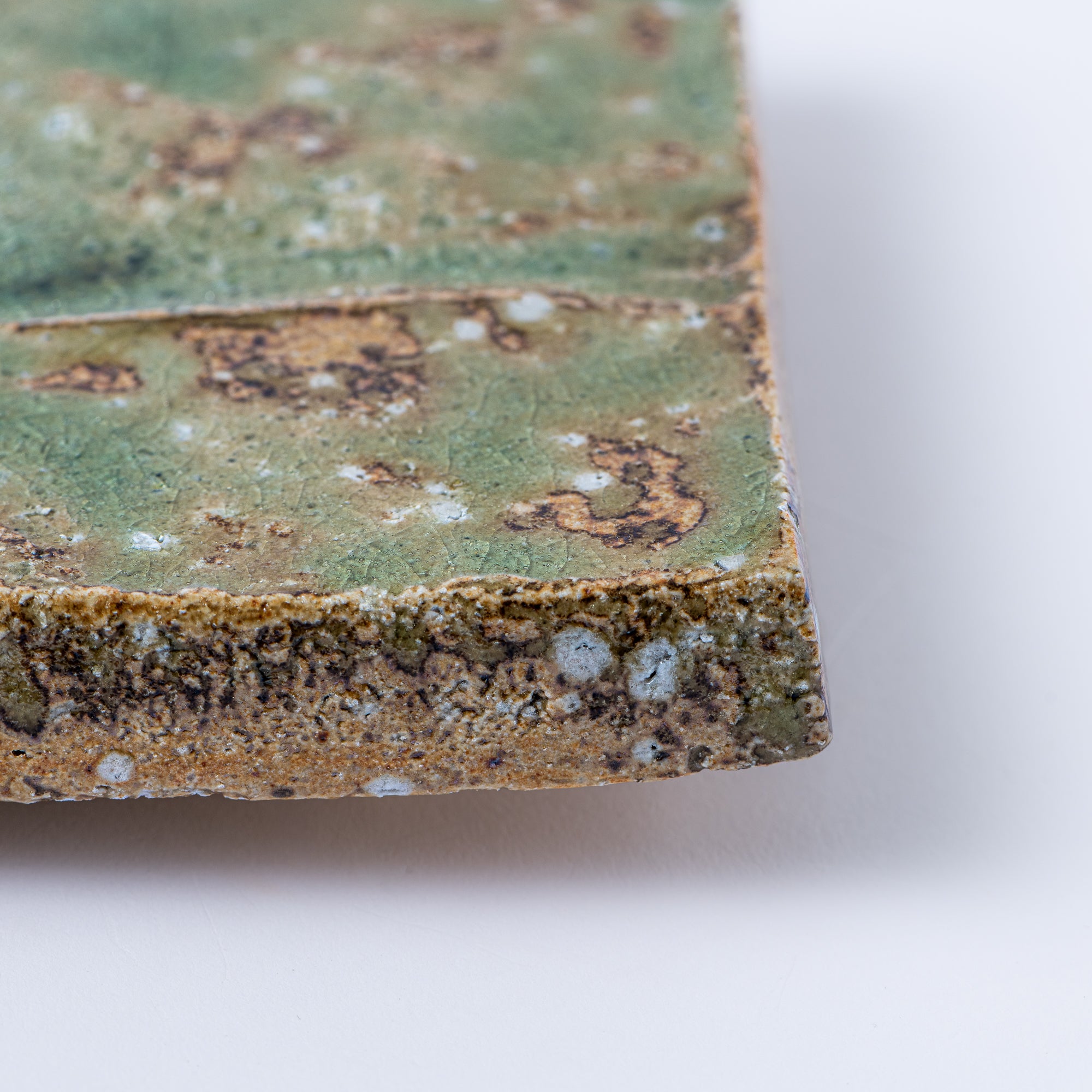
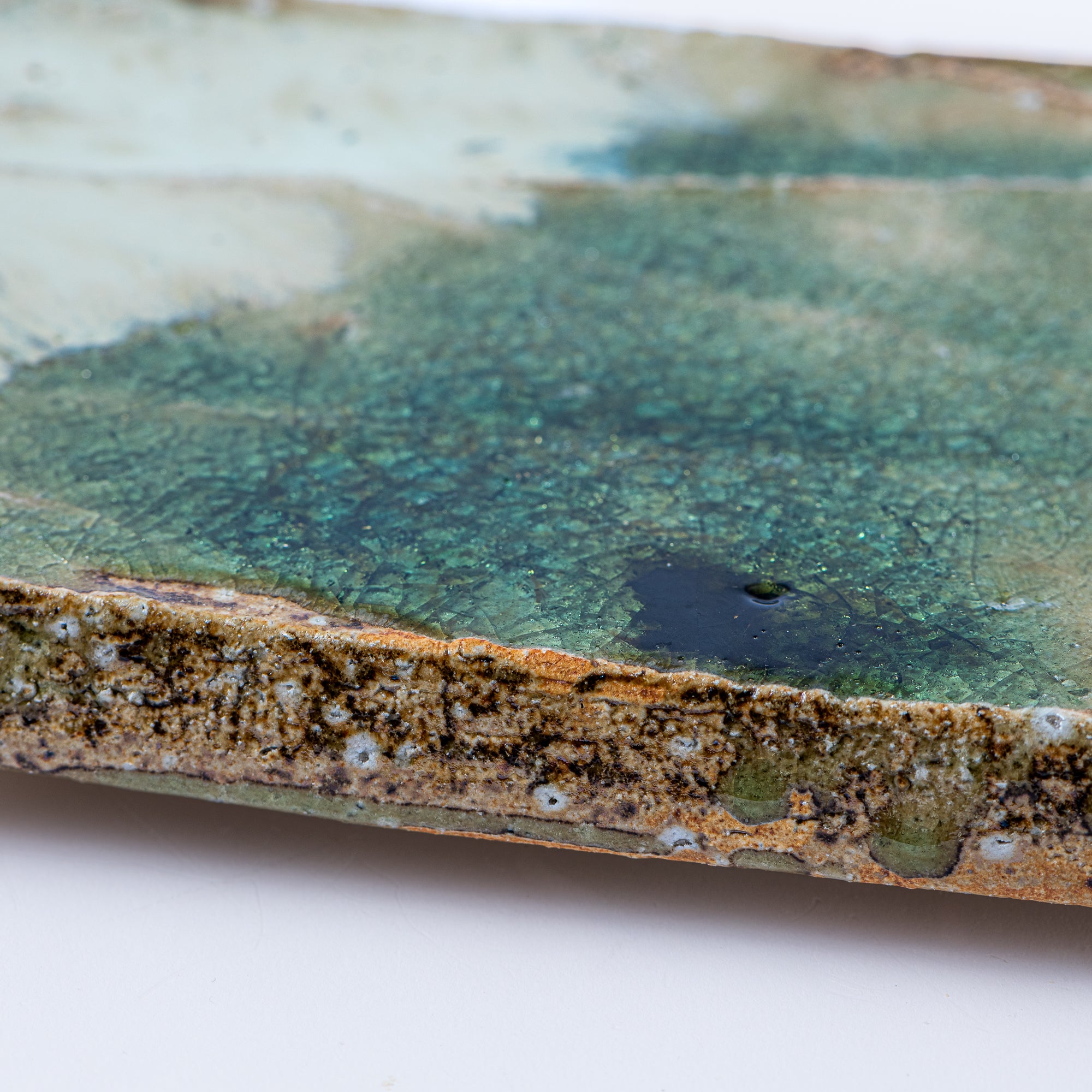
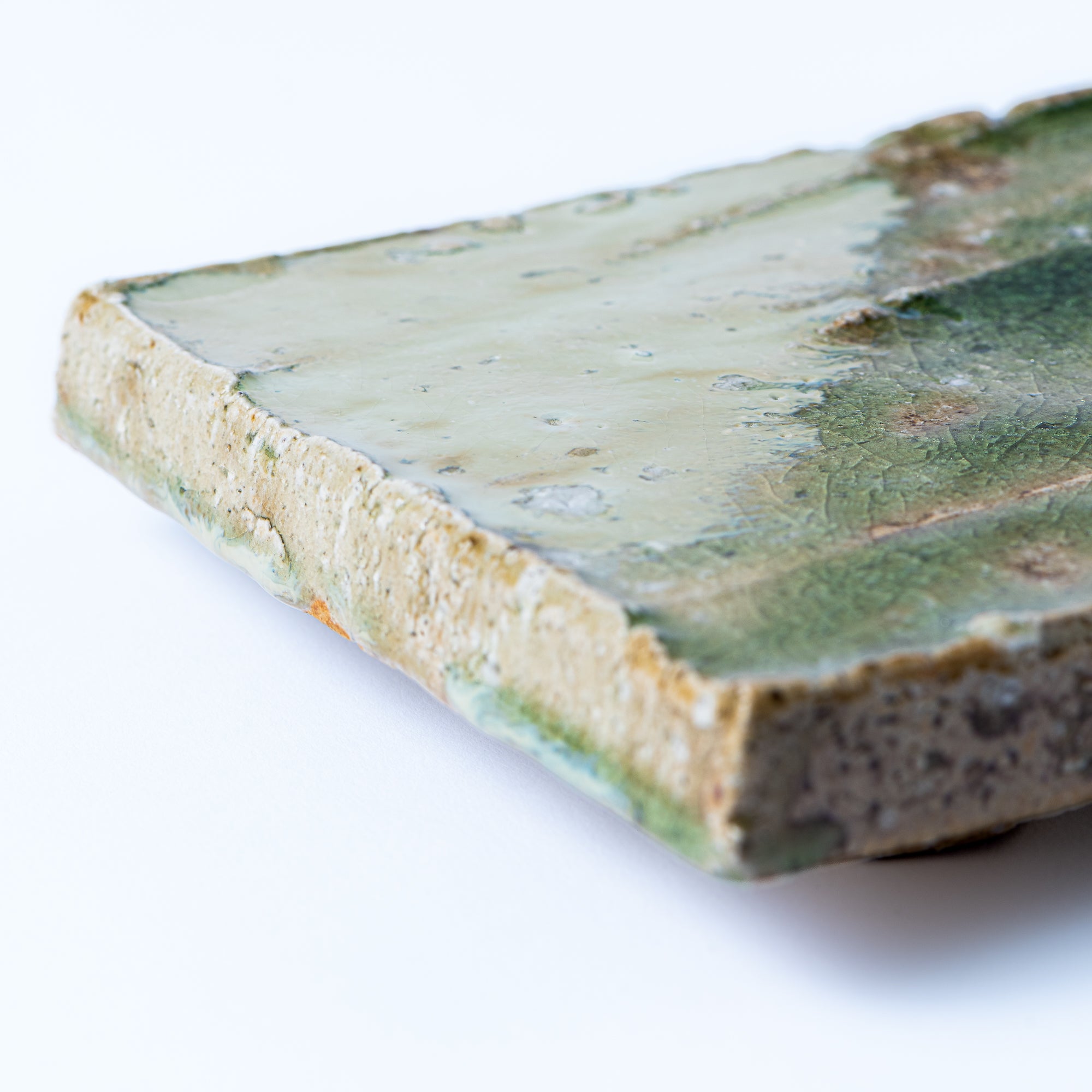
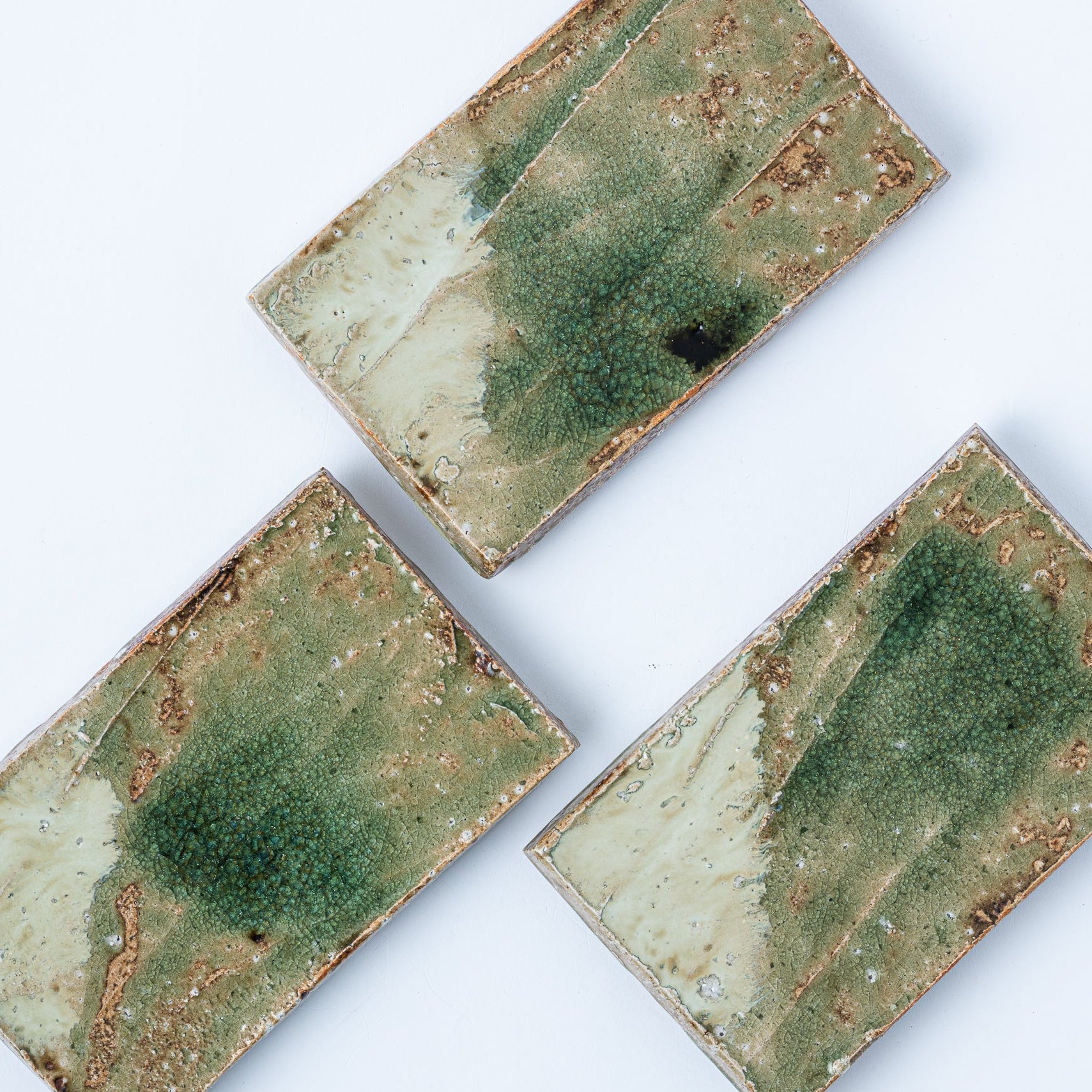
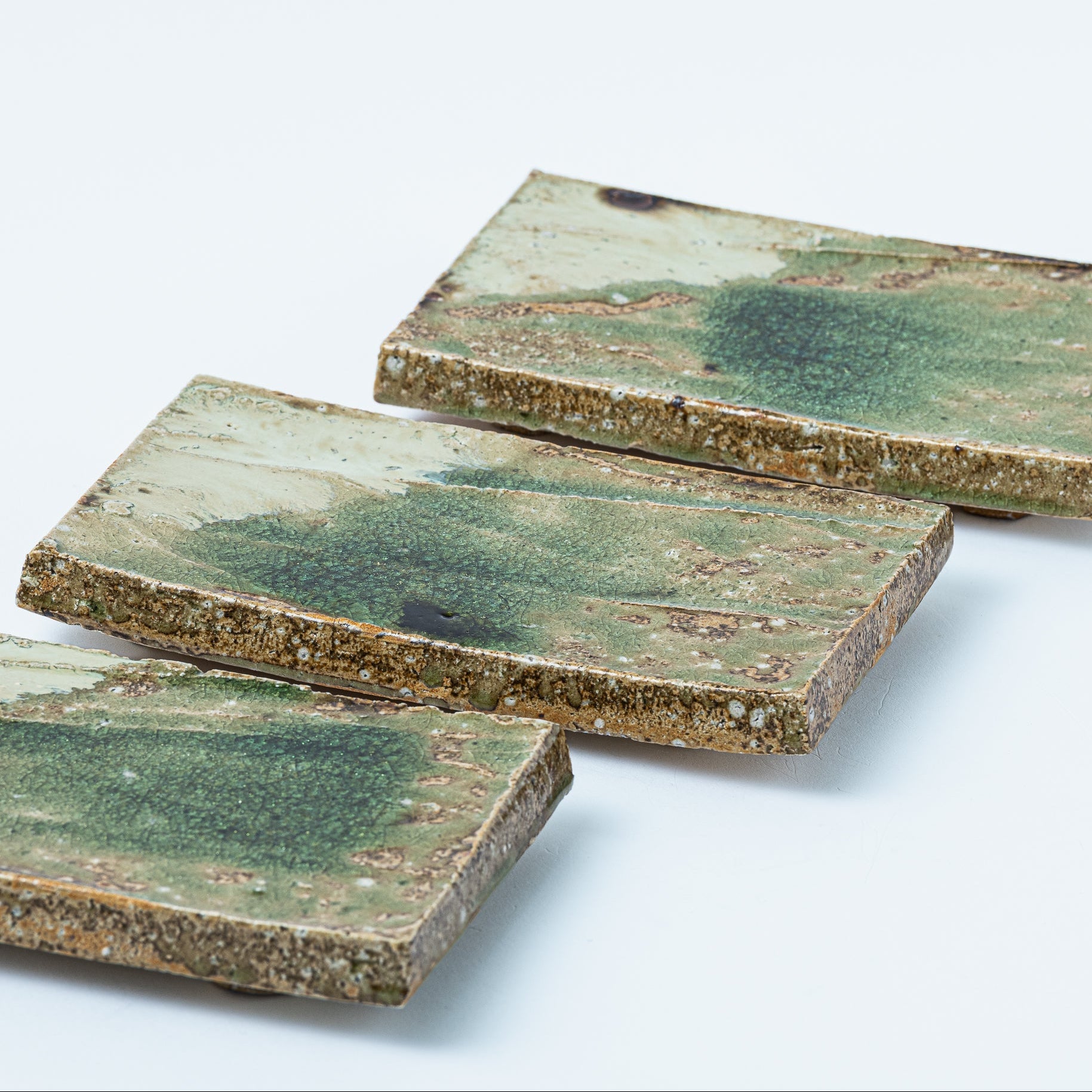
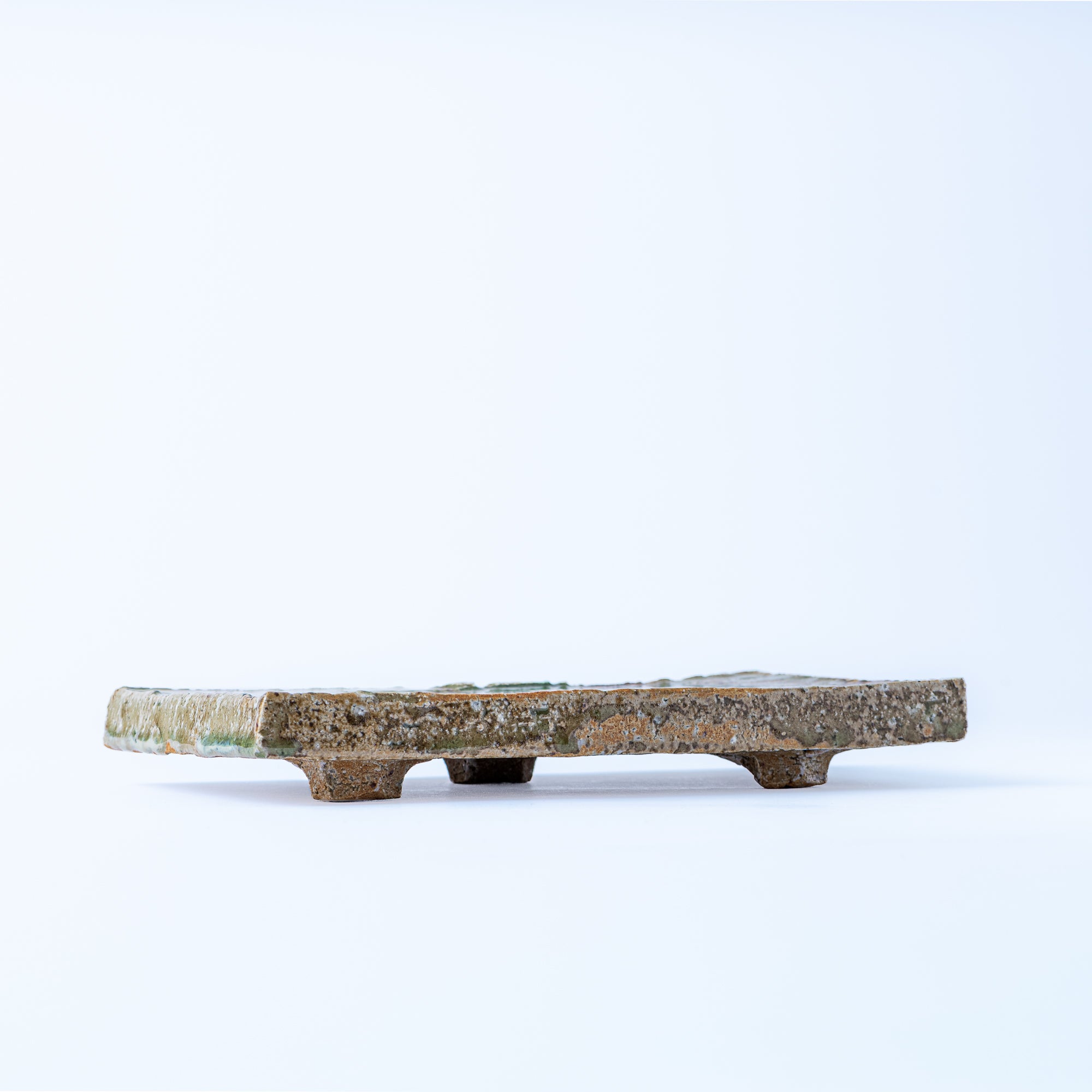
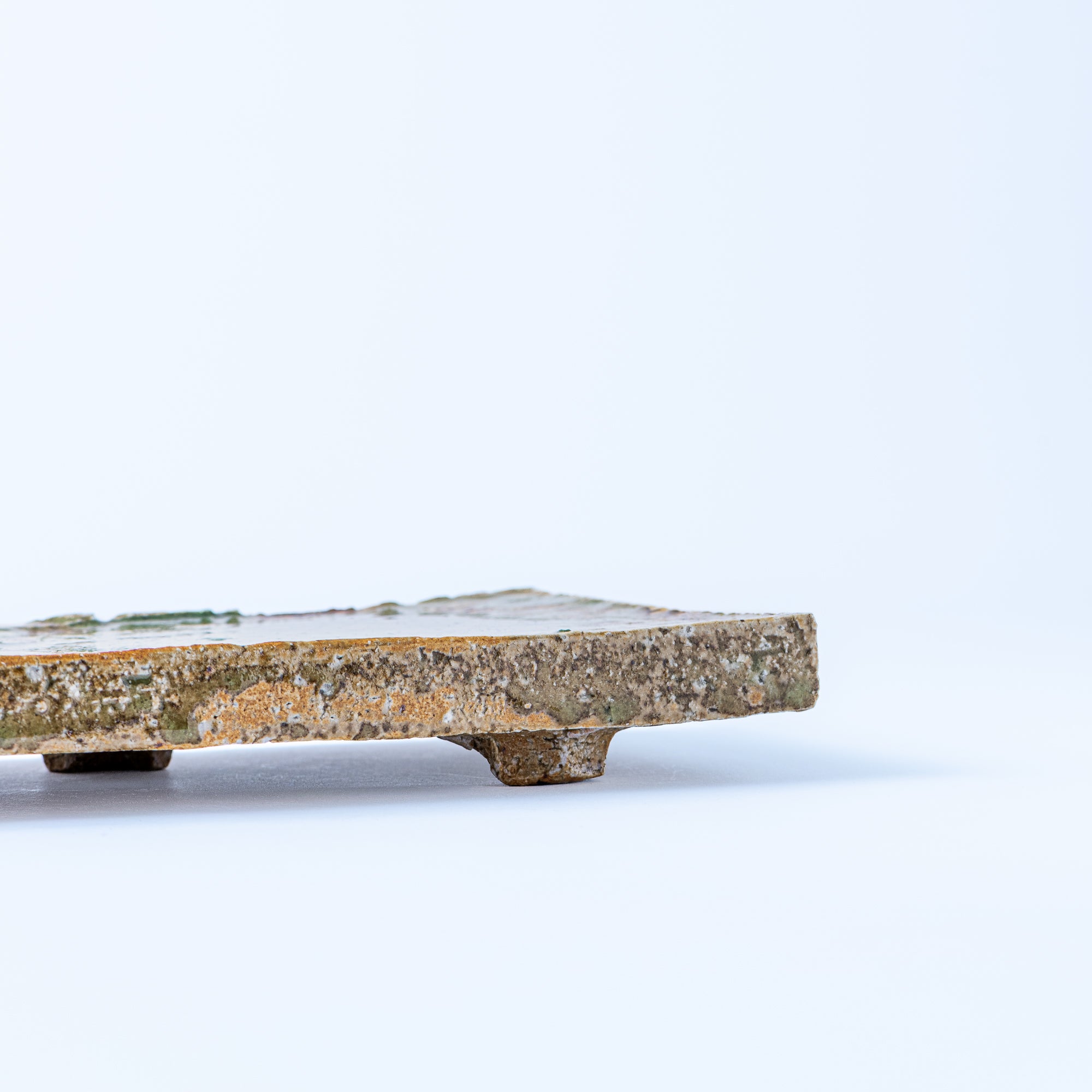
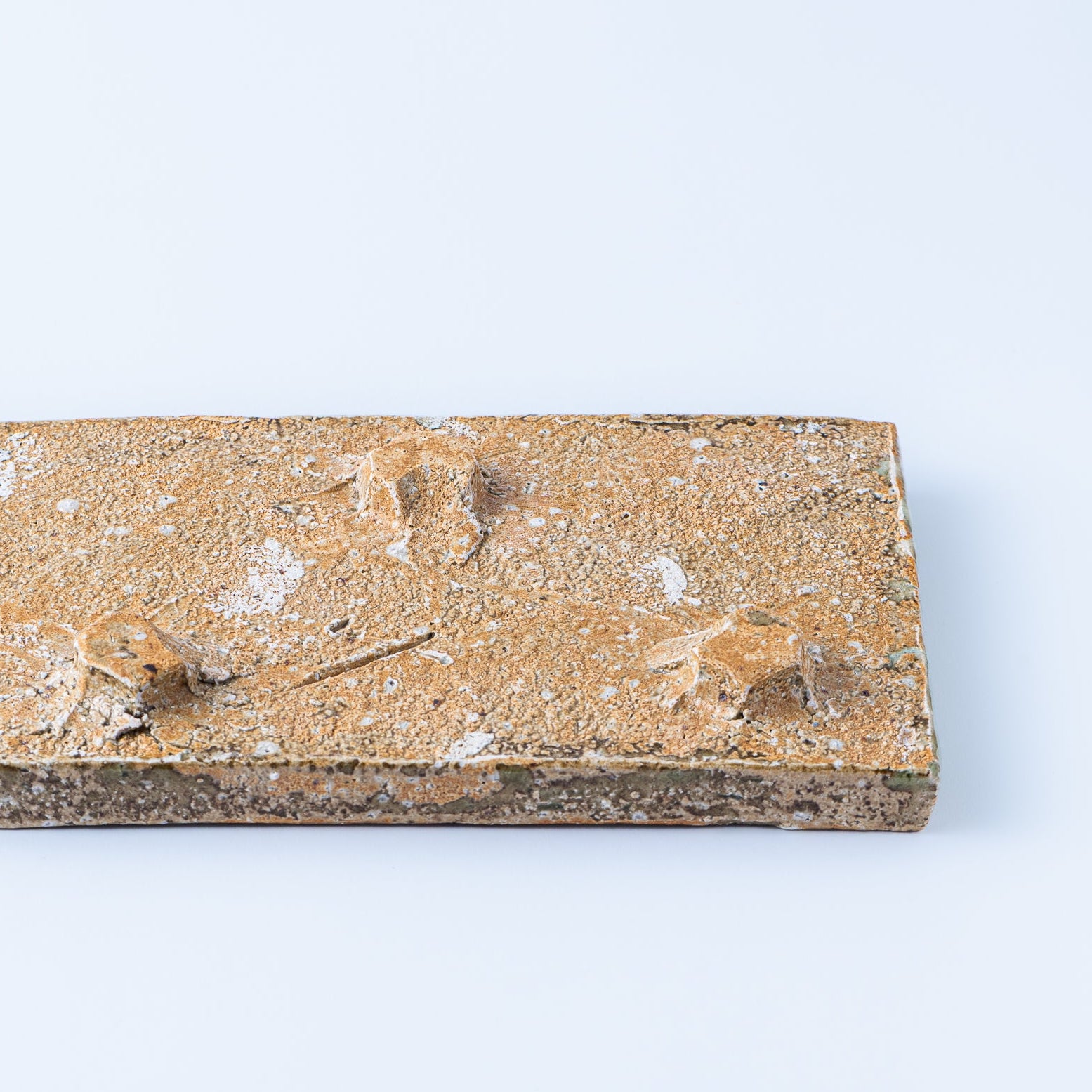
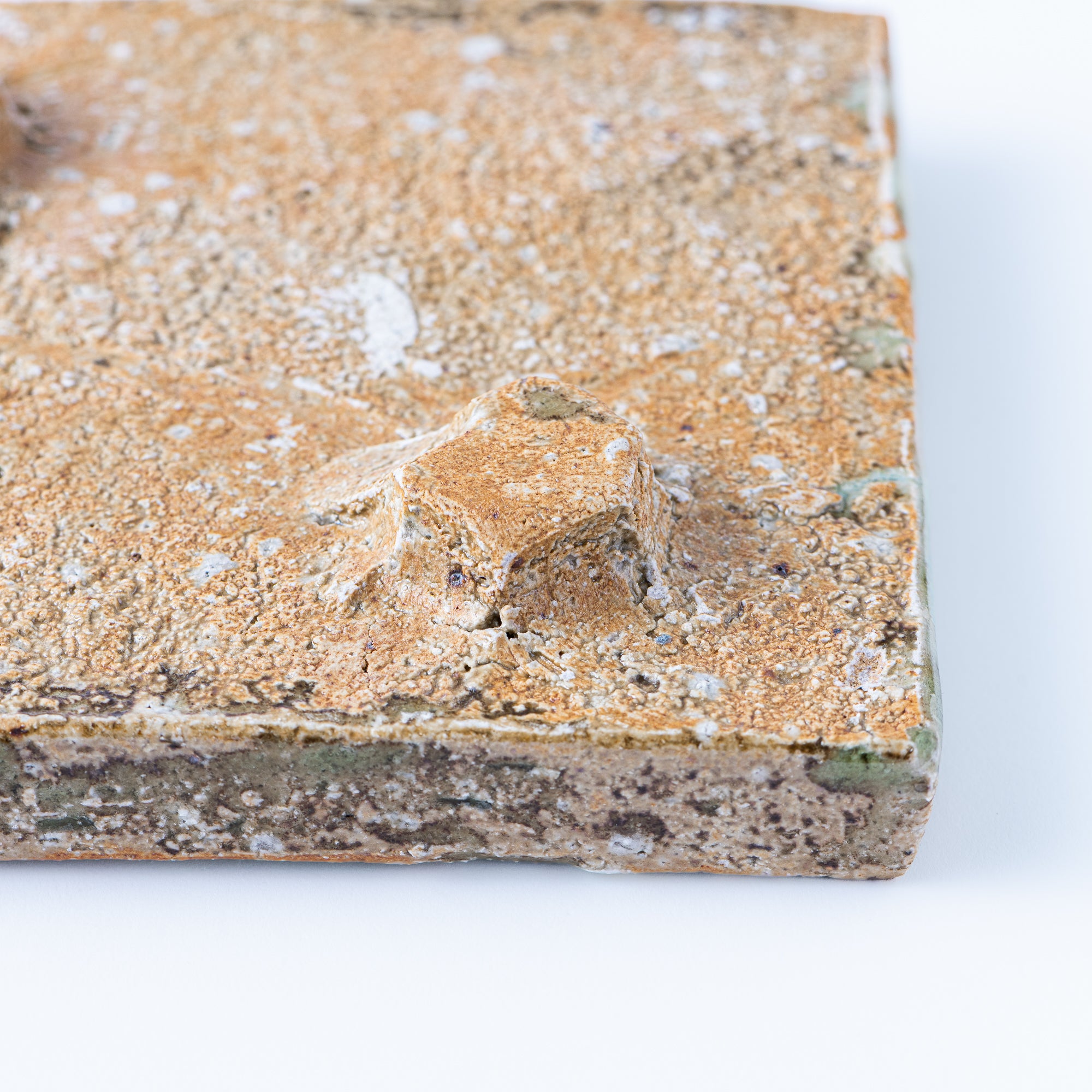
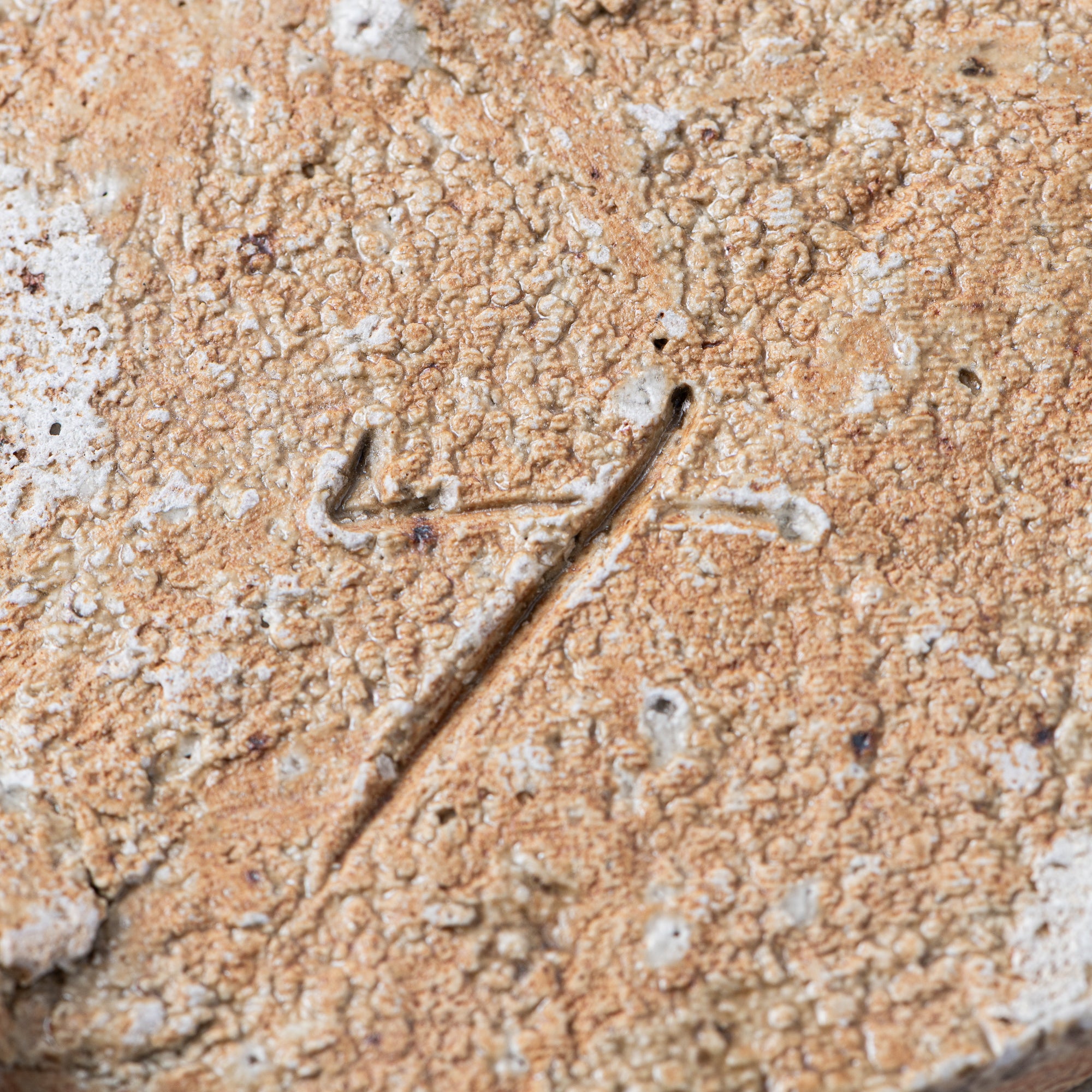
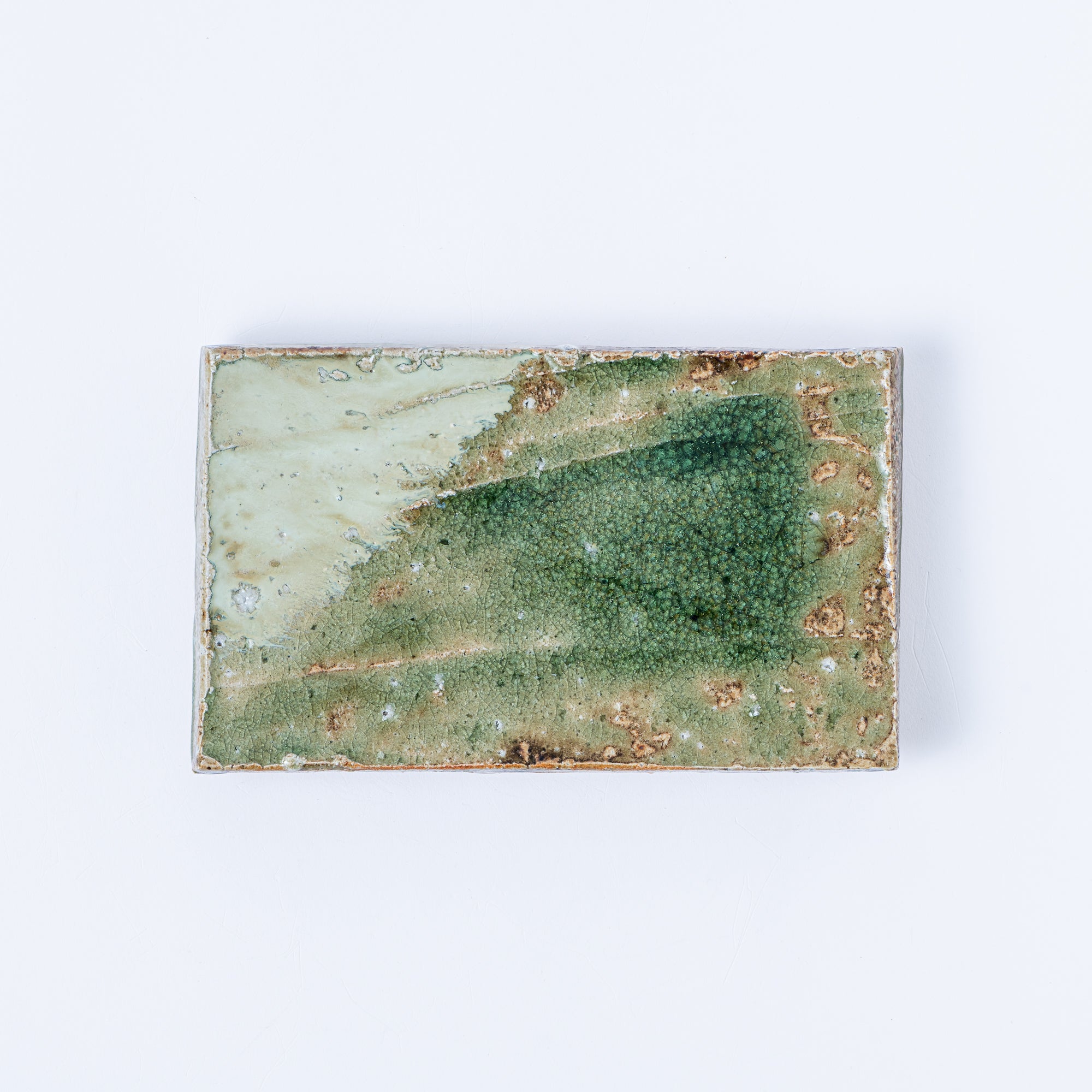
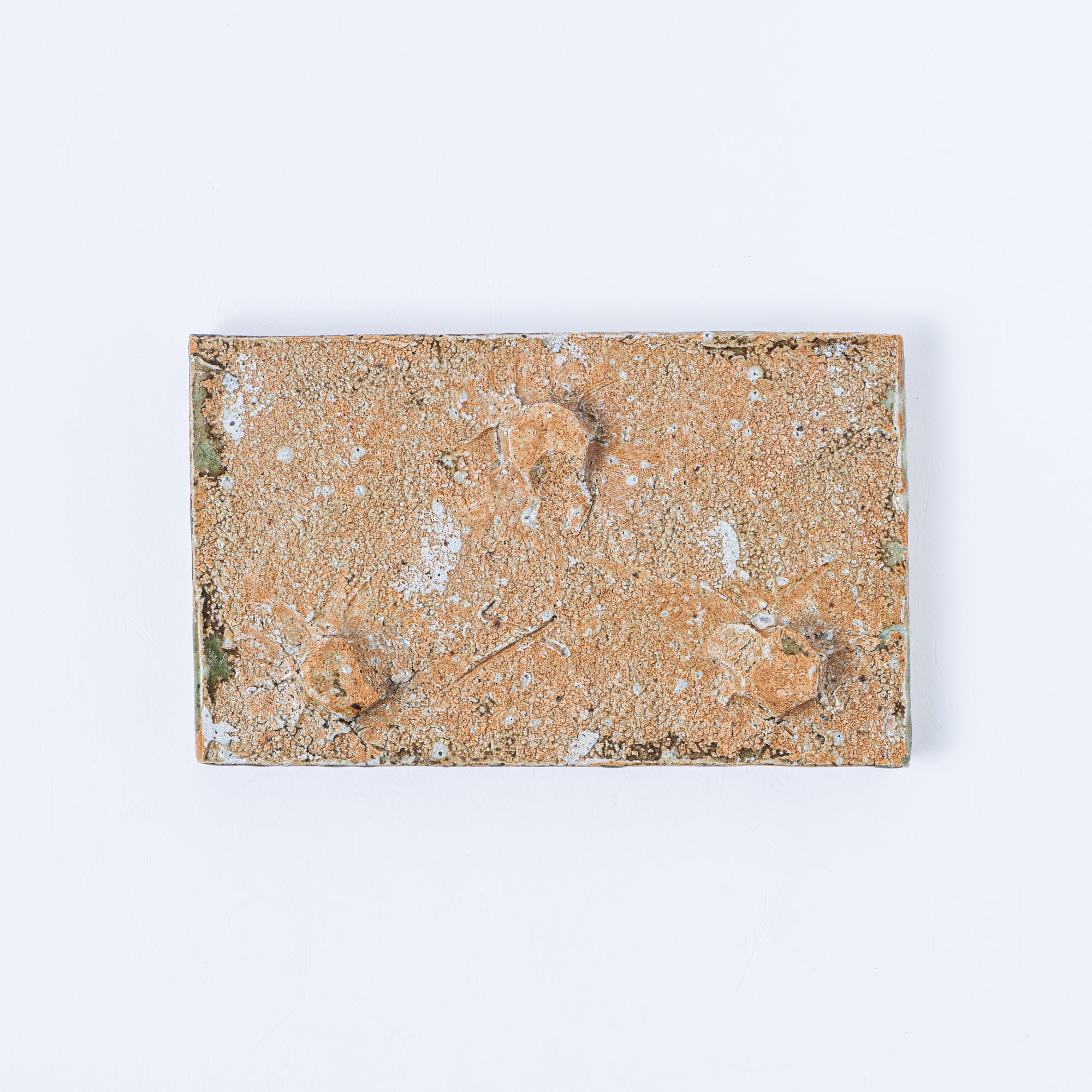
Glassy glaze pools across the slightly faceted surface of this rectangular dinner plate, contrasted with a milky white that spreads across one corner, the result of mixing a glaze with straw ash. Three small feet lift it slightly from the table, while the coarse texture of the Iga clay and its hefty weight lend it a distinct presence.
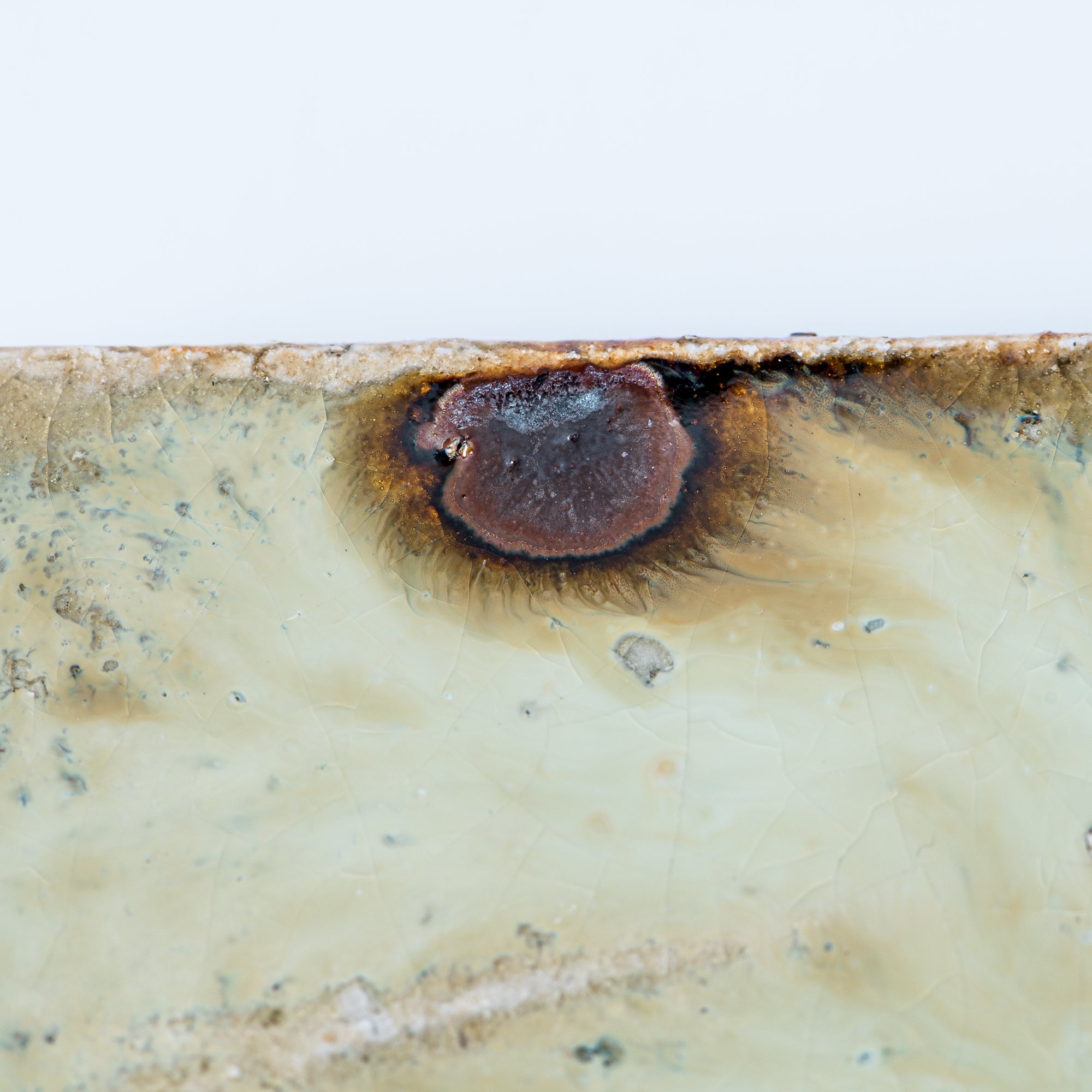
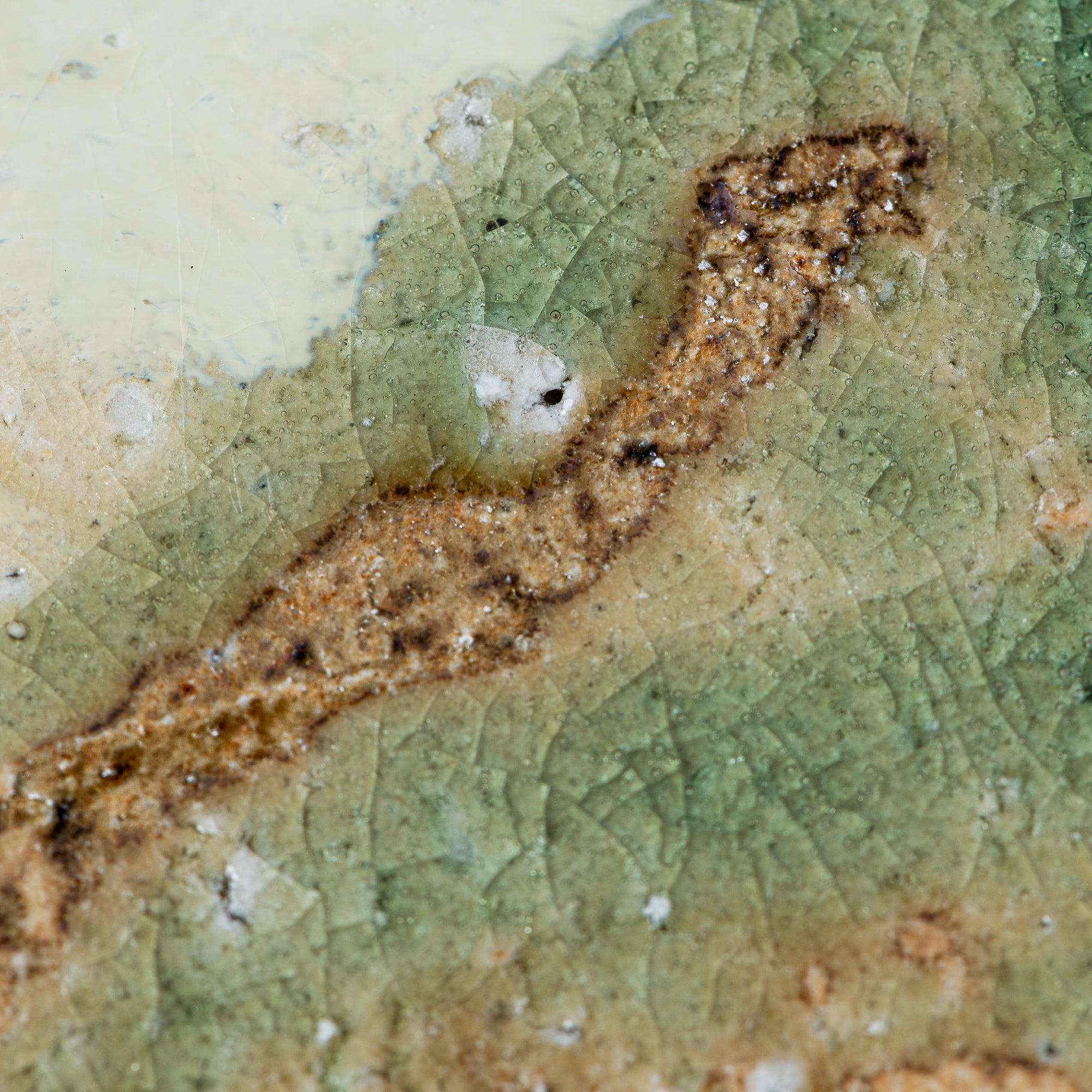
The vidro glaze gathers in the plate’s dips and channels, creating areas of deep green. In these areas, a network of kannyu crackles emerges across the surface. Spots of rust black emerge by chance where iron exists in the clay underneath. Pebble-like traces of feldspar remain visible throughout the clay body.
Under the direction of eighth-generation head Fukushima Kazuhiro, Mukai Kiln continues to explore new expressions within inherited traditions. Shaped by experiences ranging from apprenticeship under Koie Ryoji to years spent working with anagama “cave kilns” in the United States, Fukushima leads the kiln in treating tradition not as a boundary, but as a starting point.
DETAILS
| Quantity | 1 |
| Size | L 14 cm (5.5 in) x W 22.7 cm (8.9 in) x H 4 cm (1.6 in) |
| Weight | approx. 2.6 lb (1.2 kg) |
| Material | Stoneware |
| Package Type | Paper box |
| Microwave | No |
| Dishwasher | No |
Maker / Brand
Mukai Kiln is a long-established Iga ware kiln with roots dating back to the mid-nineteenth century. Today, eighth-generation potter Fukushima Kazuhiro and brother Shinya continue the tradition through both traditional and contemporary designs.
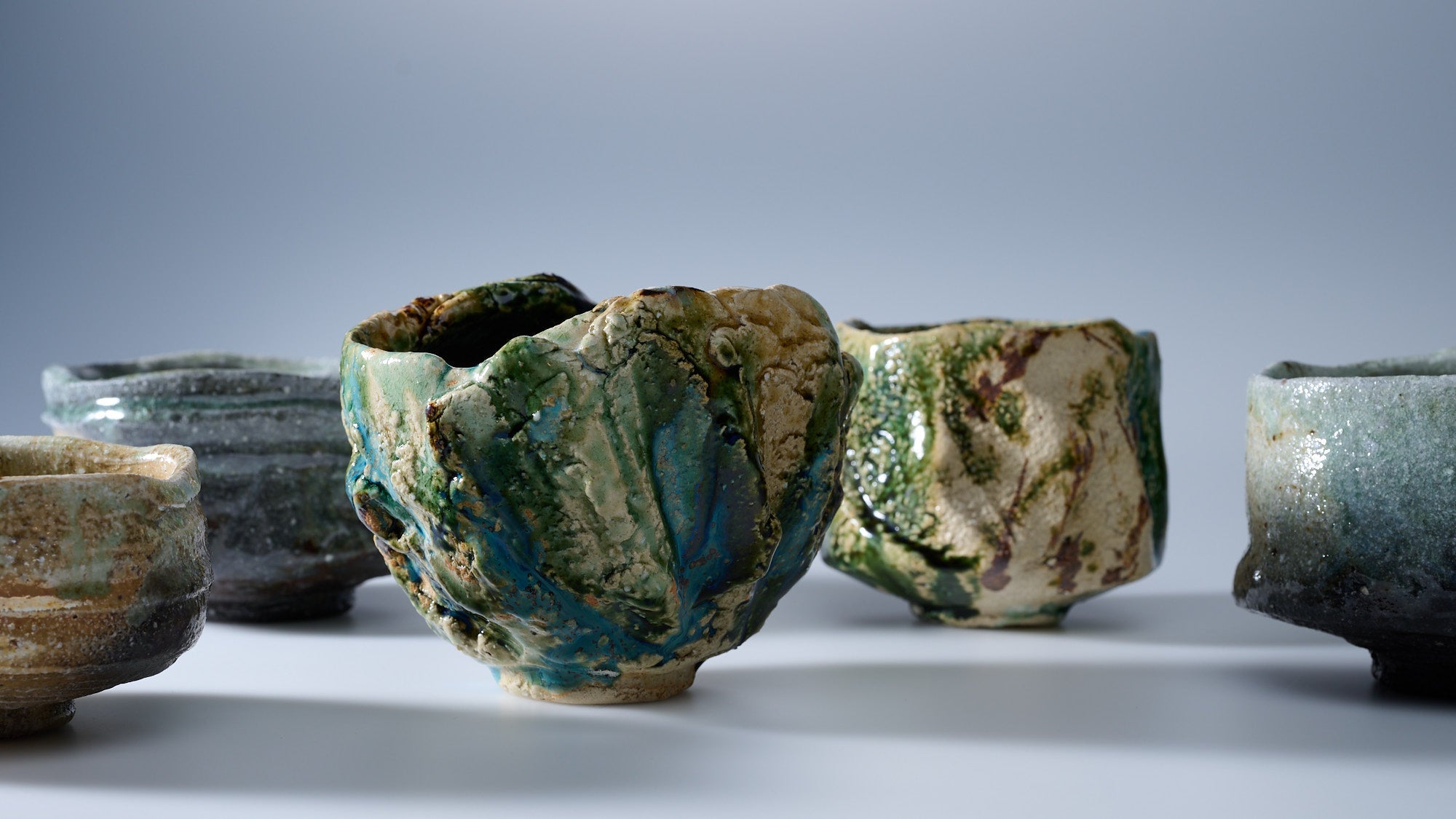
The kiln creates vessels that preserve the natural character of the region's coarse clay. Pieces born from the same firing carry subtle harmony in surface and color, bringing visual continuity to the table.
Crafts
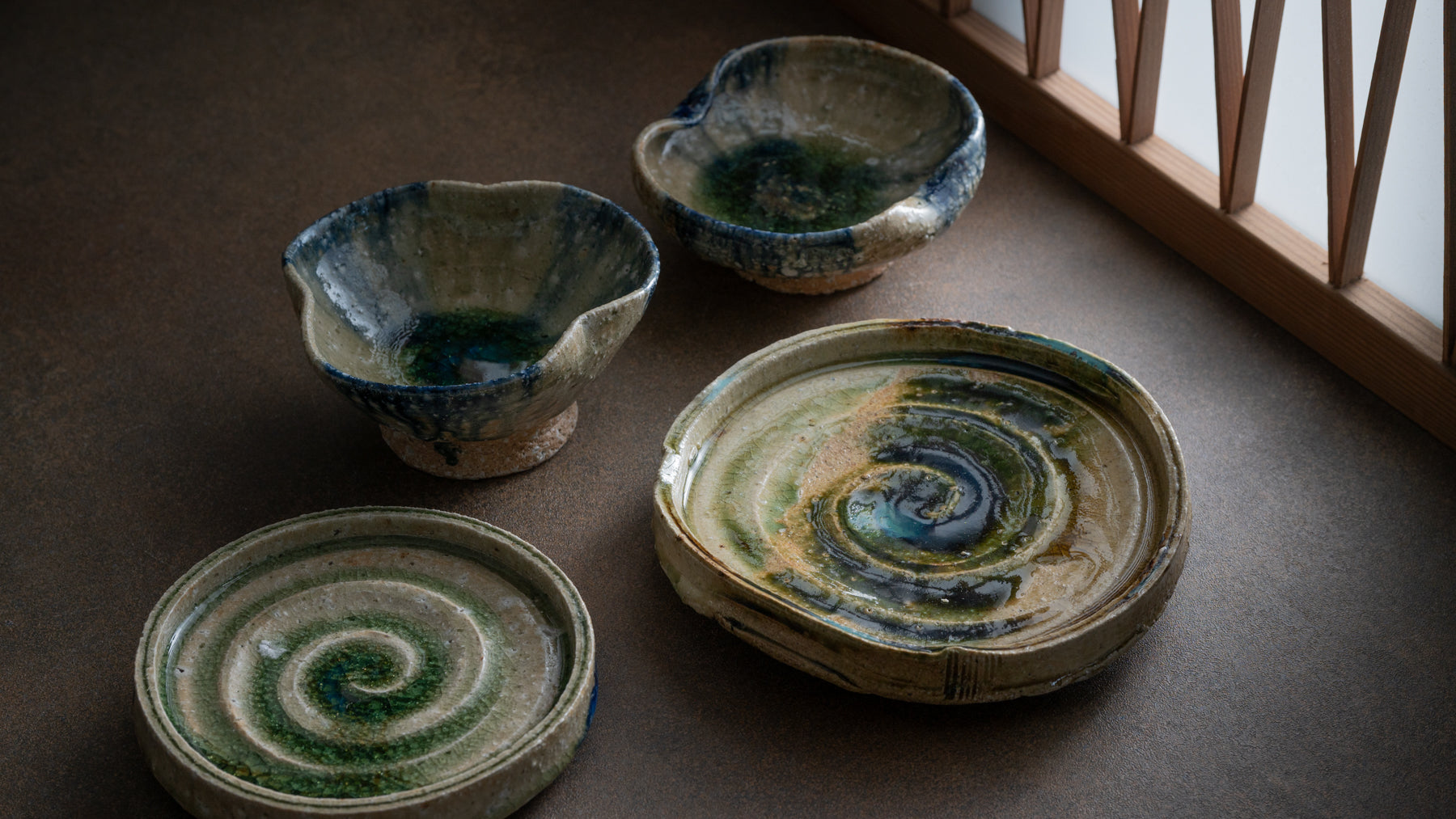
Iga ware, produced in the Iga region of Mie Prefecture, is celebrated for its deep roots in Japanese ceramic history and its distinctive character. With a lineage stretching back some 1,200 years, Iga ware rose to prominence during the Momoyama period (1573–1615 CE), when it became closely tied to the aesthetics of the tea ceremony.
As a form of traditional Japanese pottery, Iga ware is admired for its robust clay, earthy texture, and the organic beauty that emerges through various firing methods. The natural ash glazing and translucent green, glass-like vidro effects created by the intense heat of the kiln reveal the expressive artistry that defines Iga ware.
Notes
Choose options
Estimated Shipping Widget will be displayed here!
Dinner Plates
This category is for plates ranging from 21 cm (8.3 in) to 30.9 cm (12.2 in). For traditional Japanese meals, plates around 8 in are the most practical. On the other hand, when serving a one-plate dinner or pasta, plates around 25 cm (10 in) are more convenient.