

Exploring the Seasonal Herbs of Japanese Cuisine
Discover shiso, myoga, kinome, and seri, the seasonal herbs that quietly shape the flavors of Japanese cuisine.
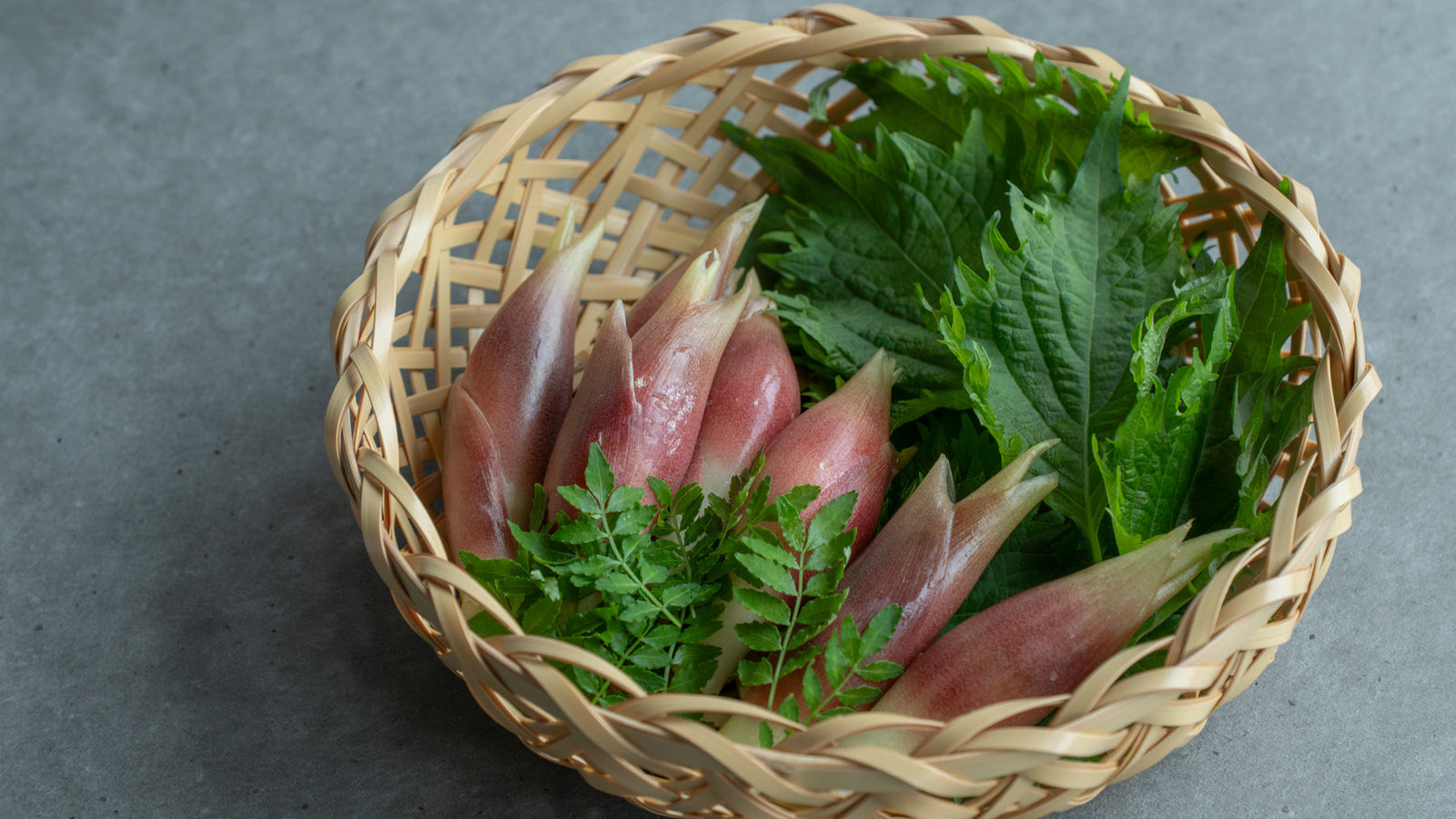
When traveling, it is often a single leaf or an unfamiliar scent that stays with us the longest, tucked into a dish we cannot quite name. Japan has a long tradition of herbs whose presence is often subtle yet memorable, adding distinctive character to everyday meals.
A small cluster of kinome brushed into a paste and spread across grilled fish. Fresh mitsuba served alongside oyakodon (chicken and egg over rice). Myoga sliced thin over chilled tofu on a humid summer evening.
These small details offer a glimpse into the rhythms of Japanese food culture. Throughout the year, different herbs appear alongside ingredients at their peak, bringing freshness and unique accents to the table. Once you begin to recognize them, what was once invisible becomes indispensable.

Japanese Herbs and the Philosophy of Yakumi
In many Western cuisines, herbs are integrated into the cooking process itself, lending flavor as a dish develops. In Japan, however, they are often valued less for the amount used than for the distinct aromas they contribute.
While Japanese cuisine is celebrated around the world, herbs used as small finishing touches are often overlooked, sometimes dismissed as little more than decoration. Yet behind them lies a rich history stretching back centuries, extending beyond the dining table into medicine, seasonal customs, and everyday life. From culinary herbs to medicinal plants and fragrant leaves, Japanese herbs reflect the many ways plants have been woven into the country’s traditions and daily routines.
At the heart of this heritage is the concept of yakumi, a term referring to aromatic ingredients such as herbs, fragrant leaves, and vegetables. The word combines the characters for “medicine” (薬 yaku) and “flavor” (味 mi,) indicating the long-standing connection between food and well-being in Japan.

Unlike seasonings such as soy sauce or miso, which form the foundation of a dish’s taste, yakumi is added in small amounts, often just before serving, to enhance aroma, bring contrast, and complement the natural flavors of the main ingredients. Many yakumi are also valued for reducing unwanted odors, helping preserve food, and supporting appetite and digestion.
More than a simple garnish, yakumi reflects a Japanese appreciation for fragrance, seasonality, and harmony in food.
Meet Japan’s Seasonal Herbs
Japan’s herbs are closely tied to the rhythm of the year. Some are available only for a short period, while others can be enjoyed year-round but are at their best when their aroma, flavor, or texture reaches its peak.
Spring: Freshness and New Growth
Kinome: The leaf of the sansho tree

With the arrival of spring comes kinome, the tender young leaves of the sansho (Japanese pepper) tree. Their bright citrus notes are softened by a gentle peppery warmth.
A classic spring yakumi, the leaves are lightly tapped in the palm of the hand before serving to release their scent, a small gesture that reflects the importance of fragrance in Japanese cuisine. Rarely used in large quantities, just a few leaves of kinome are enough to awaken the senses. Available for only a short time each year, it captures the fleeting freshness of spring in a small burst of aroma.
Ne-mitsuba: The root of Japanese parsley

Another herb associated with spring is ne-mitsuba, or root mitsuba—harvested with its edible roots still attached, a feature that sets it apart from the cut mitsuba available year-round. Whether used as a yakumi or enjoyed as an ingredient in its own right, ne-mitsuba is appreciated for its delicate fragrance and tender stems, bringing a subtle refinement to spring dishes without ever overwhelming them.
Rich in beta-carotene, it has long been valued for its antioxidant properties and traditionally linked to circulatory health. Its volatile oils are also said to have a calming effect, lending it a quietly restorative quality.
Yomogi: Japanese mugwort

The arrival of yomogi marks a different side of spring—not the cultivated freshness of the kitchen garden, but the untamed greenery of fields and riverbanks awakening after winter. For many Japanese people, yomogi is inseparable from the season itself: earthy and herbal in scent, slightly bitter on the tongue.
Often called the “Queen of Japanese Herbs,” this wild-growing plant has been gathered and enjoyed in Japan for centuries. Rich in vitamins K and E, yomogi is also valued for its antioxidant properties and other traditional health benefits.
Summer: Cooling Aromas
Shiso: Japan’s signature culinary herb

By midsummer, shiso is everywhere—its broad, serrated leaves torn over cold somen or tucked into onigiri. Its aroma is immediate and unmistakable: somewhere between mint, basil, and something entirely its own. It is one of the herbs most closely associated with summer cooking.
One of Japan’s most familiar yakumi, shiso has long been valued for the preservative properties of its natural oils—one reason it is so often paired with raw fish. Rich in beta-carotene and calcium, it is also a nutritious herb during the warmer months. Summer is also the season of red shiso, traditionally used to color umeboshi (pickled plums). It contains rosmarinic acid, a polyphenol linked to supporting overall health.
Myoga: Japanese ginger

Few herbs capture the feeling of Japanese summer quite like myoga. Recognizable by its crisp texture and sharp, unmistakable scent, this member of the ginger family is a quintessential yakumi. Its essential oils, including alpha-pinene, are said to help ease the body through the slow, humid heat of a Japanese summer.
Although cultivated in Japan for centuries and mentioned in Chinese records describing ancient Japan, myoga remains relatively uncommon as a vegetable elsewhere in the world.
Autumn: Concentrated Flavors
Mi-zansho: Sansho pepper berries

The same sansho tree that offered its tender green kinome leaves in spring gives something different by autumn. The berries that first appeared in early summer have ripened and split open, their husks developing a deeper fragrance. Rarely seen in supermarkets in their fully ripened red form, the berries are usually harvested earlier, as allowing them to mature completely can place strain on the tree. Their husks are then dried and ground into kona-zansho, the fine powder commonly sprinkled over grilled eel.
More concentrated than fresh green sansho berries, kona-zansho carries the same citrusy character found throughout the plant—settled into something deeper, with the gentle tingling sensation that makes sansho unlike anything else.
Winter: Quiet Renewal
Seri: Japanese water dropwort

In the depths of winter, seri brings vitality to the table. Known for its crisp texture and fresh, slightly peppery notes balanced by a mild bitterness reminiscent of wild greens, it is one of the few vegetables native to Japan.
During the colder months, seri is a beloved ingredient in regional hot pots, where both the stems and roots are enjoyed for their flavor. It is also one of the traditional Seven Herbs of Spring (haru no nanakusa), a reminder that even in the coldest months, the first signs of spring are already beginning to appear. Rich in carotene, folate, iron, and vitamin C, seri has long been valued for its nourishing qualities.
Bringing Japanese Herbs to the Table
One of the reasons these herbs remain such a vivid part of Japanese food culture is their versatility. Some are used as delicate finishing touches, while others are mixed into dishes or enjoyed as ingredients in their own right. Understanding a few simple ways to use them can bring the flavors of Japan throughout the year into everyday cooking.
As Garnish
Many Japanese herbs are enjoyed as yakumi, added just before serving to enhance a dish with fragrance, freshness, and color.
A leaf of kinome atop simmered bamboo shoots, a few strands of mitsuba floating in clear soup, or finely sliced shiso and myoga scattered over chilled somen noodles can transform a meal with subtle touches of color and flavor.

Because these herbs are often served in small amounts, a dedicated yakumi plate offers a way to present them at the table. Traditionally used for condiments and garnishes, these small dishes allow fresh herbs to be served separately, inviting diners to adjust flavors and aromas according to their own taste.
Ground and Mixed Into Dishes

Other herbs are incorporated directly into dishes, adding their characteristic aromas and flavors. Kinome, for example, can be gently ground together with miso using a mortar and pestle, releasing its fresh citrus aroma as the ingredients are combined into a fragrant seasoning. Yomogi is kneaded into sweets such as kusamochi dumplings (rice-flour dumplings mixed with mugwort) and sasadango (steamed rice dumplings wrapped in bamboo leaves), giving them their signature green color and herbal notes.
Enjoyed as an Ingredient

Some Japanese herbs take on a more prominent role, becoming an essential part of a dish rather than simply a seasoning. Seri, for example, is the star of warming winter dishes such as seri nabe, where its stems, leaves, and even roots are all enjoyed. Whether simmered in hot pots, added to soups, or served as tempura, such uses highlight the versatility of Japanese herbs beyond their role as finishing touches.
A New Year’s Tradition: The Seven Herbs of Spring
One of Japan’s long-standing customs involving herbs takes place on January 7, when families traditionally begin the morning with nanakusa-gayu—a simple rice porridge made with the Seven Herbs of Spring. After the rich foods of the New Year celebrations, it offers a moment of simplicity, welcoming the year ahead with a dish made with fresh greens.

This practice is rooted in the belief that each herb carries its own protective quality and that eating them together at the beginning of the year invites good health and vitality for the months to come. Seri, one of the seven herbs, is valued not only for its fresh aroma and flavor but also as a reminder of the year’s changing rhythms.
Though the tradition has changed over time, nanakusa-gayu remains a clear expression of something Japanese food culture has long understood: that what you eat, and when you eat it, is never incidental. Through ingredients and rituals alike, the passage of the year is felt, remembered, and passed on.

Though often used in only the smallest amounts, Japanese herbs reveal the depth of attention found in Japanese cuisine. To recognize them is to discover another dimension of food culture—one shaped by balance, tradition, and a close connection with the natural world.
Stay close to the craft
Now and then, a quiet letter — new stories, seasonal notes, and the hands behind the work.
Japan’s First Tea Harvest and the Hand-Picked Tea Experience
Hand-pick first-harvest leaves at a Kanagawa tea farm and discover what makes shincha, Japan's…
Rebecca Menasché
Obon: Japan’s Summer Festival of Remembrance
More than a seasonal festival, Obon is a time when families across Japan honor…

On Tango-no-Sekku, We Celebrate the Health of Our Growing Boys!
We celebrate Boy's Day on the same day as Children's Day, with fun activities…
Leave a comment