

How One Plate Led Me to Rebuild a 150-Year-Old House
A small plate from Yumachi Kiln led Asakura Keiichi to mingei, a shop in Hida, and a relocated 150-year-old farmhouse.

In the apartment where I lived alone in Nagoya, there was nothing I felt particularly attached to.
At sixteen, I dropped out of high school, left my hometown nestled in the mountains of Hida, and went to Nagoya chasing a dream. My furniture came from discount stores and secondhand shops. I owned only a few plates. When one chipped, I threw it away and bought another. There was no inconvenience, no complaint. Somewhere in my mind, I believed that owning little meant being light, and being light meant being free.
I continued living this way until my mid-twenties. Part of me wanted to become something, yet I also thought it was fine if I didn't. Days flowed by, and I never questioned their passing. I was content with that.
Coming home from my part-time job, I would stand in the kitchen with a convenience store bag still in my hand. Some days I used a plate, some days I didn’t. My belongings had no names or histories. In much the same way, my life had no particular texture to it.
In 2004, I returned to my hometown. I worked at a ramen shop, consumed by the busyness of each day. The substance of my life hadn’t changed much from my Nagoya years.

In the spring of 2011, everything stopped.
On the television in my apartment, I watched footage of the sea in Tohoku swallowing entire towns. The floor beneath my feet suddenly felt like nothing more than a thin board, and it seemed to sway. What remains? What doesn’t? What do I want to remain? When I asked myself these questions, I realized there was almost nothing in my hands that I wanted to keep.
But outside my window, it was different. Nature, history, and human endeavor were woven together into a beautiful landscape. Between that rich tapestry of life and my own existence, there was an unmistakable rupture.

Many of my former classmates had inherited family businesses. Carpentry, pharmacies, supermarkets, car dealerships. Those who had something to carry on, and me with nothing. More than envy, I wondered: what exactly am I repeating day after day? For the first time, I seriously considered what kind of work I could do for a lifetime.
It was around then that I encountered the word mingei.
A man named Yanagi Soetsu had discovered beauty in objects made by anonymous craftsmen for everyday use, and he called these things mingei, or folk craft. Things made without any desire for recognition are beautiful, he said.
As I read his writings, I felt he was speaking directly about Hida, the place right before my eyes. It didn’t feel like I was learning something new. Rather, it was as if something I had always known but never had words for had finally been given a name. This is it, I thought.

In my parents’ house and in my grandparents’ house, there had always been crafts whose makers were unknown and whose prices no one remembered. As a child, I never thought of them as beautiful. They were simply there, ordinary things that had always been present. And Yanagi Soetsu called them beautiful. That made me happy, even proud.
The first piece I bought was, I believe, a small plate from Yumachi Kiln in Shimane. I placed it on my apartment table. Suddenly, I noticed scratches on the tabletop that had never caught my eye before, along with the obviously laminated wood grain. A single piece of pottery made everything around it visible.

Gradually, the contents of our life were replaced. After the plate came rice bowls, then pots, then a chest to store them in. To reconsider your tools is, in the end, to reconsider how you live. And finally, the question turned to where we lived. I came to feel strongly that I wanted a life connected to the richness outside my window.
Curiously, once you bring in a piece of pottery you truly care about, you want to make food worthy of it. I began making dashi more often. The way I washed dishes changed. I bought things less frequently, but spent more each time. In the end, my expenses stayed about the same, yet I spent more hours in the kitchen, and my wife and I spent more time together at home.

When I consider where the things once called mingei stood, they were always at the center of someone’s daily life. They existed within the materials of a place, the culture of a place, the work of hands rooted in that place. For simply living, an apartment posed no problem. But to live as a person of this land, something felt lacking. I wanted to inhabit a life of making and doing. I wanted to engage with the land, with others, and to live in a way that might one day become part of its culture. And if I were to handle such things, I realized, my wife and I would first need to live that way ourselves. Otherwise, it would all be a lie.
I never received any formal training in running a craft shop. When it came to mingei, I had no teacher. I could only read books, visit shops, look at actual objects, and figure things out together with my wife. That hasn’t changed to this day.

I also understood that I could never be a maker. I lacked the skill and the nerve. But I could take what someone had made and pass it on to someone else’s life. If I could stand in that in-between place, I thought, this was work I could keep doing all my life.
Over several years, while continuing my day job, I visited craftspeople and bought pottery to use myself. I thought only of being honest, nothing more. Through the experience of using these objects, my wife and I gradually came to understand our own tastes and to grasp the shape of the life that suited them.


Then we encountered an old house. It was 150 years old, already dismantled and stacked as lumber. Strangely, I felt it was fate. Perhaps because of everything we had been through, my wife and I decided immediately: we would rebuild this house and live in it. We already had a location in mind. It was Utsue, a hamlet in Kokufu, the same town where our apartment stood, but a place where time seemed to flow more gently. Fortunately, we found the perfect plot of land.

We named the shop Yawaiya. In the Hida dialect, yawai means preparation, getting ready. A shop that prepares and waits. A shop that helps others get ready for their days.
Every day, we prepare. We cook meals, fold clothes, wash dishes. A life shaped by these daily preparations is a fulfilling one. Such readiness always grows from a heart that believes in a good future.

Asakura Keiichi
Born in 1984 in Takayama, Gifu Prefecture.
Owner of Yawaiya, a shop specializing in Mingei folk craft ceramics and a private library. Part-time lecturer at Aichi University of the Arts and board member of the Hida Folk Crafts Association.
He lives with his family in a 150-year-old traditional farmhouse that was relocated to its current site, spending his days selling tableware, reading books, and writing.He contributed to a dialogue in Sustainability Begins in Everyday Life by Matsumoto Shoukei (Tankosha, 2024).
Author of Mingei, Even Without Understanding It (Sakuhinsha, 2024).
Stay close to the craft
Now and then, a quiet letter — new stories, seasonal notes, and the hands behind the work.

What is Mingei? All About Japanese Folk Craft
Learn about the Japanese folk craft movement, its history, characteristics, and how crafts can…
Ito Ryo
Home Sweet Museum: Stepping Inside the Japan Folk Crafts Museum (Nihon Mingeikan)
Artifacts, collected from across Japan and beyond, irrespective of their era, represent a veritable…
Tominaga Chiaki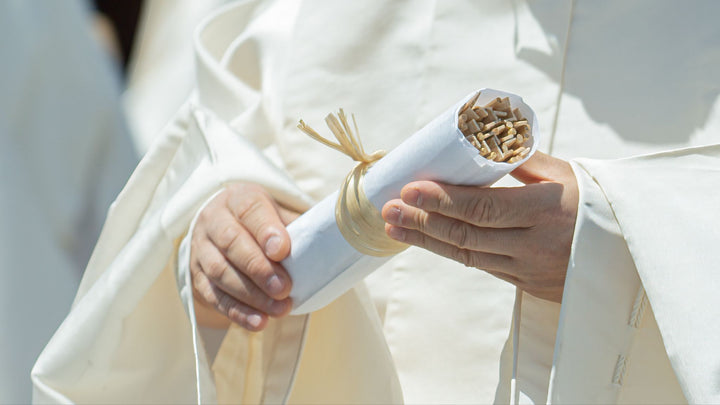
The Hashi Kanshasai: Giving Thanks to Used Chopsticks
Join us at Hie Jinja, where used chopsticks are thanked with prayer and music,…
Leave a comment