

The Craft of Kissaten: Japan’s Coffee Culture Across Time
Discover Japan’s coffee culture through kissaten traditions, hand-drip craftsmanship, and the quiet charm of a Tokyo cafe.
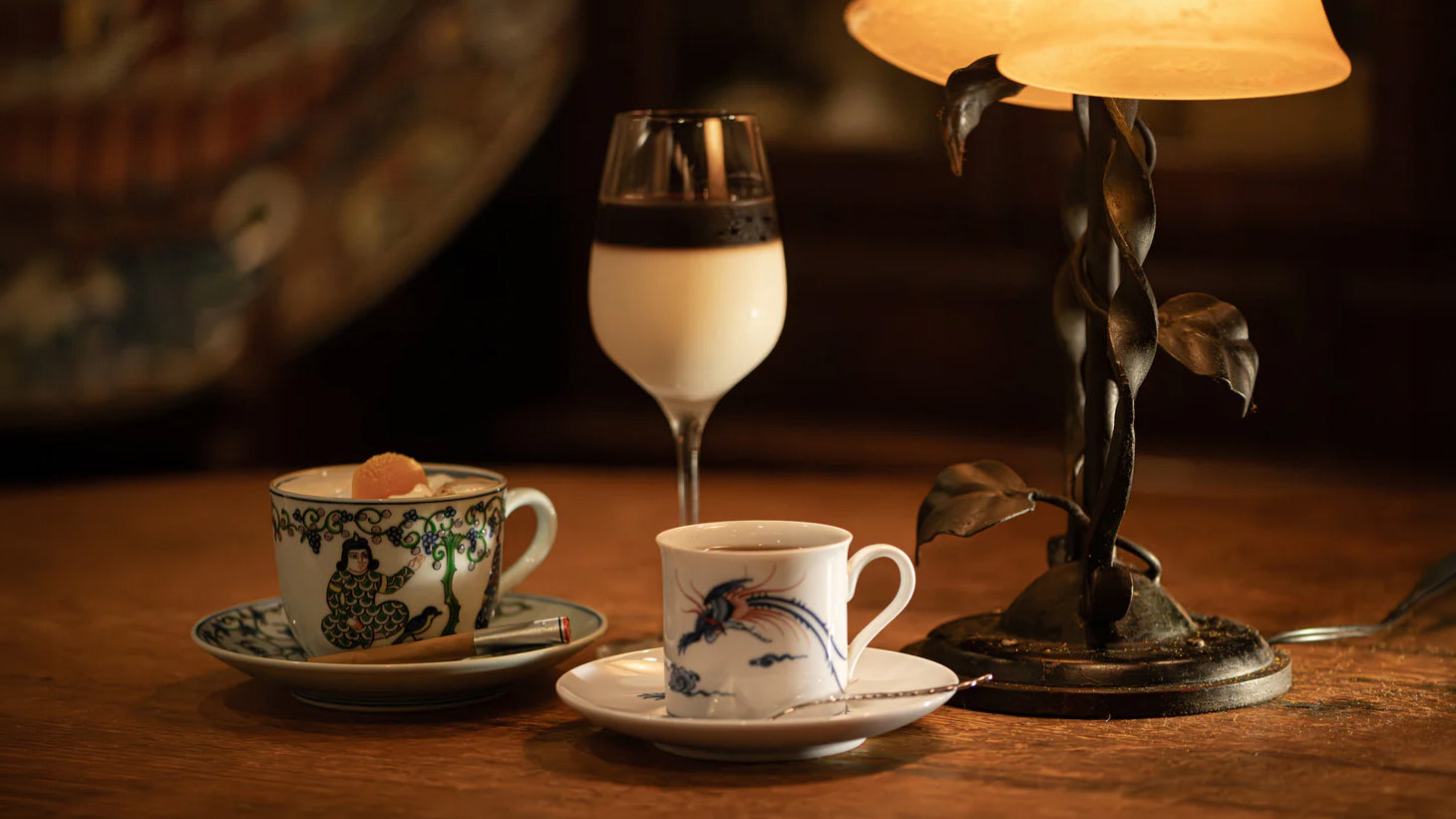
Japan’s coffee culture is a blend of tradition and modernity, evident in the wide array of coffee shops, from traditional coffee houses, known as kissaten, to homegrown chains, specialty coffee shops, and more. Among these, kissaten have been the driving force behind Japan’s coffee scene since the 1920s, perfecting the brewing technique and elevating it to an art form. Kissaten have earned their global reputation as the ultimate destination for coffee connoisseurs seeking a serene ambiance.
Team Musubi discovered Japan’s unique coffee culture by visiting a long-established kissaten, Chatei Hatou in Shibuya, and talking to the master, Terashima Kazuya. He has experienced Tokyo’s ever-changing cafe scene for about thirty-five years and shared his thoughts about the present and future of Japanese coffee culture.

Before we delve into the story of Chatei Hatou, it’s essential to briefly explore the three historical periods of transformation that paved the way for the emergence of coffee culture in Japan.
Why is Coffee Culture in Japan so Unique?
Japan has become a significant consumer of coffee. According to the All Japan Coffee Association, coffee consumption is among the highest in the world, ranking fourth globally (397,272 tons in 2025). In Tokyo, where the population is concentrated, there are 6,121 coffee shops.

You will likely encounter at least one coffee shop or cafe while exploring any of the 23 wards of Tokyo. You will find one more easily than a Japanese tea shop.
Over the past twenty years, a diverse array of coffee shops has emerged in Japan, including global coffee shops, homegrown chains, kissaten, coffee stands, specialty coffee shops, and more. It is worth noting that even convenience stores are now offering coffee brewing services from machines at reasonable prices. A wide variety of coffee-flavored beverages can be found in many places, including convenience stores, local supermarkets, and vending machines.
First Wave: The Debut of Kissaten
Japan’s coffee culture is distinguished not only by its variety but also by its emphasis on craftsmanship and ritual. In addition, it showcases the art and techniques of brewing methods, drawing parallels with the Japanese tea ceremony to encourage a Zen-like mindset while enjoying a cup of coffee. The roots of this culture can be traced back to kissaten.
Coffee made its first appearance in Japan in 1856 during the Edo period (1603–1868 CE). It was brought to Nagasaki by Dutch merchants. About thirty-two years later, in 1888, during the Meiji era (1868–1912 CE), the first coffee house, Kahisakan, opened its doors in Ueno. Then, in 1911, Café Printemps, modeled after European cafes, opened in Ginza. In the same year, Café Paulista and Café Lion were also founded, and these three establishments are said to have influenced the foundation of Japanese coffee shops.

The rapid rise of coffee houses was fueled by the influx of Western culture and Japan’s modernization efforts. This marked the beginning of Japan’s first cafe boom.
However, the encroaching war forced many shops to close around 1937. It was only after the war ended and coffee bean imports resumed in 1950 that people resumed drinking coffee again.
The number of kissaten and cafes had gradually increased from the 1950s, reaching a record high of 154,630 in 1981. Many unique shops emerged that strongly reflected the owner’s philosophy, likes, and hobbies. The diversification of coffee shops has contributed to the emergence of a unique cultural phenomenon known as “kissaten culture.”
A kissaten master with craftsmanship played an integral part in driving this culture, transforming brewing techniques into an art form. Some methods are used uniquely at Japanese kissaten, including a theatrical siphon method using glass vessels that bubble and steam like laboratory equipment, and a pioneering Japanese brewing method by hand, known as flannel drip. Brewing by hand, in contrast to the espresso machine, requires meticulous steps and time, which resemble the Japanese tea ceremony.
Second Wave: The Rise of Espresso and Dark Roasts
The second wave of stylish coffee culture arrived in Japan, along with Starbucks, which introduced the ”Seattle-style cafe” concept in 1996. Espresso-based drinks and dark roasts clearly became mainstream.

The number of kissaten decreased to around 70,000, less than half their peak in the 1980s, as the growing number of cafes that emerged during the second wave, including Seattle-style cafes, continued to dominate the market.
Third Wave: The Return of Kissaten Culture

We decided to visit Chatei Hatou to explore the allure of Japan’s coffee shop culture.
Kissaten: A Quiet Retreat in the Heart of the City
In the heart of Tokyo’s vibrant Shibuya district, just a stone’s throw from the iconic JR Shibuya station, lies a hidden gem: Chatei Hatou. Established in 1989, this long-standing coffee house is tucked away on a quiet side street, offering a welcome retreat from the city’s constant motion. Step through the heavy wooden door, and you will feel as if you’ve been transported to another era, leaving the energy of Shibuya behind. The soft lighting that gently illuminates the interior, a large round table with a luxurious seasonal flower arrangement in the center, the antique cabinets, the 2-meter-tall pendulum clock, the walls lined with porcelain coffee cups and paintings, and the long wooden counter all come together to create a serene and timeless atmosphere that stretches deep into the interior.

Only surrounded by the sound of beans being ground and the careful pouring of hand-dripped coffee, Chatei Hatou is the perfect place for customers seeking a world of silence to enjoy a delightful sip—a world apart from modern specialty cafes or single-origin coffee shops. The seats in the shop are filled with Gen Z Tokyoites embracing a more offline life, who casually drop in with a book in hand, as well as residents of Shibuya and business workers nearby. When we visited on a weekday morning, customers flocked in as the shop opened at 11 a.m.
Master Terashima asserts, “For thirty-five years, our shop has been a place where people can casually drop in alone to enjoy a cup of coffee, or where they can come specifically for the coffee.”

Chatei Hatou’s history in Shibuya began in 1989. The previous kissaten closed down, and Hatou’s owner, who was an acquaintance of the original owner, rented the space and decided to start his own coffee shop. It was at that time that Terashima, who was in his early twenties working at a coffee shop in Shinjuku, met the owner, and they hit it off. He decided to help out as the master of the new Shibuya coffee shop. The concept of the coffee shop that the two of them envisioned was clear: “To create a place that people would go out of their way to visit just to drink coffee. That was the idea the owner and I shared.”
When the shop first opened, Shibuya was still untouched by the massive development that would soon change the area. Back then, it was a place where many residents lived, making it a vibrant and authentic community. The shop was a place of relaxation for these residents, and it was a space where they could truly unwind. The shop’s location on Miyamasuzaka, once home to numerous offices of large companies, made it the ideal venue for employees to convene and conduct business negotiations. 80 to 90 percent of the customers were regulars who sat at the 14-seat counter, chatting with Terashima. The recent surge in young people among the customer base was due in part to the redesign of the city into fashion and pop culture, but the remarkable rise of social media also had a huge impact, resulting in a five-hour waiting line outside the shop on weekends.
“We feel a sense of loss in the number of regular customers who moved out of the city. Instead, we now have more people in their 20s and tourists from overseas, checking the comments on social media about our shop. Our concept for this coffee house has remained consistent, despite shifts in our customer base. We simply serve a cup of coffee and a tranquil escape from the bustle of Shibuya for our customers.”
Three Essential Steps for Brewing Delicious Coffee
Chatei Hatou offers a menu of around fifteen coffee selections. Terashima recommended the charcoal-roasted Hatou Original Blend, so we ordered the shop’s house blend, a Viennese coffee, and an iced cafe au lait, or au lait glacé.
Terashima served coffee with carefully selected cups from an extensive porcelain collection. These beautiful cups are exhibited in the cabinet behind the counter, showcasing renowned kilns and origins from around the world, including Meissen, Herend, Wedgwood, and Kutani ware. Many of them are rare, one-of-a-kind pieces. One cup is selected to match the customer’s mood and the atmosphere of the day.
He selected cups for us from the esteemed Gen-emon Kiln, a renowned producer of Arita ware, and Ichikawa Kozan Kiln, known for Imari Nabeshima ware, both from Saga Prefecture in southern Japan. The vibrant shades of the cups seemed to echo the rich, layered flavors of the blended coffee with every sip.


The charcoal-roasted original coffee offered a deep, rich flavor, all while maintaining a clean, well-balanced taste with just the right touch of acidity and bitterness. The aftertaste lingered long after I finished drinking it, leaving me with a pleasant sensation that enhanced the entire experience.
The Viennese coffee was a symphony of flavors, with the sweetness of the whipped cream and the bitterness of the coffee blending seamlessly in the mouth. The au lait glacé was incredibly smooth and easy to drink, with the sweetened milk and the astringency of the coffee mingling together perfectly. Each drink had its own distinct character, yet all were beautifully balanced and left a pleasantly lingering finish.


James Freeman had this to say about Terashima’s coffee:
“At first, I was curious how he could make such flavorful coffee with dark roast beans. Could it have been the water temperature? Maybe the grinding method? Or could it have been the roasting time? It’s amazing how all those complex techniques come together to create such delicious coffee.”
We shared the same thought with Freeman. So, how does Terashima make such flavorful coffee, and what does he consider the essence of good coffee? And what are the things he cherishes and values? When asked these questions, Terashima replied,
The beans are coarsely ground, and a relatively large amount is used, at about 25 g (0.9 oz) per cup, which is more than the typical amount. They are mainly sourced from Yamashita Coffee, a company with over a century of history. The aged coffees named Gobancho and Nire, which are made by aging the green beans for several months before roasting, are sourced from the long-established roastery Cocktail-do.
“We really appreciate the delicate sweetness of the beans. We use the beans within three to four days of roasting, after letting them sit for a day. If we leave them any longer, the beans oxidize, and the taste is affected. We’ve found that only when we meet these three conditions—fresh beans, using a slightly larger amount of beans per cup than usual, and slightly lowering the water temperature—can we achieve the coffee we desire.”


In Conversation with Coffee
Three large kettles are placed on the stove and brought to a boil. The hot water is used to warm the equipment and cups. The warmed dripper is prepared, and the brewing process begins. Brewing is primarily done using a paper filter, but Viennese coffee, made with aged beans, is brewed using a cloth filter. Cold brew, like au lait glacé, is made by a glass cold brew dripper. Terashima uses a Kalita dripper with Melitta paper filters for the single-origin and the blend, which creates a slight air gap, allowing for a smoother extraction, resulting in a mellow flavor.

When hot water is poured over the grounds, they swell and release their aroma. The first pour of hot water allows grounds to steep slowly, the second pour carefully extracts the coffee’s full flavor, and the third pour allows grounds to reach the target concentration without over-extracting. The dripper is tilted, and the coffee is drawn through the filter, one drop at a time.

His smooth movements when brewing coffee are reminiscent of the elegance of the tea ceremony. Sitting at the counter and watching his delicate movements is a delightful experience.
Why Kissaten Continues to Captivate Coffee Lovers
Within an hour of opening, the shop was already full of a young crowd. Will the younger generation, whose palates are now accustomed to high-quality coffee, shape the future of coffee culture? How, then, will coffee shops evolve?
“Coffee beans are of a much higher standard than before, so the taste of coffee has improved dramatically. The remarkable rise in the quality of beans has led to a surge in distinctive coffee shops that compete based on their concept. I think that we’ll see a resurgence in the popularity of local specialty coffee shops and cafes that are deeply connected to their communities, much like kissaten once were. Trends are said to be cyclical, and I know for a fact that coffee culture is also going through a full cycle.”

Terashima once prioritized the quality and flavor of the beans, but now he firmly believes that the atmosphere of a shop matters most. He says he would even choose a chain cafe if it has a comfortable atmosphere. After listening to Master Terashima and visiting his coffee shop, it’s clear why Chatei Hatou draws in customers. The coffee’s exquisite taste and its comforting atmosphere are the perfect pair. It is well worth experiencing coffee at Chatei Hatou. But please do not forget to bring cash with you!
Here are Terashima’s tips for brewing delicious coffee at home.
-Use freshly ground coffee beans and finish them within three to four days if you can.
-Use a bit more ground coffee than the recommended amount listed on the package.
-Boil water up to 92–96°C (198–205°F).
-Warm the dripper and server with hot water. Then pour hot water in a thin stream over the grounds and allow them to bloom for about twenty seconds to fully extract the coffee’s flavors.

Stay close to the craft
Now and then, a quiet letter — new stories, seasonal notes, and the hands behind the work.
Journey into the World of Bonsai in Tokyo
Join a hands-on bonsai workshop in Tokyo at Seikoen and explore the beauty of…

The Fascinating World of Japanese Vending Machines
Team Musubi visited Pippon! to learn more about Japan’s unique vending machines, their history,…
Tokyo's Toyosu Market: Stories from the World's Largest Fish Market
Explore Toyosu Market, the world’s largest fish market, and the people and stories behind…
Ito Ryo
Leave a comment