


Stillness and Excess
Ishikawa Ryusei
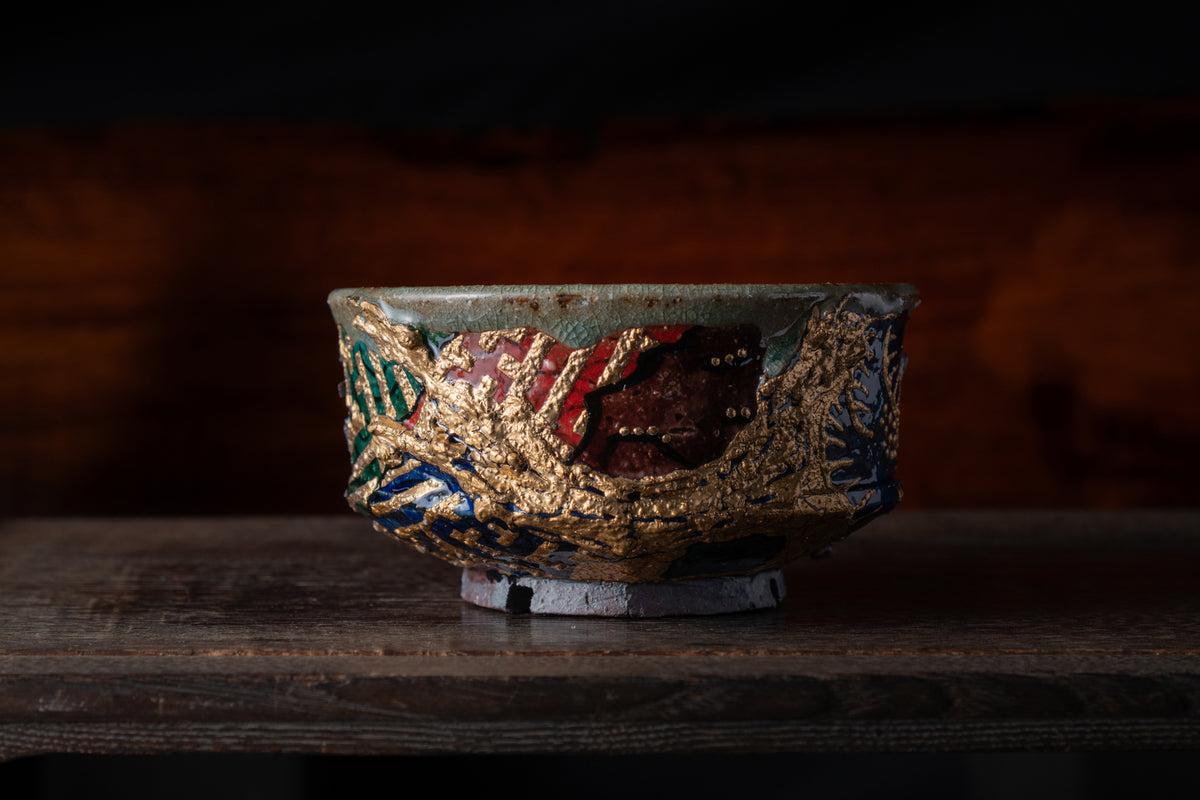
Rooted in the visual language of Kutani ware, Ishikawa Ryusei combines techniques rarely brought together within a single vessel. Each piece passes through eight to ten firings as deep glazes, raised dots applied in regular patterns, and bold gold decoration build up across its surface, creating depth, density, and variation.
At first glance, the effect is pure excess: immediately striking, rich with detail. Given a moment of stillness, the surfaces begin to reveal more, as different techniques, textures, and layers come into view.
Layer upon Layer
Ishikawa builds his surfaces from several established Kutani techniques. Aote creates areas of deep green, blue, and purple glaze, while aochibu forms small raised blue dots, placed one by one in a regular rhythm. Bold kinsai adds lines, shapes, and larger areas of gold, creating a strong contrast against the darker surfaces.
He divides each vessel into different areas. Smooth glazed sections sit beside raised decoration, dotted patterns beside more irregular textures. The roughness of the stoneware body adds another contrast to the precision and density of the decoration.
Cracks appear in the liquid gold applied over overglaze enamels. Ishikawa explores this effect, allowing the fractured surface to become part of the finished work. Through repeated layering and firing, each piece bears the marks of the time and labor involved in its making.


Kabukimono: A New Expression Within Kutani
The appeal of Ishikawa’s works lies in the balance between freedom and control. His boldest compositions are carefully considered.
He calls his works kabukimono, a name that echoes both Kabuki theater and kabuki-mono, a term once used for people who defied convention through flamboyant dress and behavior. The pieces similarly draw on Kutani’s established visual language while leaving room for spectacle and individuality.
Classic motifs, including auspicious symbols such as bamboo and plum, provide a familiar foundation, which Ishikawa reworks into compositions that are distinctly his own. For all the complexity of the decoration, the message behind his pieces is simple: “May good fortune come to you.”
Biography
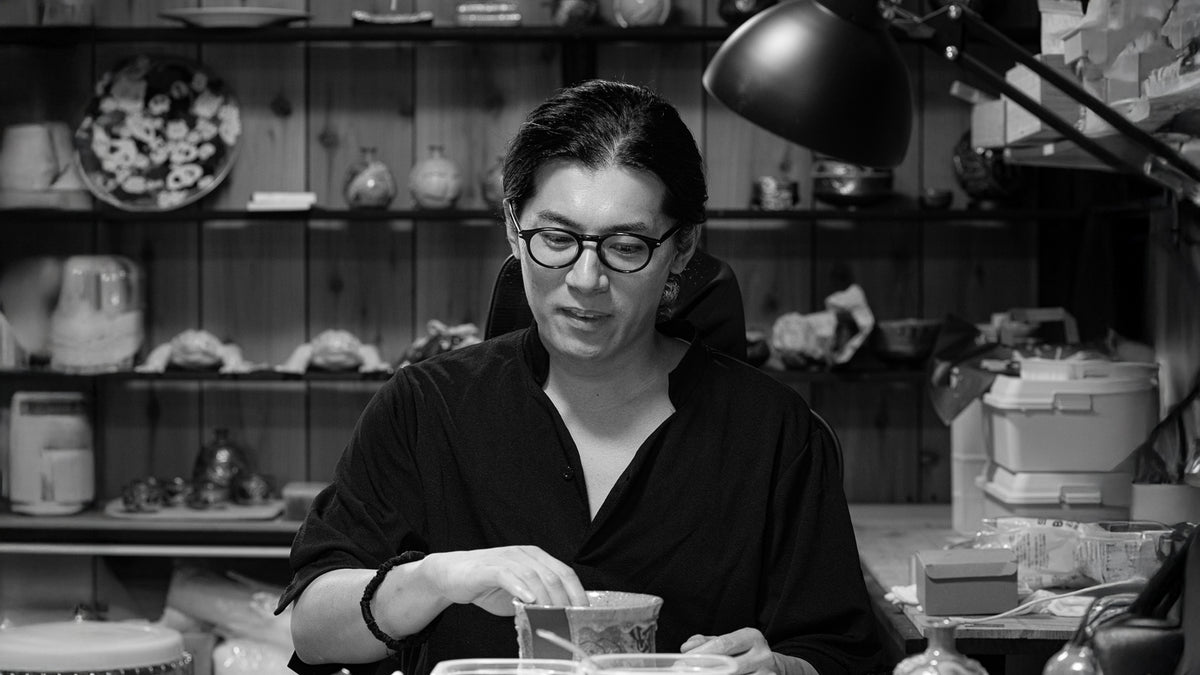
An emerging Kutani ware artist, Ishikawa Ryusei is developing a distinctive approach to a craft he grew up around. He was raised next door to a Kutani ware workshop in Nomi City, Ishikawa Prefecture, and became familiar with the craft from an early age.
His career initially took him into other fields, including firefighting and digital content production, but he eventually found his way back to Kutani ware. He went on to study at the Ishikawa Prefectural Kutani Ceramic Technical Training Institute for two years.
After graduating in spring 2026, he established his studio that April, beginning his career with a clear vision for the work he wanted to create. Today, he continues to develop his Kabukimono series, exploring new possibilities within the techniques, motifs, and visual language of Kutani ware.


