

Tried-and-True Japanese Kitchen Tools
Discover essential Japanese kitchen tools that blend tradition, function, and beauty in everyday cooking.
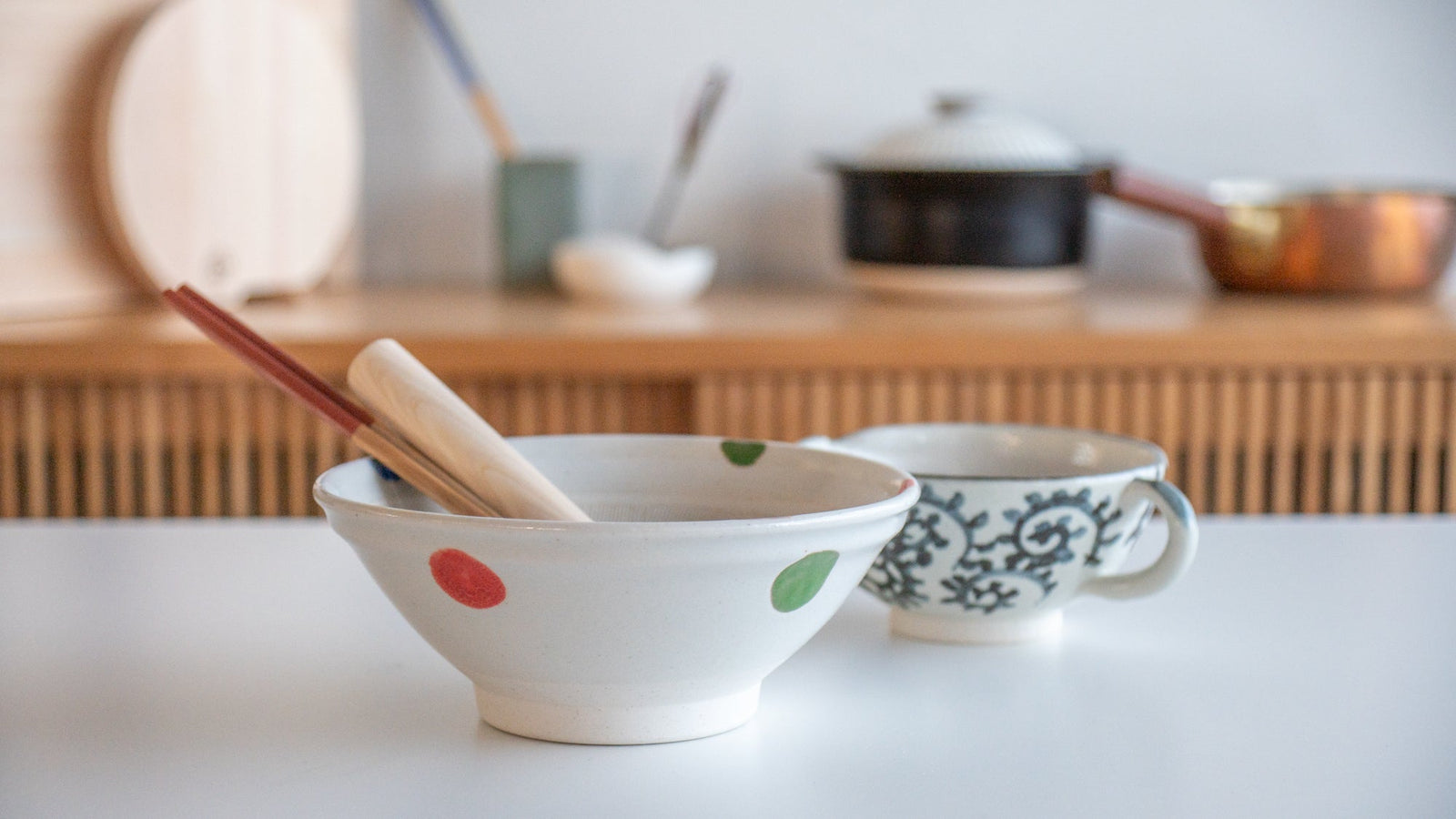
Step into a Japanese kitchen, and you’ll find tools that have earned their place through generations of trust. Whether a delicate lacquer ladle or robust donabe pot, each piece reflects Japan’s balance of form and function, designed to make cooking not only efficient but also deeply satisfying.
In this updated collection of tried-and-true essentials, we introduce both beloved classics and new favorites for the modern kitchen. Japanese knives crafted for precision, hinoki cutting boards that protect your knives’ edges, and ceramic mortars—these new additions bring out the best in every ingredient.
More than utensils, these are companions in daily life, tools that make every meal a quiet celebration of craftsmanship and care.
Japanese Knives
Japanese knives are strong, thin, accurate, and hold their edge. And if you were to pick a single to have in your kitchen, the one to choose would be the multi-purpose santoku knife.

Santoku can handle a wide range of tasks, from filleting fish to slicing meat to chopping vegetables. Their highly-prized ability to cut all three is even in the name: “santoku” translates literally to “three virtues.” Similar to Western chef knives, they have a double-bevel design, which means they are sharpened on both sides of the blade: the one facing the user and the one facing away.
Yet crucially, santoku tend to be lighter, thinner, and made of harder steel than their Western counterparts. These are knives that, with a bit of care, can last a lifetime.
If you’re seeking to add a santoku knife to your kitchen, try the Damascus Santoku Knife. It is made of VG10: a stainless, high-carbon steel that provides outstanding sharpness while resisting rust. The Damascus steel construction adds superior edge retention. This santoku’s length of 165 mm (6.5 in) is convenient for the vast majority of home cooks, while the fact that its center of gravity is concentrated in the handle allows it to be used for long periods without fatigue.

If you prefer a longer knife, try a 210 mm (8.3 in) gyuto: the Damascus Gyuto Knife with a Damascus make, or the Kurouchi Gyuto Knife, which has a rustic, black oxide finish that is extra rust-resistant.

A little proper maintenance can keep your blade ready to cut smoothly and safely. For how to sharpen a Japanese knife, read our article here.
View Japanese Knives Collection
Hinoki Cutting Boards
Indispensable for any kitchen is a cutting board—and here, it’s all about material. The go-to in many Japanese kitchens is hinoki, and once you use it, you’ll understand why. The surface of hinoki cutting boards is gentle on Japanese knives, helping them stay sharp for longer, and the wood itself has natural antibacterial properties. As a bonus, cutting on them releases the gentle scent of Japanese cypress, bringing a calming atmosphere to the kitchen.

One thoughtfully considered design is the Tono Hinoki Round Cutting Board with Stand. Its wood has narrow tree rings, making it highly durable, while the round shape is convenient to use from any angle. Finally, a handy rotating stand allows you to set it upright to dry or store—no worries about your round cutting board rolling away from you.

Variations are available in rectangular shapes or with a hole for hanging storage, so you can find the hinoki cutting board that’s the best fit for your particular kitchen.
View Cutting Boards Collection
Mino Ware Mortars & Wooden Pestles
Grinding sesame seeds and spices, grating yams for tororo, and preparing salad dressings right in the bowl—there are so many delicious uses for Japanese mortars and pestles. They provide more control than a food processor, and grind or crush rather than cut ingredients, bringing out the best aromas and flavors.

And when it comes to a mortar you’ll want to reach for every day, Mino ware mortars deliver. The secret lies in the grinding grooves. Thanks to their durable construction, the grooves don’t wear down, even with frequent grinding of hard ingredients like sesame seeds and nuts. To give these grooves the best angle and depth, craftspeople carve them by hand using a toothed spatula. The result is that even a small amount of pressure is enough to grind fragrant, delicious ingredients—taking the strain off your wrists and arms so you can cook longer.

Finally, Japanese mortars’ intentional design means they look beautiful on the table, too—no need to dirty another dish.
If you’re looking for one on the larger side, try the Polka Dot Mortar 8.7 In. Its wide rim provides plenty of elbow room for grinding, while its depth and volume allow you to prepare soups and salads directly in the bowl.

Another option is the Arabesque Mortar with Spout and Handle 6.1 In, whose useful spout and side handle make pouring dressings and sauces a breeze.

Pairing them with a wooden pestle is a nice touch. Soft on the hand, it brings a touch of Japanese nature into the kitchen.
View Mortars & Pestles Collection
Basic Cooking Chopsticks

Known as saibashi, cooking chopsticks are essential tools in the preparation of a Japanese meal. While dining chopsticks typically measure between 21 to 23 cm (8.3 to 9.1 in), cooking chopsticks are about 1.5 times longer. This added length makes a real difference, keeping your hands safely away from hot oil or steam and offering the control needed for tasks like plating a single slice of sashimi or stirring simmering noodles.
Yamachiku offers a range of thoughtfully designed cooking chopsticks, each with features to suit different tasks.
The Okaeri Bamboo Long Chopsticks Set includes three sizes—26 cm (10.2 in), 28 cm (11 in), and 30 cm (11.8 in). Lightweight and smooth, they’re easy to use and versatile for everything from sautéing to bento prep.
A practical set for everyday cooking and plating.

The Colorful Handle Cooking Chopsticks have a sturdy, easy-grip feel and square-shaped tips that improve control while preventing residue buildup. Designed for durability and ease of use, they’re great for anyone getting started with Japanese cooking tools.
A chef-trusted design that balances comfort and control.

The Nimono Master Cooking Chopsticks feature a clever dual-purpose design: one end tapers to a skewer-like point for testing doneness, while the other grips larger ingredients with ease. Notches at 3 cm (1.2 in) and 5 cm (2 in) help with plating bite-sized portions.
Ideal for precise plating and simmered dishes.

Starting with a high-quality pair makes all the difference. Well-crafted chopsticks won’t splinter or lose shape—and once you get used to them, you’ll reach for them again and again.
 Okaeri Bamboo Long Chopsticks Set
 Colorful Handle Bamboo Cooking Chopsticks
 Nimono Master Bamboo Cooking Chopsticks
The Versatile Donabe Clay Pot
The donabe clay pot, known for its sturdy texture and generous size, often takes center stage during traditional hot pot meals. Made from special heat-resistant clay, it’s built to withstand direct flame—making it a reliable choice for everyday cooking, especially in colder months. While ideal for soups and stews, its thoughtful design also suits the slow preparation of aromatic rice dishes.
Every meal served in a donabe benefits from its unparalleled heat retention, and its timeless design promises a heartwarming dining experience every time.
Imagine placing a hearty tonjiru pork soup in a donabe right at the center of your table—simple, inviting, and full of warmth.

Paired with a Shuro Palm Trivet, the donabe becomes an ideal centerpiece—practical on the counter, welcoming at the table.


Lustrous Lacquerware Ladle
While metal ladles get the job done, a lacquerware ladle becomes the preferred choice when serving hearty soups or stews like oden. Its softly rounded edges protect delicate ingredients, ensuring dishes remain as visually appealing as they are delicious.

Lacquerware ladles can also double as stylish servingware. Their luminous finish and ergonomic design transform even the simplest of dishes into elegant servings.
The Multi-Purpose Sauce Container

Don't let its name fool you; this container isn't solely for sauces. Use it for blending starch with water when thickening a sauce and also a pre-mixing bowl for seasonings in dishes like ginger pork or teriyaki chicken. Its thoughtfully crafted spout guarantees an even pour every time.
Perfectly sized for preparing a dinner for two, a sauce container can keep a prime spot at the front of your cupboard.
Handy Sauce Plates

Besides the usual dip for sushi or sashimi, small sauce plates can be used in a variety of ways. They're wonderful for tasting dishes in-the-making. Want a nibble of stewed vegetables or a sip of miso soup? Small sauce plates are your go-to. Keeping a set on your counter ensures they're always ready for taste-testing or resting utensils.
Have any odd little sauce plates tucked away in the back of your cupboard? Bring them out! They can be little helpers in fine-tuning the flavors of your dishes.
Every kitchen tells a story. In a Japanese kitchen, these well-loved essentials are part of everyday life. The items we've shared are still used in homes across Japan, bringing together practical know-how and a long tradition of care. Thoughtfully made and easy to use, they're the kind of tools that quietly support you as you cook, serve, and enjoy each meal.
Stay close to the craft
Now and then, a quiet letter — new stories, seasonal notes, and the hands behind the work.
Leave a comment
@Susan Thank you for pointing it out! We stopped providing pumpkin, but it was still there in the picture. Therefore, we tried to erase as much as we could. We cannot thank you enough for noticing, and we apologize that we no longer provide the pumpkin. We hope you can find a substitute among other veggies.
The vegetable hashioki picture shows a kabocha, but it isn’t listed to add to cart.