


Woods Used in Traditional Japanese Crafts
Learn about Japan’s finest woods, with insights on their unique properties and many uses in Japanese traditional crafts.

Japan is the third largest "Land of Trees" in the world, following Finland and Sweden, with seventy percent of its land area covered by forests. Additionally, the country’s vertical expanse from north to south results in varying climatic conditions across regions.
As a consequence, Japan boasts a rich diversity of wood species, each with distinct appearances and characteristics. This has fostered a long tradition of woodworking, leading to the production of a wide range of beautifully handcrafted and durable household items.
Local craftspeople, especially those engaged in traditional woodworking, possess deep knowledge of wood properties. They meticulously assess the unique characteristics of each tree and piece of wood to create products of the highest quality.
Different types of wood are suited to various purposes. In this article, we will explore some of the most common woods used in Japanese woodworking and their distinctive qualities.
Hinoki (Japanese Cypress)

The above image is for illustrative purposes only.
Hinoki is a type of cypress native to Japan and is regarded as a top-tier aromatic conifer, making it a highly sought-after wood. Its beautiful, glossy white appearance and soothing, forest-like fragrance have been cherished in Japan for centuries.
All softwoods possess water-resistant properties, but hinoki stands out for its exceptional durability against continuous exposure to water. It also has natural antibacterial and deodorizing properties, which is why it is favored for countertops and sushi plates in high-end sushi restaurants.
In particular, Kiso hinoki, a variety grown naturally in the Kiso Valley, spanning Nagano and Gifu prefectures, is considered the finest quality of hinoki wood.
 Fan Shaped Platter
 Hinoki–Cypress Rectangle Dinner Plate
 Tono Hinoki Round Cutting Board with Stand
 Tono Hinoki Round Cutting Board with Hole
 Tono Hinoki Rectangular Cutting Board with Stand
 Tono Hinoki Rectangular Cutting Board with Hole
Sugi (Japanese Cedar)

The above image is for illustrative purposes only.
 Wood‑grain Flower Shaped Bento Box
 Wood‑grain Plum Blossom Shaped Bento Box
 Wood‑grain Candy Box
 Wood‑grain Round Serving Tray
 Wood‑grain Donburi Bowl 6.1 in
 Akita Cedar Ohitsu Rice Container
Keyaki (Japanese Zelkova)

The above image is for illustrative purposes only.

Sakura (Cherry Tree)

The above image is for illustrative purposes only.
 Shell Inlay Sakura Hexadecagon Serving Tray
 Sakura Hexadecagon Chabitsu Japanese Tea Box
 Sakura Pail Single-Flower Vase
 Glossy Cherry Blossom Bark-Design Tea Canister
 Sakura Tea Serving Tray
 Shell Inlay Checkered Pattern Platter
 Sakura Rectangle Serving Tray With Handles
 Lacquered Sakura Wagashi Dessert Knife
 Gourd Shaped Sakura Designed Chasaji Teaspoon
 Shell Inlay Sakura Rectangle Serving Tray
 Cherry Blossom Bark-Design Tea Canister
Take (Bamboo)

The above image is for illustrative purposes only.
Matsu (Pine Tree)

The above image is for illustrative purposes only.
Tsuge (Japanese Boxwood)

The above image is for illustrative purposes only.
While boxwood is often seen as a garden tree, it is also a well-known material for crafts in Japan. Due to its extremely slow growth, it has a very fine texture and is one of the hardest woods used in Japan, with a stone-like strength. Although difficult to work with, its durability makes it highly resistant to damage.
Because boxwood trees do not grow large, the wood is typically used to create small items such as shogi (Japanese chess) pieces, netsuke (miniature carvings), and hair combs. It has also been employed for making precision parts for ukiyo-e woodblock prints. To learn more about ukiyo-e, refer to our Journal What Is Ukiyo-e? A Look into Japan’s Iconic Woodblock Print Art.
In particular, Japanese boxwood combs are prized for their ability to reduce static electricity, helping to keep hair smooth and beautiful. These combs are often soaked in hair-nourishing oils, such as camellia or apricot oil, further enhancing their benefits for hair health.

From Tree to Treasure: Cherry Bark Craft From YATSUYANAGI
Learn about kabazaiku, or cherry bark craftsmanship, at Yatsuyanagi, where bark transforms into handcrafted…
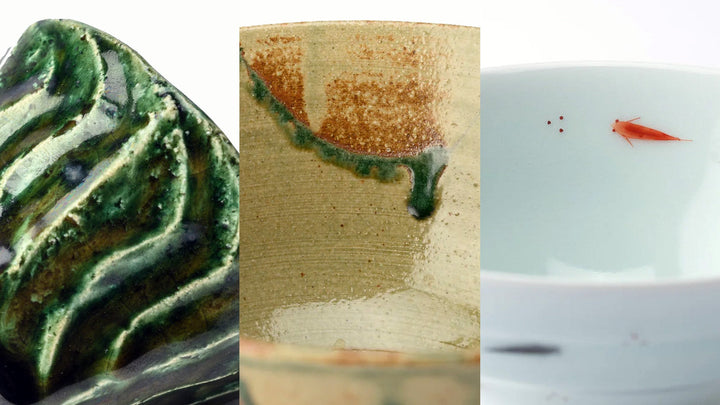
An Introduction to Japanese Ceramic Glazes
Explore the history, varieties, and beauty of Japanese ceramic glazes and how they transform…
Ito Ryo
The Enigmatic Science of Japanese Climbing Kilns
Enter the fiery heart of noborigama, stepped kilns where flames and ash forge ceramics…
Stay close to the craft
Now and then, a quiet letter — new stories, seasonal notes, and the hands behind the work.

Leave a comment
@Frans Hi. Thank you for your inquiry. Our Musubi Lab Concierge Team will be in touch with you shortly regarding whether we provide items with wood species Betula Schmidtii Regel or Onoorekanba. Please kindly wait for our team to contact you!
I am interested in the wood species “Betula Schmidtii Regel” or Onoorekanba.
Do you sell this